DEX aggregator 1inch described MEV protection as becoming important for DeFi traders as bots continue to target public on-chain swaps. The decentralized exchange aggregator said MEV can reduce execution quality. It can also increase slippage during trades.
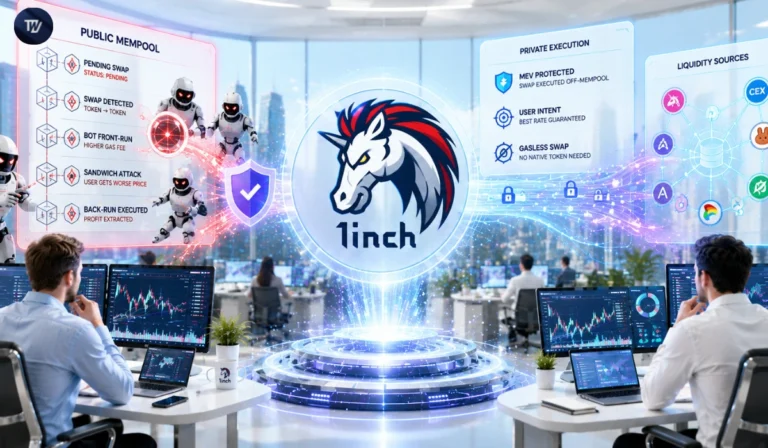
In a recent X post, the company said Maximal Extractable Value, or MEV, occurs when bots scan blockchain mempools for pending transactions. These transactions are visible before final confirmation.
1inch says this visibility poses a risk to users. Bots are able to identify the swap before it settles. They can then place their own transactions around that trade.
Also Read: ECB Chief Lagarde Says Euro Stablecoin Could Weaken ECB Policy
Intent-Based Swaps Reduce Public Mempool Exposure
The company highlighted front-running, back-running, and sandwich attacks as prevalent forms of MEV. A bot is said to be involved in a sandwich attack when it places an order prior to and subsequent to the user order. This may shift the price against the trader.
Users do not frequently see this activity, 1inch said. But they might still get substandard execution rates. The company said that MEV is a hidden cost of public DeFi swaps.
According to the aggregator, the primary risk is that of mempool broadcasting by the public. When a swap is added to the mempool, bots can view the swap information. In this way, they can act before the trade is confirmed.
To overcome this problem, 1inch adopts an intent-based execution model. This model enables protecting against MEV attacks without exposing the company’s mempool publicly, the company said. Users define the result they want from a swap.
For example, a user can request a token exchange at the best available rate. Then external resolvers come into play to perform the order. The last transaction is “bundled” and sent off-mempool.
According to 1inch, this setup curtails bots’ visibility. It also minimizes the risk of front running and sandwich attacks. This helps reduce attack surface during execution, the company stated.
The resolver model can also enhance swap pricing. Resolvers can offer liquidity from decentralized exchanges, centralized exchanges, and private inventories. This competition may be used to help minimize slippage.
MEV Protection Powers Gasless 1inch Swaps
Gasless swaps are also available on the same system. Resolvers pay network fees and incorporate them into the execution fee. This enables users to trade without the need for native gas tokens.
MEV protection is automated in the background, 1inch said. Users attach a wallet, select the tokens, and sign an order for a swap. Assets are then pushed to the wallet following execution.
This has become a subject of focus as DeFi trading activity increases. KuCoin Web3 Wallet has integrated with 1inch earlier this week. The integration brought gasless and MEV protection swaps for users.
KuCoin Web3 Wallet integration enables gas token-less swaps. It also provides MEV protection to the wallet’s trading process. The transfer reflects the demand for more secure executions in DeFi.

1inch stated that it has created a model to lower the exploitation of bots. It also seeks to enhance the pricing and ease the swaps. The company introduced MEV protection as an integral component of its DeFi trading system.
Also Read: Tether Freeze Hits $514M USDT Across Tron and Ethereum in 30 Days