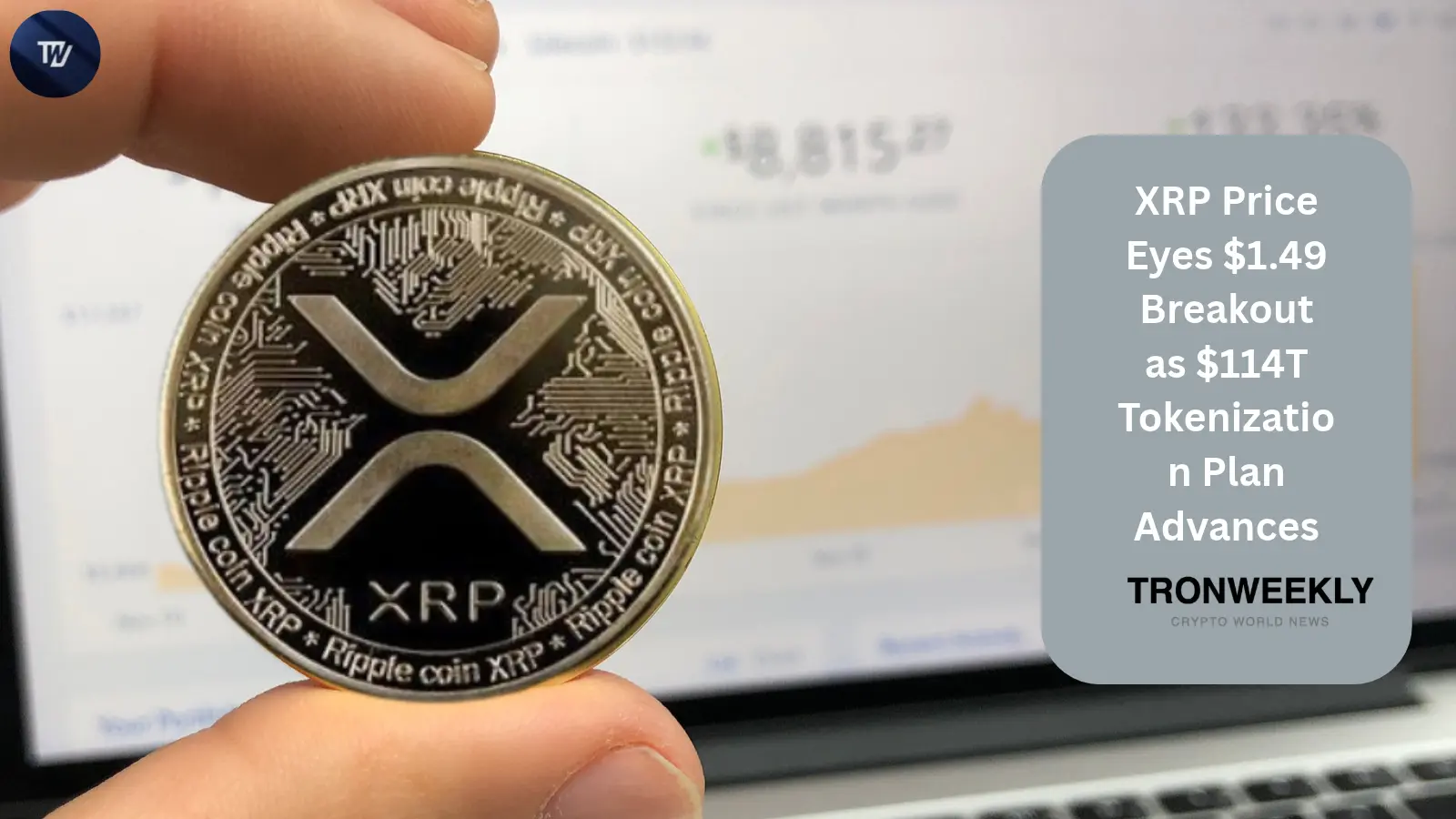
XRP Price Eyes Powerful $1.49 Breakout as Ripple Joins DTCC
XRP price remains under pressure near $1.30 despite Ripple Prime’s reported involvement in the DTCC tokenization initiative involving $114 trillion in assets under custody. Traders are watching key technical levels as bearish momentum persists.
Featured Stories
Trending News
DeFi Development Corp Adds 3,983 SOL as Solana Price Eyes Its Next Breakout
DeFi Development Corp. purchased 3,983 SOL worth approximately $417,000 last week, marking its smallest weekly acquisition since September. Meanwhile, Solana’s tokenized-stock ecosystem has reportedly reached 1.4 million holder addresses. Analyst Crypto_Nova identifies $92–$98 as a potential support zone, with $160 as a conditional upside target.
Ethereum EIP-8288: 8 MB/s Limit, 10M to 10k Gas Solution
Vitalik Buterin’s EIP-8288 proposes replacing Ethereum precompiles with client-side STARKs aggregated recursively, cutting quantum-safe transaction costs from 10M gas to tens of thousands while respecting the 8 MB/s calldata limit. It enables permissionless cryptography, faster innovation, and scalable privacy without protocol changes.
Solana Leads Stablecoin Transfers as SOL Price Eyes Macro Breakout
Solana processed 557 million stablecoin transfers in September, up 33% from August, averaging 18.6 million daily transfers. Meanwhile, SOL is forming an ascending triangle, with analyst Solana Hub highlighting a potential breakout and a speculative $1,000 price target dependent on sustained buying pressure and favorable market conditions.
Solana Posts $299M App Revenue as SOL Price Outlook Draws Attention
Solana application revenue climbed 48% quarter over quarter to $299.1 million in Q3 2026, while tokenized equities reached $7.1 billion in quarterly volume and spot DEX trading totaled $197.2 billion. Meanwhile, SOL is trading near $105 after a trendline rejection, with analyst Don identifying $80–$95 as support and $166 and $378 as potential upside targets.
USDC Solana Mint Surges 750M With Strong 68.26B Growth
Circle minted $750 million USDC on Solana within 24 hours ending October 15, raising native supply to $7.3-$7.45B. Coinciding with 420M monthly transactions and $68.26B yearly issuance, it signals deepening institutional liquidity demand and stablecoin utility on Solana.

Vitalik Buterin Unveils Great 3-Layer Private AI Stack
Vitalik Buterin’s paranoid-mode agent combines local Qwen 3.8 prompt rewriting, separate Tor circuits with cover traffic, and zkAPI unlinkable payments to hide what AI asks, how it pays, and where it connects, though he warns Tor alone is insufficient without mixnet support.