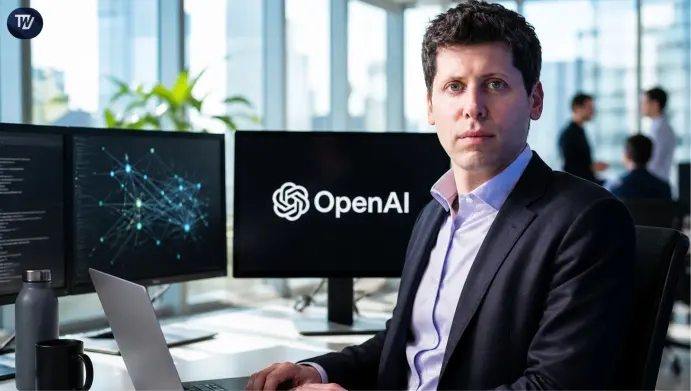
On May 1st, a verified account believed to be Sam Altman’s posted “Artificial Goblin Intelligence Achieved”. The message appears to be amusing rather than a serious AGI announcement. However, it comes at a time when the discussion of AI safety is getting heated, and some people are predicting that AI will surpass human intelligence in 2030. The joke has attracted attention not only from AI researchers but also from people exploring decentralized AI in the blockchain community.
Humor Vs Milestone in AI Communication
The style of the post implies satire rather than an official announcement of artificial general intelligence. Public statements from top AI leaders like Sam Altman are heavily monitored, especially when they touch upon the discussion of model capabilities, benchmarks, and release schedules.

For Web3 projects that are using large language models in their smart contracts, DAOs, or on-chain agents, it is very important to be able to tell apart marketing language from real technical milestones in order to evaluate the roadmaps, tokenomics, and protocol risks.
Also Read: Crypto Cards Dominate Payments as Spending Skyrockets 500%
AI Safety Timelines and 2030 Projections
There is still a heated discussion in the industry about whether AI might exceed human intelligence by 2030. Some researchers, along with voices like Sam Altman, point to scaling laws, multimodal reasoning, and agent behavior as possible indicators; others focus on the gaps of alignment, evaluation, and governance issues.
Blockchain advocates are of the opinion that decentralized computing networks, zero-knowledge proofs, and immutable audit trails could enhance transparency in model training and inference. Still, there are no standards laid down yet for the verification of AGI claims, which makes it difficult for investors and providers of decentralized infrastructure to do their due diligence.
Also Read: OpenAI CEO, Sam Altman’s Home Targeted in Violent Molotov Incident
Implications for Decentralized AI and Crypto Infrastructure
This whole thing proves how the narratives around AI shape the mood in crypto markets and affect the development of Web3. Sometimes platforms with tokenized AI, decentralized GPU marketplaces, and data DAOs even make their moves based on what they think is a breakthrough.
Besides the fact that a lot of new funding can be poured into open source models and on-chain identity solutions, the downside is that statements like Altman’s can accelerate the spread of misinformation, increase regulatory pressure, and highlight the technical issue of verifying AGI claims without the help of standardized, tamper-proof benchmarks.
Also Read: Ethereum (ETH) Foundation Flags 100 Suspected North Korean Operatives in Web3
