• Skip to primary navigation
  • Skip to main content
  • Skip to primary sidebar
  • Skip to footer
  • About TronWeekly
  • Write for us
  • Terms and Conditions
  • Privacy Policy
  • Disclaimer
  • Contact
  • All Posts
  • Advertise

TronWeekly

Crypto World News

  • Home
  • Latest News
  • Opinion
    • Education
    • Best TRON Wallets
    • Beginner’s guide to TRON
    • Tron Tokens
    • Market Analysis
  • Industry
    • Tron Exchange
    • Project Review
  • Press Release
  • Bitcoin (BTC)
  • Ripple (XRP)
  • Advertise
  • About TronWeekly
    • The Team
    • Editorial Policy
    • Write for us
    • Privacy Policy
    • Disclaimer
    • Terms and Conditions
    • Contact
You are here: Home / Cryptocurrency News / Clarity Act May Limit New Crypto Growth, Warns Charles Hoskinson

Clarity Act May Limit New Crypto Growth, Warns Charles Hoskinson

What to know:

  • Clarity Act may favor established networks while limiting growth for new projects.
  • Early-stage networks may face hurdles in liquidity, listings, and ownership rules.
  • Broader definitions may expand enforcement power and impact project funding.

By Arslan Tabish | Edited By Ammar Raza,April 25, 2026, 4:00 PM

Clarity Act May Limit New Crypto Growth, Warns Charles Hoskinson

The proposed Clarity Act in the United States could reshape blockchain development by setting stricter requirements for network classification. Charles Hoskinson warned that the Clarity Act may support established ecosystems while creating barriers for newer projects entering the market.

Hoskinson shared his views during an interview on the Crypto Coin Show. He said the Clarity Act may offer certainty for major networks but could limit growth for early-stage protocols. He added that structural requirements may slow innovation.

He elaborated that network systems like Bitcoin, Ethereum, XRP, and Cardano will probably qualify for the expected standards. These systems are already liquid and decentralized and have user bases. Under the Clarity Act, new projects might not comply with those thresholds.

Also Read: Clarity Act Crypto Bill Gains Momentum as Coinbase CEO Backs Approval Push

New Networks Struggle Under Strict Clarity Act Rules

He reported that there might be a problem of getting exchange listings in early-stage networks. They might also have difficulties developing distributed ownership with strict regulations. In the absence of these aspects, projects cannot be considered mature blockchains.

Hoskinson observed that dominant networks expanded in an era of regulatory uncertainty. That stage enabled provision of tokens and community building. He opined that eliminating that environment might limit new entrants under the Clarity Act.
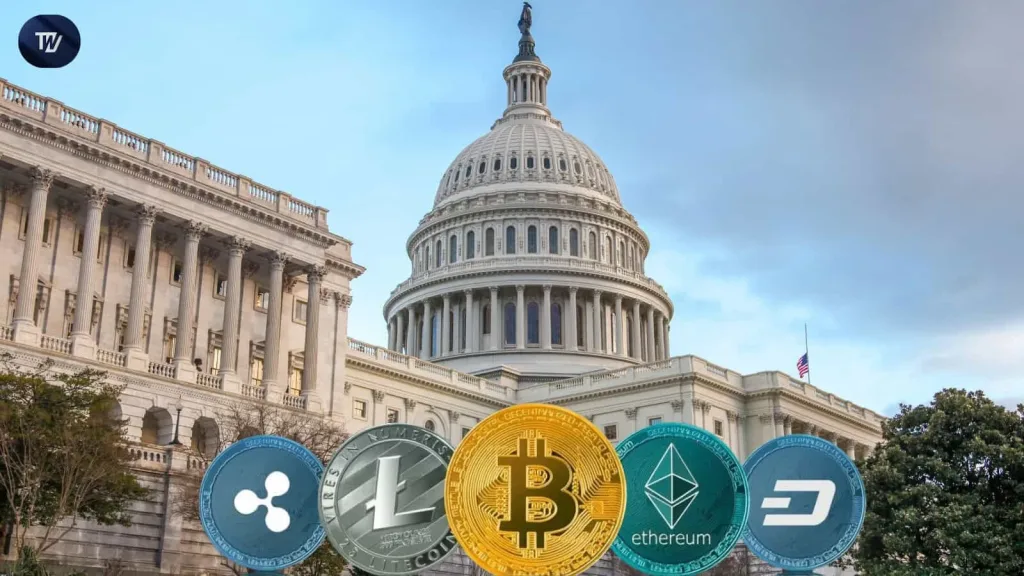
He also discussed the legal framework of the digital asset regulations in the United States. He claimed that present definitions are based on legislation that goes back to 1933. He contended that these classes do not depict decentralized systems.

A different classification of decentralized digital assets was suggested by Hoskinson. He added that this methodology might involve customized compliance and disclosure guidelines. This framework can minimize the unending conflicts in the industry.

Stronger Rules May Expand Enforcement and Limit Funding

He cautioned that more specific definitions would increase enforcement power. The regulators can have additional tools with which to categorize new projects. This may have an impact on their functioning or ability to raise capital.

He also wrote about privacy and identity in blockchain systems. He emphasized the models of self-sovereign identity and models of zero-knowledge proofs. These applications enable the user to check information without revealing comprehensive data.

This model, he said, can be used to support compliance requirements. It is also capable of safeguarding confidential user information when verifying. Examples are establishing jurisdiction or credentials without exposing personal information.

Hoskinson associated such concepts with the general digital trends. According to him, cryptographic verification can gain significance in the future. This may be applicable to automated agent systems and decentralized systems.

Also Read: Nakamoto’s Bold Strategy Promises Income Boost While Managing Market Risks

Filed Under: Cryptocurrency News

About Arslan Tabish

Arslan Tabish is a Technical Reporter and Market Analyst at Tron Weekly with over five years of experience covering cryptocurrency markets and blockchain developments. His reporting focuses on Bitcoin, Ethereum, altcoins, and decentralized finance, alongside NFTs, crypto regulation, policy, and Web3 innovations.
Arslan covers blockchain technology, Layer 2 scaling solutions, and emerging use cases, including AI-driven crypto applications, while delivering clear market analysis on how technical and regulatory developments impact digital asset markets. His work is designed for both beginners and experienced readers, offering accurate, easy-to-understand reporting without speculation or investment guidance.

Primary Sidebar

Recent Posts

  • Spain’s Cecabank Crypto Custody Expands Regulated Bank Services June 11, 2026
  • XRP Price: 10-Year AI Prediction Sparks Massive Interest June 11, 2026
  • Japan’s Crypto Tax Cut Bill Seeks 20% Rate and ETF Access Plan June 11, 2026
  • BlackRock Bitcoin Nears New Income ETF Launch Built on Options Strategy June 11, 2026
  • Jim Cramer Bitcoin Warning After Strategy Sells 32 BTC June 11, 2026

Footer

News

  • Latest News
  • Altcoin News
  • Bitcoin (BTC)
  • Blockchain
  • Tron (TRX)
  • World

Digest

  • Meet the Founder
  • Price Winning Article
  • DeFi
  • Cyber Security
  • Crypto Scam

Industry

  • Project Review
  • Technology
  • Fintech
  • Tron Exchange
  • New in Town

Tron Universe

  • Event and Tron Parties
  • New in Town
  • Tron Tokens

FOLLOW US

  • Facebook
  • Telegram
  • Twitter
  • Linkedin

Subscribe US

Editorial Policy | Privacy Policy | Disclaimer | Terms and Conditions | Masthead

Copyright © 2026 · Tron Weekly. All Rights Reserved. NOTE: Tron Weekly is an independent crypto news site that adheres to the strict journalism policy anchored on transparency, trust, and objectivity, we have no affiliation with the TRON Foundation, its founder Justin Sun or any other cryptocurrency firm.