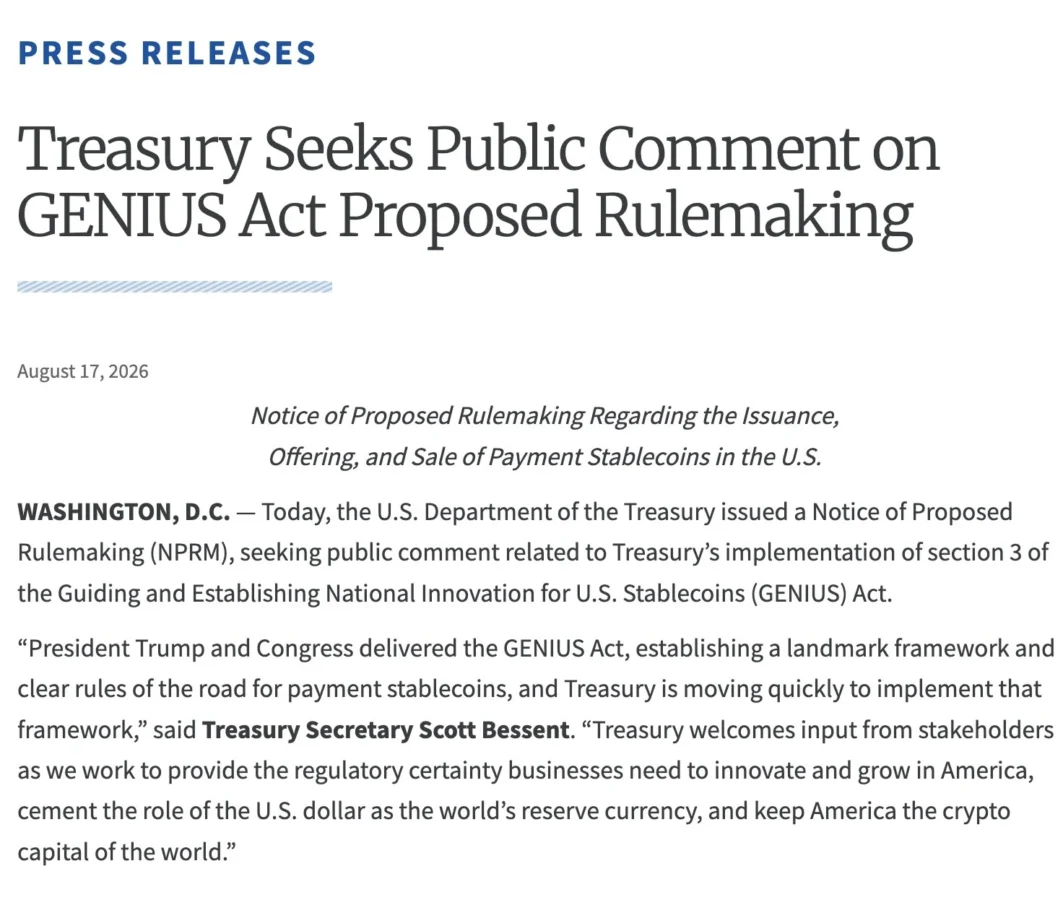
The GENIUS Act implementation has gained additional momentum following the move by the U.S. Treasury Department to formulate guidelines to identify which parties can issue payment stablecoins within the country.
This comes amid efforts by the federal authorities to develop the required rules to implement the novel framework. The banking and financial regulators have also been formulating guidelines related to the Act as the industry awaits clarity.
Scott Bessent, the Treasury Secretary, revealed that the government is working hard to provide firms with the assurance they need to thrive in the USA. In addition to that, there has been an emphasis on enhancing the role of the USD as the reserve currency in the international market and as the hub of crypto.
Also Read | Strategy Raises $333.7 Million but Keeps Bitcoin Holdings Unchanged
GENIUS Act Rules Enter Public Comment Period
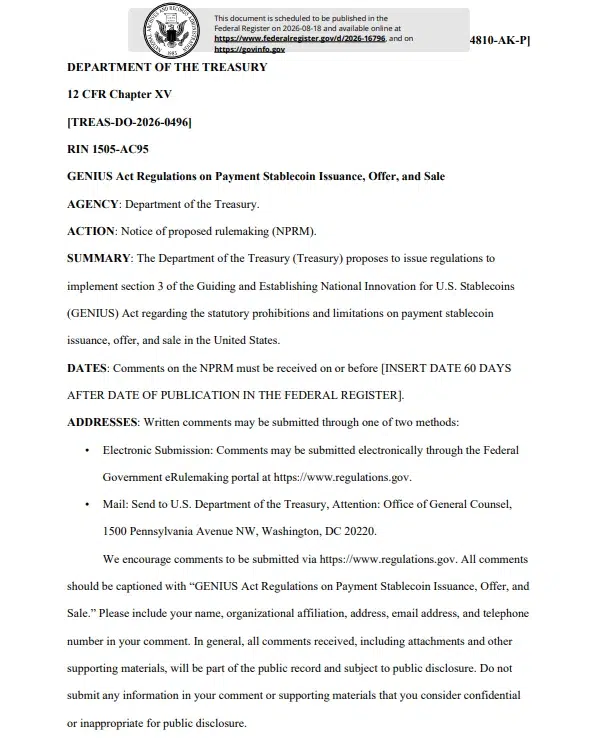
The proposal from Treasury deals with the application of the GENIUS Act to issuers of stablecoins, including those who operate out of the US. Treasury considered securities laws when drafting the guidance but found that payment stablecoins required a different treatment since they are created for payments and settlement purposes.
Treasury warned that application of traditional investment laws may hinder the use of payment stablecoins for making payments.
This new proposal came after an announcement from the Treasury made in September last year. Now, the public and the stablecoin industry have been given 60 days to respond, which is estimated to end in mid-October.
There are many questions the Treasury has raised about how some of the sections in the act should be interpreted.
Foreign Issuers Face Close Attention
The other crucial aspect is whether the GENIUS Act will be applied to foreign stablecoin providers. Big firms that operate in foreign countries, such as Tether, will closely follow the proposals and see how they might impact their ability to enter the U.S. market.
It is also important from the point of view of timing. As per the law, the regulatory framework should have been developed within a year; however, this term has already elapsed without completing all the necessary regulations.
The following key deadline is the estimated effective date of January 18. But achieving all of this by then may prove challenging, as agencies still have to go through the public comments and finalize their rules.
GENIUS Act Meets Wider Crypto Legislation
The GENIUS Act rulemaking is also occurring against the backdrop of the Digital Asset Market Clarity Act being deliberated in Congress. The bill may affect some components of the stablecoin framework, especially those related to incentives for using stablecoins on cryptocurrency exchanges.
Clarity Act is now in question due to the failure to start certain votes in the Senate before the recess period began.
For the stablecoin firms, the Treasury’s proposal is a landmark move towards federal regulations, although there might be more changes to the proposed framework in the future.
Also Read | Alibaba Gaming Sale Nears $1.5 Billion as Company Shifts Focus to AI