• Skip to primary navigation
  • Skip to main content
  • Skip to primary sidebar
  • Skip to footer
  • About TronWeekly
  • Write for us
  • Terms and Conditions
  • Privacy Policy
  • Disclaimer
  • Contact
  • All Posts
  • Advertise

TronWeekly

Crypto World News

  • Home
  • Latest News
  • Opinion
    • Education
    • Best TRON Wallets
    • Beginner’s guide to TRON
    • Tron Tokens
    • Market Analysis
  • Industry
    • Tron Exchange
    • Project Review
  • Press Release
  • Bitcoin (BTC)
  • Ripple (XRP)
  • Advertise
  • About TronWeekly
    • The Team
    • Editorial Policy
    • Write for us
    • Privacy Policy
    • Disclaimer
    • Terms and Conditions
    • Contact
You are here: Home / Cryptocurrency News / Tether Backs SQRIL to Accelerate Global QR Code Payments in Emerging Markets

Tether Backs SQRIL to Accelerate Global QR Code Payments in Emerging Markets

What to know:

  • Tether makes a strategic investment in SQRIL to expand global QR code payment networks.
  • Banks, e-wallets, and fintech apps gain instant cross-border scan-to-pay capabilities for users.
  • Emerging markets are driving the next generation of payments infrastructure and global adoption.

By Sajjal Ali | Edited By Ammar Raza,January 4, 2026, 1:00 PM

Tether

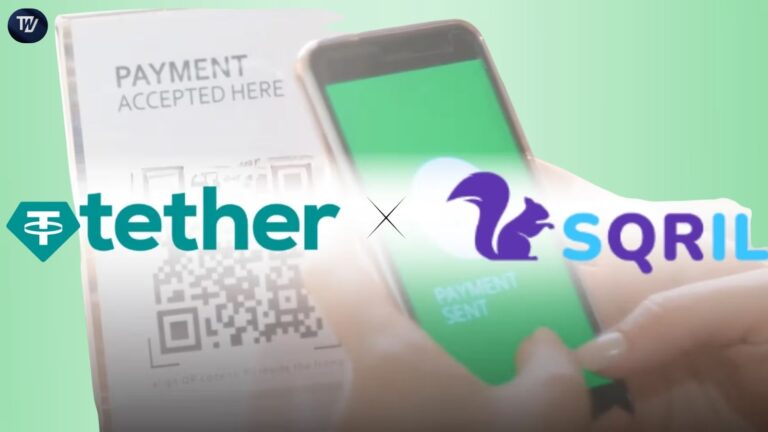
Tether, the company behind the giant stablecoin, has made an investment in SQRIL, which is a payment startup based in Southeast Asia and is working on the development of an API switch for QR payments. This development is important because it bridges the infrastructure of digital currencies and retail payments.

The technology offered by SQRIL enables banks, e-wallets, and financial technology solutions to empower customers to read local QR codes internationally and make immediate payments. The customers make their payments from their domestic accounts, while merchants receive payments in their local currency due to SQRIL’s expertise in handling overseas exchange and delivering payment outcomes.

Also Read: Tether Launches PearPass, a Cloud-Free Peer-to-Peer Password Manager

Instant QR Payments Drive Global Financial Interoperability

Weed considers this investment to be a boost to the transformation to instant interoperability worldwide. National-level QR-based systems, mobile payment systems, and stablecoins are currently converging to form a facilitation infrastructure linking banks and merchants to users across borders and across currencies with a lowered cost of settlement.

Scan to pay QR systems remain the most common in the real-world payment systems within the broader Asian region. The trends for Latin America and Africa indicate a movement towards the development of real-time country QR systems that are less reliant on cash for transactions and offer the undocumented population access to formal financial services through mobile-operated financial systems.

So, Weed thinks that such development should result in overturning traditional technology streams from one region to another. Emerging markets are now creating innovations that even developed markets are adopting, such as the use of QR codes. Weed’s exposure to cross-border payment and his stay in Southeast Asia support his theory that universality is approaching soon.

SQRIL Leads QR Payment Expansion in Emerging Markets

Currently, the SQRIL API is available live in the Philippines, Vietnam, and Indonesia. In Malaysia and Thailand, the payment method is via bank transfers. This is important because the payment method gives banks instant access to major routes within the Southeast Asian region. This is because QR is widely embedded within commerce.

More countries in Asia, Africa, and Latin America are set to integrate in the first quarter of the year. SQRIL’s target is to be one of the basic QR infrastructure providers in emerging markets, putting the company in the center of future cross-border payment channels, supporting banks, wallets, and merchants.

Also Read: Tether’s Bold $200M Move: Unpacking the Controversial Northern Data Deal

Filed Under: Cryptocurrency News

About Sajjal Ali

Sajjal Ali is a Market Analyst and Crypto Reporter at Tronweekly with over three years of experience covering cryptocurrency markets and digital asset ecosystems. Her work focuses on Bitcoin, Ethereum, altcoins, DeFi, blockchain developments, crypto regulation and policy, and Layer 2 scaling solutions.

She tracks major DeFi platforms, leading Layer 2 networks, and evolving regulatory frameworks, explaining how policy, technology, and adoption trends influence crypto markets. Her previous work has been featured on BTCRead. Sajjal verifies information through official filings, regulator statements, court records, and on-chain data, ensuring accurate, responsible reporting for a global audience.

Primary Sidebar

Recent Posts

  • Ripple and SBI Unlock RLUSD in Japan Amid 2026 Demand June 25, 2026
  • 45% Of Central Banks to Buy Gold as Crypto Market Matures June 25, 2026
  • ONDO Price Under Pressure After 7.6M Token Transfers, $0.30 Becomes Critical June 25, 2026
  • Ethena’s ENA Price at Critical Level As 300 Million Tokens Flood Exchanges June 25, 2026
  • Ethereum Price Falls 34% From Peak as Recovery Hopes Focus on Key Resistance June 25, 2026

Footer

News

  • Latest News
  • Altcoin News
  • Bitcoin (BTC)
  • Blockchain
  • Tron (TRX)
  • World

Digest

  • Meet the Founder
  • Price Winning Article
  • DeFi
  • Cyber Security
  • Crypto Scam

Industry

  • Project Review
  • Technology
  • Fintech
  • Tron Exchange
  • New in Town

Tron Universe

  • Event and Tron Parties
  • New in Town
  • Tron Tokens

FOLLOW US

  • Facebook
  • Telegram
  • Twitter
  • Linkedin

Subscribe US

Editorial Policy | Privacy Policy | Disclaimer | Terms and Conditions | Masthead

Copyright © 2026 · Tron Weekly. All Rights Reserved. NOTE: Tron Weekly is an independent crypto news site that adheres to the strict journalism policy anchored on transparency, trust, and objectivity, we have no affiliation with the TRON Foundation, its founder Justin Sun or any other cryptocurrency firm.