• Skip to primary navigation
  • Skip to main content
  • Skip to primary sidebar
  • Skip to footer
  • About TronWeekly
  • Write for us
  • Terms and Conditions
  • Privacy Policy
  • Disclaimer
  • Contact
  • All Posts
  • Advertise

TronWeekly

Crypto World News

  • Home
  • Latest News
  • Opinion
    • Education
    • Best TRON Wallets
    • Beginner’s guide to TRON
    • Tron Tokens
    • Market Analysis
  • Industry
    • Tron Exchange
    • Project Review
  • Press Release
  • Bitcoin (BTC)
  • Ripple (XRP)
  • Advertise
  • About TronWeekly
    • The Team
    • Editorial Policy
    • Write for us
    • Privacy Policy
    • Disclaimer
    • Terms and Conditions
    • Contact
You are here: Home / Cryptocurrency News / Based on New Data, the ‘Ultrasound Money’ Narrative No Longer Applies to Ethereum

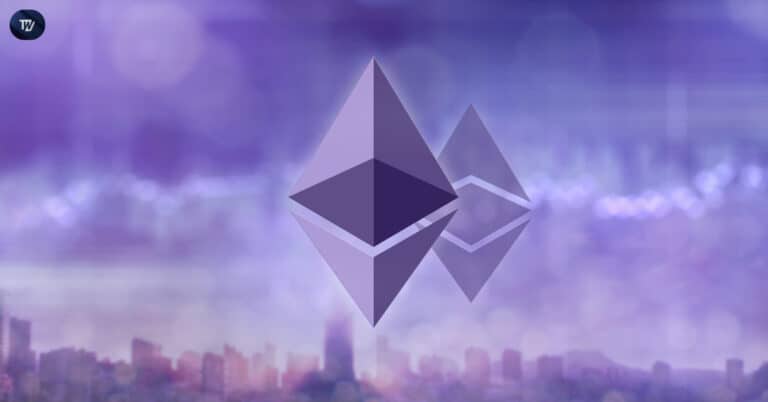
Based on New Data, the ‘Ultrasound Money’ Narrative No Longer Applies to Ethereum

By Paul Adedoyin | Edited By Ammar Raza,April 14, 2025, 8:30 PM

Ethereum
  • Although the EIP-1559 upgrade has been completed; over the past year, Ethereum’s total supply has increased by 620,000 ETH.
  • Revenue generated from validator staking using proof-of-stake is more than that being burned, therefore adding to the total supply.
  • Layer-2 solutions have forced transaction fees to be diverted to Ethereum’s base layer and have diluted deflationary effects.

Since the EIP-1559 change in Ethereum, which occurred in August 2021, the network has sent 4.5 million ETH to dead wallets with the most recent data available as of April 14, 2025. The point of this upgrade was to slow down the rate at which Ethereum’s supply increases and also make it deflationary, but that’s actually proven to be surprisingly untrue.

ETH burn chart. Source: Etherscan

Over the last year, Ethereum’s total supply has in fact increased to around 120.69 million ETH, according to Ycharts. This represents an annual growth rate of about 0.51% from April 2024. 

While the idea of Ethereum turning into Ultrasound Money (i.e., becoming fewer and scarcer over time) keeps getting popular, this supply growth contradicts that.

ETH supply. Source: Ycharts

ETH’s Rising Supply is Fueled by Staking Rewards

The growth in Ethereum’s supply was largely due to ETH’s switch to proof-of-stake in September 2022. In this model, people stake their ETH in order to participate in keeping the network secure; in return, they are rewarded with new ETH.

25% of all ETH is currently staked by over 1 million individuals. In the span of a year, more than 624,000 to 1.25 million new ETH was earned by these validators, at a 2% to 4% annual return per validator.

In 2025 alone, Ethereum will release around 1.02 million new ETH, and only about 400,000 ETH will be burned. As a matter of fact, it’s actually less than the 465,657 ETH that was burned in 2024.

Although staking helps to secure the network, more ETH is being in supply than destroyed. Approximately 620,000 more ETH has been in circulation over the last year.

Ethereum Mainnet Fee Burns Decrease With Layer 2 Growth

A reason that ETH burns have decreased is due to reduced activity on Ethereum’s main network, where transactions occur. Part of the decline is due to the increasing use of Layer 2 networks like Optimism and Arbitrum, which operate faster and cheaper than the Ethereum base layer.

Once the Dencun upgrade was implemented more activities moved to these Layer 2s, thus leading to fewer transaction fees being burned on the main Ether network. To address ETH’s inflation issue, there have been proposals such as EIP-7514 that suggest limiting the exponential staking growth rate, but none have been enacted yet.

Filed Under: Cryptocurrency News, Altcoin News

About Paul Adedoyin

Paul Adedoyin is a Financial Correspondent at Tronweekly with over four years of experience covering the cryptocurrency and digital asset sector. His work focuses on Bitcoin, altcoins, and DeFi, alongside crypto regulation and policy, blockchain technology, Web3, Layer 2 ecosystems, and AI-blockchain developments. He verifies reporting through primary sources such as official filings, regulatory statements, court records, and on-chain data to ensure accurate, fact-based coverage. His work has been featured on platforms like U.Today and CryptoMode.

Twitter

Primary Sidebar

Recent Posts

  • DASH Price Forecast: Can Buyers Overcome Resistance and Reach $43.74? June 22, 2026
  • Ethereum Faces 43% YTD Decline as $1,800 Resistance Holds June 22, 2026
  • SUI Price Holds Key Support Amid Potential Recovery Toward $0.95 June 22, 2026
  • XRP Staking: 4 Platforms Offering Drastic Yield Today June 22, 2026
  • Andrew Cuomo Joins OKX and ICE to Launch New Crypto Venture June 22, 2026

Footer

News

  • Latest News
  • Altcoin News
  • Bitcoin (BTC)
  • Blockchain
  • Tron (TRX)
  • World

Digest

  • Meet the Founder
  • Price Winning Article
  • DeFi
  • Cyber Security
  • Crypto Scam

Industry

  • Project Review
  • Technology
  • Fintech
  • Tron Exchange
  • New in Town

Tron Universe

  • Event and Tron Parties
  • New in Town
  • Tron Tokens

FOLLOW US

  • Facebook
  • Telegram
  • Twitter
  • Linkedin

Subscribe US

Editorial Policy | Privacy Policy | Disclaimer | Terms and Conditions | Masthead

Copyright © 2026 · Tron Weekly. All Rights Reserved. NOTE: Tron Weekly is an independent crypto news site that adheres to the strict journalism policy anchored on transparency, trust, and objectivity, we have no affiliation with the TRON Foundation, its founder Justin Sun or any other cryptocurrency firm.