• Skip to primary navigation
  • Skip to main content
  • Skip to primary sidebar
  • Skip to footer
  • About TronWeekly
  • Write for us
  • Terms and Conditions
  • Privacy Policy
  • Disclaimer
  • Contact
  • All Posts
  • Advertise

TronWeekly

Crypto World News

  • Home
  • Latest News
  • Opinion
    • Education
    • Best TRON Wallets
    • Beginner’s guide to TRON
    • Tron Tokens
    • Market Analysis
  • Industry
    • Tron Exchange
    • Project Review
  • Press Release
  • Bitcoin (BTC)
  • Ripple (XRP)
  • Advertise
  • About TronWeekly
    • The Team
    • Editorial Policy
    • Write for us
    • Privacy Policy
    • Disclaimer
    • Terms and Conditions
    • Contact
You are here: Home / Industry / US Credit Union Regulator Proposes Stablecoin Licensing Path: A Breakthrough in 2026

US Credit Union Regulator Proposes Stablecoin Licensing Path: A Breakthrough in 2026

What to know:

  • NCUA plans a federal license for payment stablecoin issuers linked to credit union subsidiaries.
  • Proposal aligns with the GENIUS Act to create a unified US stablecoin framework.
  • Credit unions would be barred from backing stablecoin issuers without an approved license.

By Ananthyka J | Edited By Ammar Raza,February 13, 2026, 9:30 AM

US

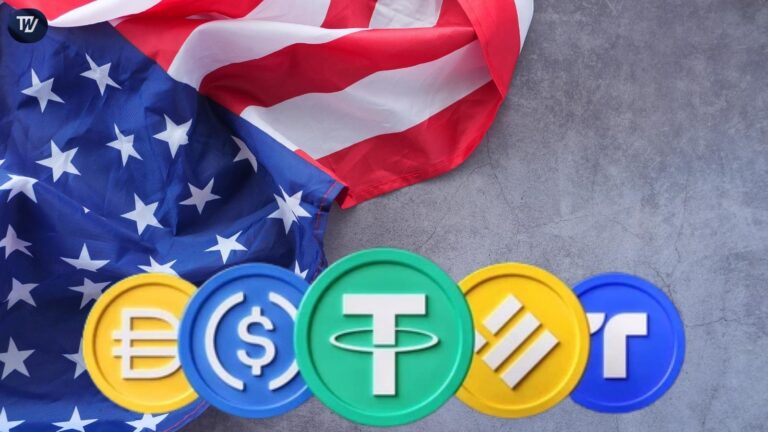
The US National Credit Union Administration (NCUA) has announced a plan to establish a federal licensing system for payment stablecoin issuers that operate via subsidiaries of credit unions. This is a notable development towards the regulation of stablecoins in the US.

The NCUA’s proposal aligns with the goals of the Guiding and Establishing National Innovation for Stablecoins (GENIUS) Act, which seeks to establish a regulatory framework for stablecoin issuers.

Licensing Requirements and Process

According to the proposed regulation, any payment stablecoin issuer that is a subsidiary of an insured credit union should first obtain an NCUA permitted payment stablecoin issuer (PPSI) license if they plan to issue coins.

US
Source: PYMNTS.com

Federally insured credit unions would be restricted from investing in, or lending to, payment stablecoin issuers unless those issuers hold a NCUA PPSI license. The NCUA would have 120 days to either approve or deny an application, and in case the agency fails to take any action within that period, the application would be considered approved by default.

Also Read: Sui’s Price Climbs as Canary Capital Files for first ETF in SEC filing

Key Features and Implications

The proposal adopts a fundamental provision of the GENIUS Act that mandates insured depository institutions, such as credit unions, to issue payment stablecoins via their separately supervised subsidiaries, which comply with uniform federal standards.

The NCUA would not be allowed to reject a substantially complete stablecoin application simply due the stablecoin is issued on an open, public, or decentralised network.

Also Read: Top Lawyers Reveal Why the SEC Is Stalling Crypto Lawsuits Like Ripple’s

Regulatory Landscape

The GENIUS Act represents landmark legislation that sets up a thorough federal framework for the issuance of payment stablecoins. The NCUA’s proposal plays a vital role in the implementation of this framework.

After the NCUA publishes the proposal in the Federal Register, stakeholders will have 60 days to submit their comments before the NCUA can either finalise or revise the licensing regime.

Aldo Read: Cryptocurrency worth over $102M seized by secret service

Filed Under: Industry, Cryptocurrency News

About Ananthyka J

Ananthyka J is a market reporter at Tronweekly, reporting on cryptocurrency news. She covers cryptocurrency markets, blockchain technology, and digital asset regulation, focusing on Bitcoin, Ethereum, DeFi, altcoins, and crypto policy. Her reporting emphasizes clear and accurate market coverage, including crypto market movements, regulatory developments, and blockchain adoption. She holds a BA in Journalism and Mass Communication and an MA in Communication and Media Studies. She has also completed multiple media internships, follows strict editorial and fact-checking standards, and discloses potential conflicts of interest when reporting.

🔗 Connect on LinkedIn

Twitter LinkedIn

Primary Sidebar

Recent Posts

  • SpaceX Valuation Hits $2.5T: Huge Impact On Crypto Capital June 16, 2026
  • Upbit and Bithumb Expand Listings with SPX6900 and Spacecoin June 16, 2026
  • Arthur Hayes: Ethereum Surge Shocks Crypto Market 2026 June 16, 2026
  • Standard Chartered Bets Big On DeFi Growth And RWA By 2026 June 16, 2026
  • Ethereum’s Staking Ratio Reaches 32.7% ATH June 16, 2026

Footer

News

  • Latest News
  • Altcoin News
  • Bitcoin (BTC)
  • Blockchain
  • Tron (TRX)
  • World

Digest

  • Meet the Founder
  • Price Winning Article
  • DeFi
  • Cyber Security
  • Crypto Scam

Industry

  • Project Review
  • Technology
  • Fintech
  • Tron Exchange
  • New in Town

Tron Universe

  • Event and Tron Parties
  • New in Town
  • Tron Tokens

FOLLOW US

  • Facebook
  • Telegram
  • Twitter
  • Linkedin

Subscribe US

Editorial Policy | Privacy Policy | Disclaimer | Terms and Conditions | Masthead

Copyright © 2026 · Tron Weekly. All Rights Reserved. NOTE: Tron Weekly is an independent crypto news site that adheres to the strict journalism policy anchored on transparency, trust, and objectivity, we have no affiliation with the TRON Foundation, its founder Justin Sun or any other cryptocurrency firm.