• Skip to primary navigation
  • Skip to main content
  • Skip to primary sidebar
  • Skip to footer
  • About TronWeekly
  • Write for us
  • Terms and Conditions
  • Privacy Policy
  • Disclaimer
  • Contact
  • All Posts
  • Advertise

TronWeekly

Crypto World News

  • Home
  • Latest News
  • Opinion
    • Education
    • Best TRON Wallets
    • Beginner’s guide to TRON
    • Tron Tokens
    • Market Analysis
  • Industry
    • Tron Exchange
    • Project Review
  • Press Release
  • Bitcoin (BTC)
  • Ripple (XRP)
  • Advertise
  • About TronWeekly
    • The Team
    • Editorial Policy
    • Write for us
    • Privacy Policy
    • Disclaimer
    • Terms and Conditions
    • Contact
You are here: Home / Cryptocurrency News / A New Era for Ethereum: How Based Rollups Could 100x ETH Demand

A New Era for Ethereum: How Based Rollups Could 100x ETH Demand

By Mishal Ali | Edited By Sahana Kiran,September 11, 2024, 9:54 PM

Ethereum

In a recent analysis, prominent crypto analyst Adam Cochran presented a compelling case for how Based Rollups could revolutionize the Ethereum network and significantly enhance the long-term demand for Ether (ETH). According to Cochran, the introduction of Based Rollups could fundamentally shift incentive structures, potentially leading to a staggering 100x increase in ETH’s demand.

1/14

Based Rollups directly impact the monetization of ETH, by making a pretty fundamental change to incentive structures – which could easily 100x the long term demand for ETH.

Here's how that works: pic.twitter.com/ynFchtQT3k

— Adam Cochran (adamscochran.eth) (@adamscochran) September 10, 2024

The concept of Based Rollups hinges on their innovative economic model, which allows layer 2 (L2) solutions to access the processing power of existing layer 1 (L1) validators instead of merely paying for data availability (DA).

This change could fundamentally reshape the blockchain economy, as processing transactions are often the most lucrative aspect of blockchain operations. Cochran notes that while ETH has historically underpriced its DA value, validators can earn additional rewards by participating in Based Rollups, which could create significant new revenue streams.
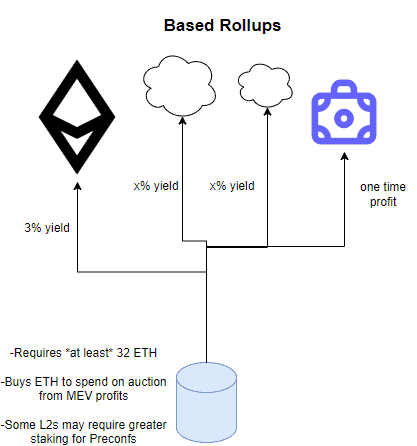
For validators, this means enhanced staking yields that are less correlated with the total amount of ETH locked up in the network. In scenarios where numerous Based Rollups emerge, its validators could achieve yields of 15% or more, potentially leading to supply shocks in the market.

Mechanisms for Monetizing Ethereum

Additionally, the monetization of ETH could be expanded through mechanisms like miner extractable value (MEV) auctions, where validators bid in ETH for the chance to process transactions, thereby enabling them to realize one-time profits.
Cochran outlined several possible models for these Based Rollups, including preconfirmation staking, which requires validators to stake more ETH than the value of transactions they confirm, and proof of burn, which mandates that validators burn ETH to gain access to L2 validation opportunities. These mechanisms could significantly increase liquidity access and drive up gas demand through a greater volume of cross-market settlement transactions.

Ultimately, Based Rollups promises to enhance the value accrual of ETH in two primary ways: by making regular ETH staking more lucrative and facilitating competitive bidding for idle processing resources on the Ethereum network without inflating L1 gas fees.

This alignment of incentives between L1 validators and L2 solutions may lead to Ethereum’s minimum viable issuance approaching 0%, while validator yields could remain robust at 4% to 8%.
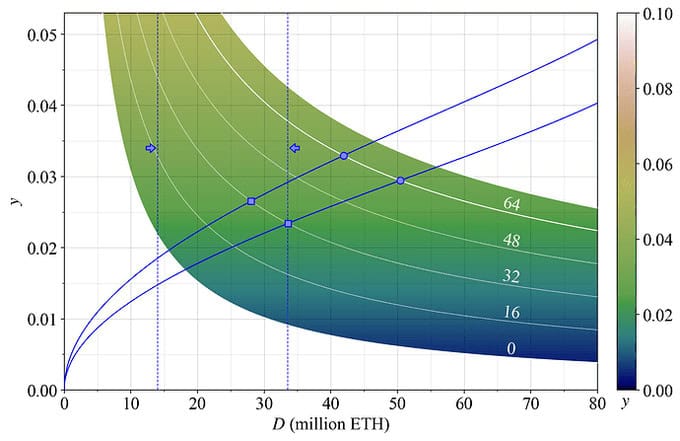
Nevertheless, the potential for Based Rollups to drive substantial economic changes is significant. By aligning the interests of various stakeholders, Cochran believes that Ethereum could see transformative growth, positioning ETH as a potentially high-value asset in the coming decade.

Related Reading | DOGE Gains 6% as Analysts Predict $0.15 Breakout Amid Bullish Signals

Filed Under: Cryptocurrency News, Altcoin News

About Mishal Ali

Mishal Ali is a Policy and Regulations Reporter at Tron Weekly with over four years of experience covering the global crypto and blockchain space. Her reporting focuses on crypto regulations and policy, alongside Bitcoin, Ethereum, altcoins, DeFi, NFTs, Web3, Layer 2 solutions, and AI-driven crypto use cases. She also tracks Ripple-related developments, enforcement actions, licensing updates, and crypto scams and fraud trends, helping readers understand regulatory and compliance risks.

🔗 Connect on LinkedIn

Twitter LinkedIn

Primary Sidebar

Recent Posts

  • Zcash Price Breaks Key Resistance as Bulls Extend Momentum Toward $800 Upside May 10, 2026
  • Strategy Bitcoin Sales May Occur Under Financial Conditions: CEO Explains May 10, 2026
  • NSW Police lead Australian Bitcoin seizure worth $4.1 million investigation May 10, 2026
  • XRP Price Analysis: Break Above Resistance Opens $1.4700 Upside Target May 10, 2026
  • Bitcoin Supply Shift Analysis Shows 78.3% BTC Held by Long-Term Wallets May 10, 2026

Footer

News

  • Latest News
  • Altcoin News
  • Bitcoin (BTC)
  • Blockchain
  • Tron (TRX)
  • World

Digest

  • Meet the Founder
  • Price Winning Article
  • DeFi
  • Cyber Security
  • Crypto Scam

Industry

  • Project Review
  • Technology
  • Fintech
  • Tron Exchange
  • New in Town

Tron Universe

  • Event and Tron Parties
  • New in Town
  • Tron Tokens

FOLLOW US

  • Facebook
  • Telegram
  • Twitter
  • Linkedin

Subscribe US

Editorial Policy | Privacy Policy | Disclaimer | Terms and Conditions | Masthead

Copyright © 2026 · Tron Weekly. All Rights Reserved. NOTE: Tron Weekly is an independent crypto news site that adheres to the strict journalism policy anchored on transparency, trust, and objectivity, we have no affiliation with the TRON Foundation, its founder Justin Sun or any other cryptocurrency firm.