- Bitcoin network activity hits a yearly low, signaling a consolidation phase rather than the end of the current bull run.
- Resistance at $92,000 triggers a pullback, with $86,000 and $73,000 key support levels shaping near-term price movements.
- Macro trends and halving cycle data suggest a 2025 peak, making Q1 a strategic accumulation phase for Bitcoin and altcoins
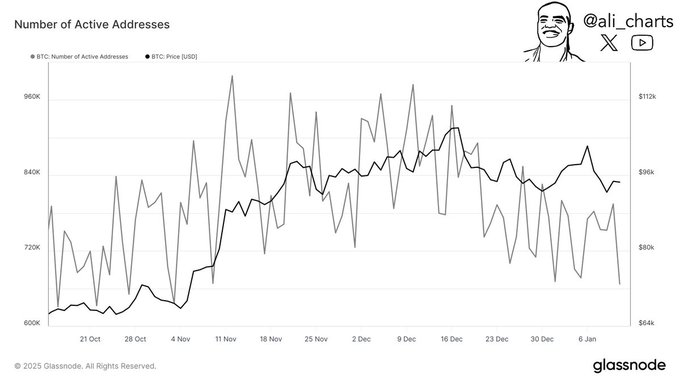
The number of transactions on the Bitcoin network reached its lowest point since November 2024 with only 667,100 active addresses. However, it happens at the same time as a notable price correction; however, experts believe that it is part of a general correction rather than the end of the current bull market.
Source: Ali
Bitcoin Consolidation Before Rise
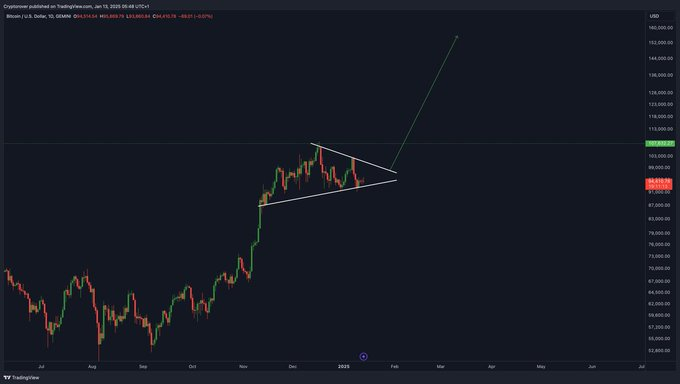
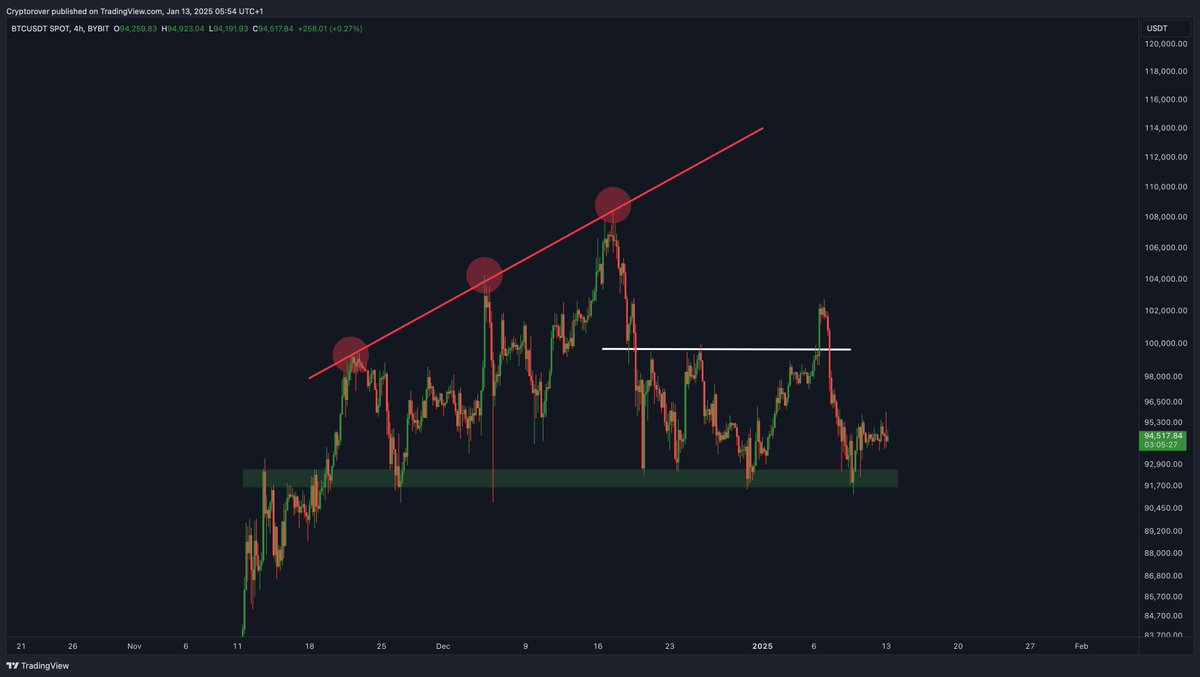
The cryptocurrency recently faced resistance at the $92,000 level, which has previously acted as a support level and a resistance level in previous cycles. A rejection at this level led to a pullback which formed what Rover described as a descending triangle. This pattern points to further near-term falls if support is broken again. If the bearish view comes into focus, levels of interest are $86,000 and $73,000.
Source: CryptoRover
However, short term volatility is a clear possibility and there are still many signs pointing to the upturn of the market. The Pi Cycle Top Indicator which is used to predict the market tops does not indicate that the price of Bitcoin has peaked. Also, the Bitcoin halving cycle suggests that the market may reach its pinnacle during 2025 most probably between the months of March and November. The current decline may be consolidation phase as historical analysis indicate that consolidation is often followed by a rise.
Bullish Long-Term Outlook
Bitcoin price behavior in the short term can be also influenced by macro factors. The S&P 500 declined in recent days and this has weighed on BTC because the cryptocurrency is increasingly being linked to traditional markets. But Bitcoin is still trading near the key support levels inside the symmetrical triangle, signaling that the bulls are still in control of the market.
While BTC usually sets the trend for altcoins, these other currencies have not yet seen the same level of price appreciation in 2025. Observers of the market have pointed out that the first quarter of a year after Bitcoin halving tends to see altcoins run up in value, so the current levels could be attractive to buyers. For example, Ethereum rises after a bullish breakout from a bull flag pattern.
On the longer timeframe, the Bull case for Bitcoin is robust, with liquidity metrics showing that a lot of the downward pressure has been metabolized by the market. Rover has projected a possible ascent to $99,000, with possible short liquidations causing additional increases.
Source: CryptoRover
The broader market is looking for a spark that will propel the next phase of the BTC ascent. People have high expectations from the new U.S administration policies and their impact on cryptocurrency adoption. As the market consolidates, many believe this is the beginning of the next major bull cycle and therefore a good time for investors to make strategic investments.