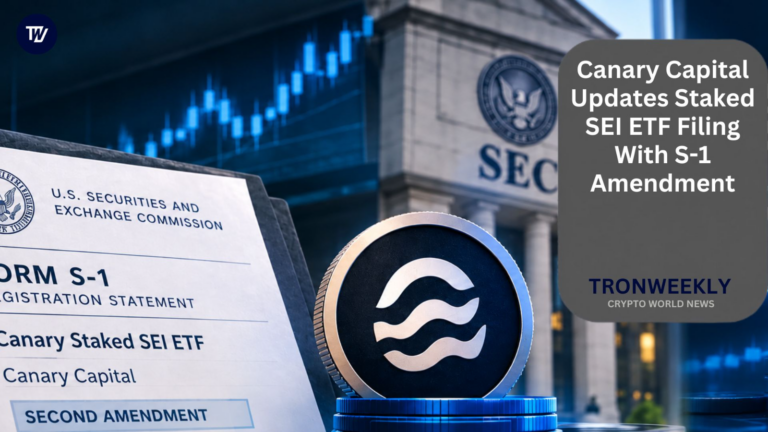
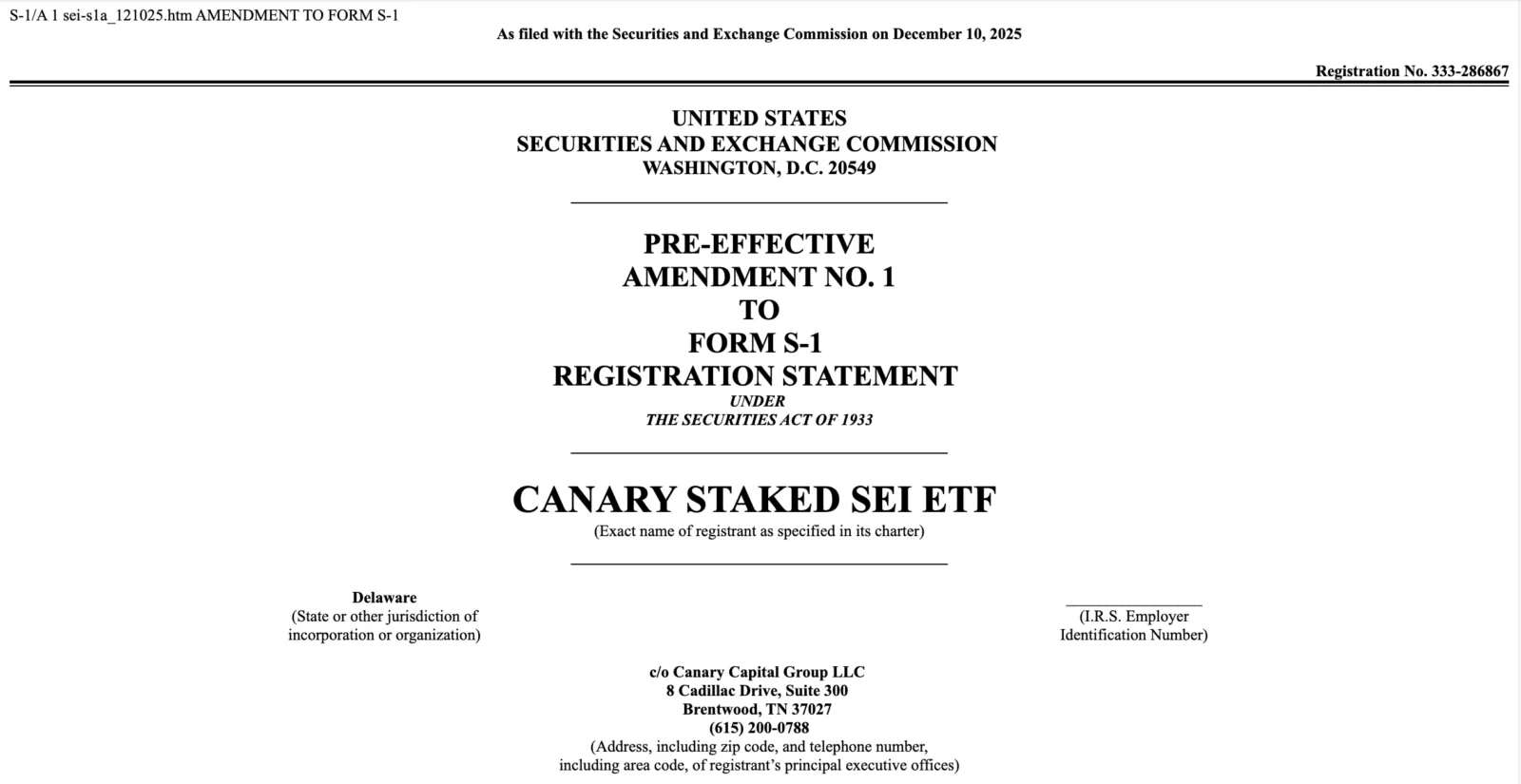
Canary Capital has filed Pre-Effective Amendment No. 2 to its S-1 registration statement for the proposed Canary Staked SEI ETF. The September 15 filing outlines a spot SEI exchange-traded product that would also seek staking rewards. The proposed fund is designed to list on Cboe BZX Exchange, pending regulatory approval.
The filing outlines a structure that would give investors exposure to SEI held by the Trust while allowing the fund to earn additional SEI through staking. The proposed ETF is designed to list on Cboe BZX Exchange, although the registration statement remains preliminary and does not mean the fund has received SEC approval.
Table of Contents
Also Read | LTC Price Holds Key Channel Resistance as ETF Developments Fuel Hope
Canary Details Proposed SEI ETF Structure
The Canary Staked SEI ETF will be under the sponsorship of Canary Capital Group LLC and will be organized as a Delaware statutory trust. The main aim of the ETF will be to give investors exposure to the SEI owned by the trust, while another aim will be to obtain further SEI through the stake of the network’s proof-of-stake validation process.
The CoinDesk SEI Benchmark Rate 60m NY Rate will be used to derive the ETF’s net asset value. The rate is a 60-minute time-weighted average price using SEI traded on the leading exchanges. This arrangement is aimed at providing a reference price for the valuation of the SEI in the ETF.
The ETF will give investors spot exposure without any form of derivative or leverage. The shares will be a beneficial interest in the trust and will be able to trade through the exchange. In the filing, the shares will trade on Cboe BZX, but the ticker is yet to be determined.
Staking Forms Core Part of Fund
Staking is another key component of the structure proposed by Canary. Under normal circumstances, the Sponsor will stake almost all the Trust’s SEI, apart from that SEI which will be used for redemptions, for covering expenses or liquidity requirements, and for the protection of the assets of the Trust.
The Trust will employ one or several staking providers instead of operating validator nodes directly. The staking providers will perform the job of validating transactions, and the Trust will receive a reward for its stake in SEI. Staking fees will decrease the amount of rewards that will be received by the fund.
Such an approach is important since this combination of spot exposure to SEI and the generation of additional SEI through the staking mechanism provides the basis for another investment goal of the ETF – exposure to additional SEI through staking.
BitGo Handles SEI Custody
The amended structure would have BitGo Trust Company as the custodian of the Trust’s SEI. The filing explains that BitGo would be holding the SEI of the Trust, with U.S. Bank being the cash custodian and U.S. Bancorp Fund Services providing administration and transfer-agent services.
Custody is important in relation to the proposed ETF since it would be holding real SEI and not just a derivative of the asset. It discusses how the digital assets would be held and moved around, and the Trust would use authorized participants to assist in the issuance and redemption of shares by using SEI or cash.
In the case of this Trust, share creation and redemption would be done in baskets of 10,000 shares. In this regard, authorized participants would be depositing either SEI or cash when creating shares and receiving SEI or cash when redeeming shares.
SEC Effectiveness Remains Key Next Step
The latest amendment does not provide a confirmed launch date for the SEI ETF. In particular, in the SEC filing, it is clearly stated that the preliminary prospectus is not complete and is subject to change. It also says the securities cannot be sold until the registration statement becomes effective, leaving regulatory effectiveness as a key next step.
Also, the filing reveals that SEI is the native token of a Layer 1 network that features fast transactions, decentralized finance, trading applications, tokenization, and other uses of blockchain technology. SEI token supports proof-of-stake validation, governance, and transaction fees on the network.
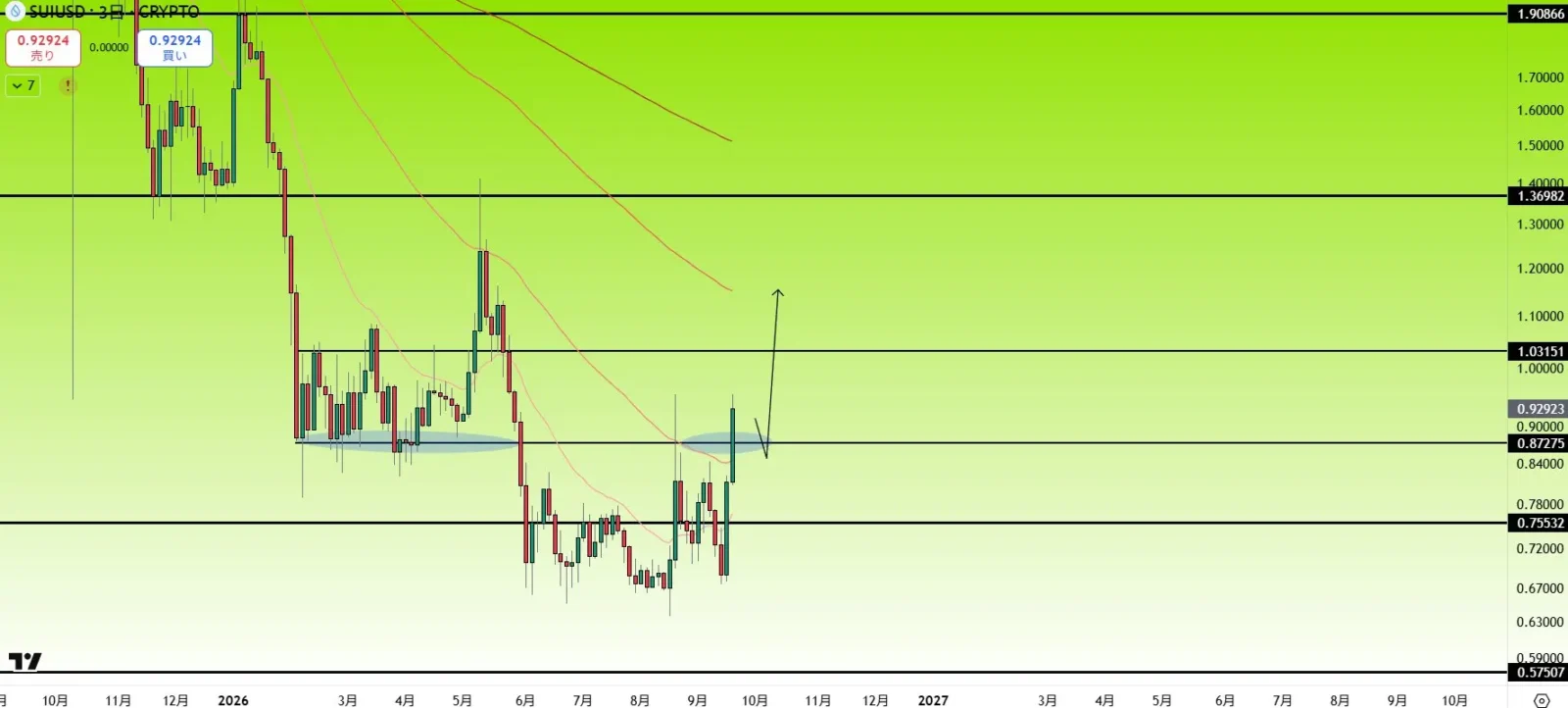
For additional market context, Ultimae’s Post discusses a separate SUI setup rather than SEI. According to the post, the SUI token managed to break above its resistance near $0.87, and $0.87 becomes the level to watch for support, while $1.00 and $1.37 are noted as possible levels. As the post refers to the SUI token, it does not give any technical overview of SEI.
Therefore, in the case of SEI, the immediate implication should focus on the structure of the product rather than the market launch. Canary has already provided all details about the spot holdings, staking, custody, valuation benchmark, and redemption process. The next important event will be the effectiveness of the SEC’s registration statement.
Also Read | TRX Price Eyes $0.36 as Derivatives Activity and Tron Treasury Demand Rise