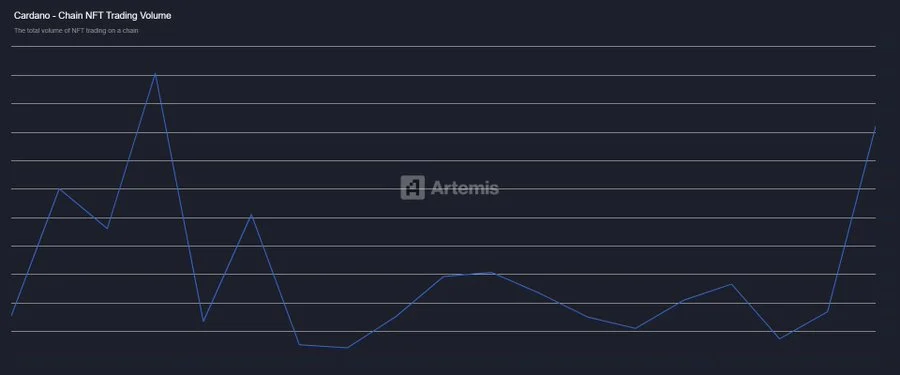
Cardano’s NFT ecosystem has recorded a sharp increase in activity in 2026, with trading volume reportedly rising by 434% since the beginning of the year.
The latest figures, shared by staking platform Everstake using Artemis data, point to renewed interest in Cardano-based digital collectibles despite broader volatility in the crypto market. The surge has also sparked discussions about whether NFT activity is beginning to return across multiple blockchain networks.
Cardano NFT Market Shows Strong Recovery
The 434% increase in the volume of NFT transactions on the Cardano network represents one of its most robust phases of growth seen in a long time.
Activity had been declining significantly amid the decline in the entire crypto industry; however, the last few months seem to have indicated the revival of interest among traders and collectors. Increased wallet activity and transaction counts have also accompanied the rise in NFT volume.
Market observers say the recovery reflects improving engagement within the Cardano ecosystem rather than short-term speculation alone. NFT collections on the network have continued to attract communities focused on gaming, digital art, and utility-based assets. This broader participation may be helping sustain trading activity across marketplaces operating on ADA.
Also Read: Cardano Price Analysis: Will $0.255 Break Spark a Strong Recovery?
Growing User Participation Drives Network Activity
Increased NFT trade volume usually denotes higher interaction between various blockchain applications, and it seems like ADA is gaining from the trend. With an increase in the number of transactions involving NFT purchases, sales, and transfers, more transactions are made on the platform. This brings about increased need for wallets and marketplaces within the blockchain.
Analysts also point to user retention as a key factor behind the recent growth. Rather than relying only on new users entering the market, some existing participants appear to be returning to NFT trading after months of reduced activity. Continued engagement from established communities can help maintain consistent trading levels even during uncertain market conditions.
NFT Activity Expands Beyond Ethereum and Solana
Historically, Ethereum and Solana were the leaders in the NFT space; however, some of the recent tendencies point out that there might be a change in this situation.
In particular, the growth seen in the Cardano network shows that NFT ecosystems are evolving into being less centralized on specific blockchains. Lower transaction costs and community-driven projects have contributed to this shift.
Moreover, the rise in volume of Cardano NFTs is an indicator of changes in the preferences of those traders who seek other blockchain networks for transactions.
For example, some users might prefer blockchain networks that feature relatively low fees and lower congestion levels than those of bigger blockchains. In such circumstances, the development of ADA is expected to be one of the major NFT blockchains by 2026.
Also Read: Cardano RWA Expansion Sparks Bullish ADA Outlook Toward $0.27