
The Commodity Futures Trading Commission (CFTC) has opened a rulemaking process for leveraged retail crypto trading, marking its first step toward new crypto market rules. The October 5 action follows the Senate’s September failure to advance the CLARITY Act.
Table of Contents
CFTC chair Michael Selig said the agency plans to use existing authority while Congress has not enacted a broader federal market structure law. Advanced Notice of Proposed Rulemaking for Regulation Crypto Asset Transactions and Regulation Crypto Asset Markets (CAM) has been released by the CFTC.
Selig also announced the initiative in a video posted on X. In a separate statement, he said Congress considered legislation to clarify crypto regulation but failed to send a market structure bill to the president’s desk.
Who Falls Under Crypto Market Rules for Leveraged Trading?
The proposed crypto market rules would start with those concerning the retail commodity transactions which involve leverage, margin, or finance. These kinds of transactions could be eligible for Section 2(c)(2)(D) of the Commodity Exchange Act.
Regulation CTX aims to provide further clarity in applying the provisions of this section to crypto instruments. The CFTC has also asked for information regarding abusive behaviors, compliance requirements, and other matters related to the covered transactions.
Also Read: Illinois Crypto Tax Delay Heads to Court as July 2027 Start Looms
CAM Creates a Federal Registration Option
CAM regulation involves the creation of a new registration subcategory in crypto asset markets. According to the CFTC, it is a specially designed category of designated contract market registration for exchanges dealing with CTXs.
The proposed crypto market regulations would be a federal solution for exchanges looking to trade covered products. It does not mean that all American crypto exchanges should register at the CFTC.
According to Selig, the CFTC has no authority to regulate all crypto platforms as such unless Congress acts on it. He says that the proposed framework applies only to those exchanges willing to run under the federal market system.
Spots are fundamentally different from leveraged transactions in CTX. According to Selig, CAM platforms can offer leveraged trading to retail clients under the CFTC’s jurisdiction.
Why Is the CFTC Focusing on Customer Protection?
Selig tied the crypto market rules to the problems associated with the failure of companies like FTX. Regulations, according to him, should be able to prevent fraud instead of punishing only after committing fraud.
In addition to that, he compared the federal market regulation with state money transmission licensing. He argued that state money transmission licensing was primarily designed for payment services and not for markets.
There were federal standards regulating manipulation, abusive trading, and customer assets at federal trading venues. Furthermore, he also pointed out that the CFTC-registered unit of FTX had customer assets in segregated form while other units filed for bankruptcy.
This was one of the arguments made by the CFTC in favor of the proposed crypto market rules. It was looking for ideas about how to prevent abusive behavior under a uniform national regime.
SEC Actions Add Regulatory Context
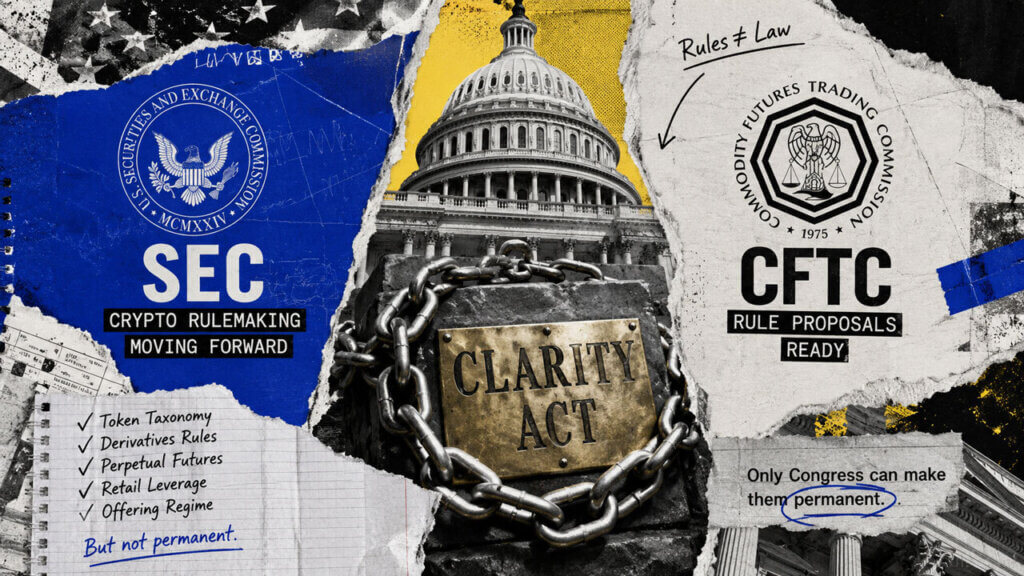
This move by the CFTC comes after an SEC interpretive statement on March 17 in which the CFTC concurred. It classified cryptocurrencies as falling into groups such as digital commodities, digital collectibles, digital tools, stablecoins, and digital securities.
In addition, the interpretive statement also outlined situations where a non-security cryptocurrency could fall under investment contracts. This interpretive statement provided a broad regulatory framework for the CFTC cryptocurrency regulations.
This was followed up by the SEC’s Regulation Crypto Assets statement of August 18. It proposed registration exemptions and conditional safe harbors for investment contracts that involved crypto assets.
Rulemaking Still Faces Several Steps
The October 5 notice does not impose any imminent obligations upon exchanges. Written submissions will be accepted within 60 days of publication of the ANPRM in the Federal Register.
The CFTC may make a determination based on such input regarding issuing crypto market rules. Any such regulations will then follow at a later stage of the rulemaking process.
There is also Congress involved in the ongoing regulatory discussion. The motion to proceed for the CLARITY Act has not invoked cloture in the Senate on September 15 by a margin of 49-50 votes.
At this point, the crypto market rules apply only to leveraged retail transactions covered by CFTC jurisdiction. The establishment of the mandatory framework of spot crypto marketplaces will require legislative approval, according to Selig.
Also Read: Coinbase Adds U.S. Stock Options in 1-Platform Trading Push