Circle generated approximately $1.4 billion in revenue and reserve income during the first half of 2026, but 59% went toward USDC distribution partners and transaction costs. The stablecoin issuer highlighted these figures as part of its case for investing in the infrastructure behind USDC, which processed more than $36 trillion in onchain transaction volume during the period. The numbers illustrate both the scale of USDC adoption and the cost of maintaining its global payment network.
Table of Contents
Circle Spent $819M on USDC Distribution and Transactions
In its October 16 blog post, Circle said it paid approximately $819 million to distribution partners and covered transaction costs in the first half of 2026. Another $473 million, or roughly 34% of revenue, went toward licensing, banking relationships, settlement liquidity, compliance and product development. The USDC issuer said about 7% remained as net profit.
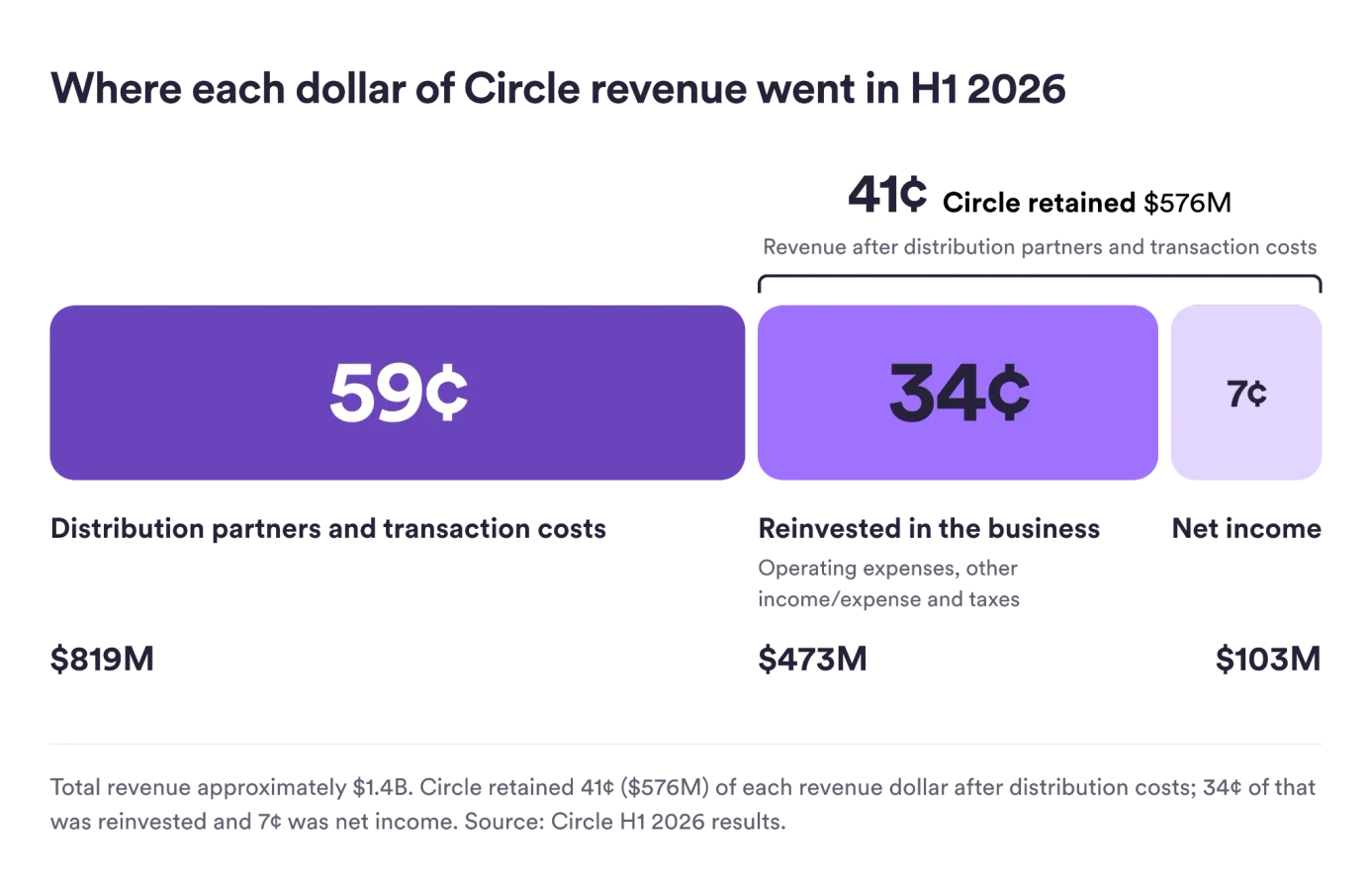
These expenses reflect a business model that relies on partners to make USDC available across exchanges, wallets, fintech companies and payment networks. Distribution arrangements help expand circulation, but they also reduce the revenue the USDC issuer retains from its stablecoin operations. The company argues that funding compliance, liquidity and settlement infrastructure is necessary to support reliable redemptions and wider adoption.
Also Read: Circle 1B USDC Mint Solana: $3.25B Surge Fuels Strong $15.2B
USDC Processes $36T as Stablecoin Competition Intensifies
Circle reported that USDC processed more than $36 trillion in onchain transaction volume during the first half of 2026. It also said USDC accounted for approximately 77% of global stablecoin transaction volume in June, up from 60% a year earlier. These are Circle-reported figures, and transaction volume measures activity rather than the total value of USDC outstanding.
The USDC issuer’s latest second-quarter financial results filed with the SEC provide additional context. USDC in circulation reached $73.3 billion at the end of June, increasing 19% year over year, while quarterly onchain transaction volume rose 151% to $14.8 trillion. The figures indicate expanding use, although transaction growth alone does not establish how much revenue each transaction generates.
Circle Offers Free Near-Real-Time USDC Redemptions
Circle said eligible customers using the Circle Payments Network and Circle Platform can access free, near-real-time USDC redemptions around the clock. Standard redemptions through banking rails can take up to two business days, according to the company. Faster settlement requires liquidity to be available across banking relationships even when conventional banking systems are closed.
The service could make USDC more useful for payment firms, remittance providers and businesses moving money internationally. However, maintaining readily available liquidity and supporting regulated operations comes with costs that the USDC issuer says it must continue funding. The commercial question is whether faster settlement and broader payment access can attract enough recurring activity to justify those investments.
Falling Reserve Yields Remain a Risk for Circle Revenue
Circle’s financial performance also depends on the income earned from reserves backing USDC. Its SEC filing showed that the average reserve return rate fell to 3.5% in the second quarter of 2026 from 4.1% a year earlier. Lower yields can constrain reserve income even when USDC circulation grows, making payment services and other revenue sources increasingly relevant.
The USDC issuer is therefore balancing two objectives: expanding USDC adoption while maintaining the infrastructure and partnerships needed to support it. Its reported figures show rising circulation and transaction activity, but also substantial distribution and operating costs. Future results will help reveal whether growth in payment utility and additional services can improve the share of revenue the company retains.
Also Read: Circle and Tereina Bring USDC and EURC Into SAP Enterprise Payments