Senate bipartisan talks on the Clarity Act died over last-minute wrinkles, and tomorrow’s markup is reportedly set to be partisan, reports Eleanor Terrett.
The failure to reach consensus highlights new cloudiness over digital assets regulation as legislators struggle to find common ground in a unified way forward for cryptocurrency regulation, blockchain innovation, and decentralized finance.
Jurisdictional Disputes Derail Clarity Act Negotiations
The Clarity Act sought to create clear jurisdictional walls between the SEC and CFTC on digital assets, finally settling long-time compliance ambiguities. Negotiations broke down when members could not reach compromises on classes of tokens, stablecoin reserves, and who should oversee DeFi protocols. Moving to a partisan markup greatly damages short-term prospects for passage, but highlights wider policy cracks.
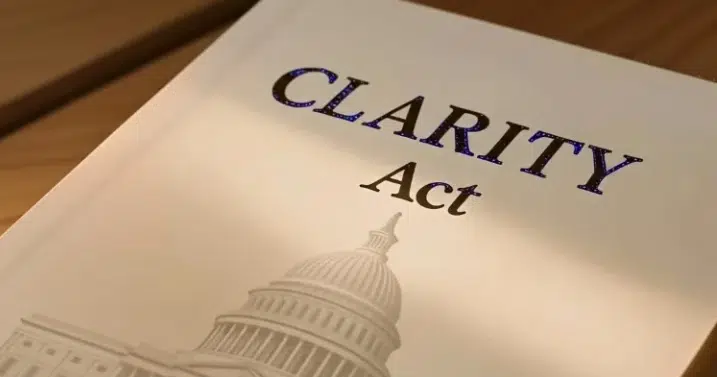
Also Read: CLARITY Act’s 309-Page Crypto Market Overhaul
Market and Industry Implications
Persistent regulatory ambiguity still discourages blockchain developers, exchanges, and institutional actors from seeking legal clarity. A clear set of regulations might encourage innovation around Web3 infrastructure, smart contracts, and custody solutions. But if such uncertainty persists, crypto companies could scale down U.S.-based operations at the expense of investment into layer-1s, non-fungible tokens (“NFTs”), and on-chain settlement protocols connected to real-world assets.
Also Read: CLARITY Act Heads to Senate Vote as Crypto Industry Awaits Clear US Regulations
Regulatory Outcome
Absent bipartisan buy-in, the bill’s fate will depend on committee modifications and floor bargaining. Virtual currency ecosystem players will be looking for ways in which the proposed revisions tackle consumer protection, illicit financial activity, and innovation competitiveness concerns. The results will be telling for where the States stand on digital asset markets, blockchain proliferation, and integration with legacy financial services.
Really, the Clarity Act’s evolution will determine if Washington can meet the competing goals of regulatory clarity and blockchain progress. During committee negotiations and floor deliberations, digital assets industry players will have their eyes on the revised language to gauge if the bill can strike an adequate balance among consumer protections, anti-money laundering policies, and Web3 growth incentives. How this plays out will set the regulatory precedent for crypto exchanges, custodians, and DeFi protocols, and communicate the US approach to digital asset adoption in total.
Also Read: Clarity Act Faces Setback as Law Enforcement Concerns Threaten Congressional Progress