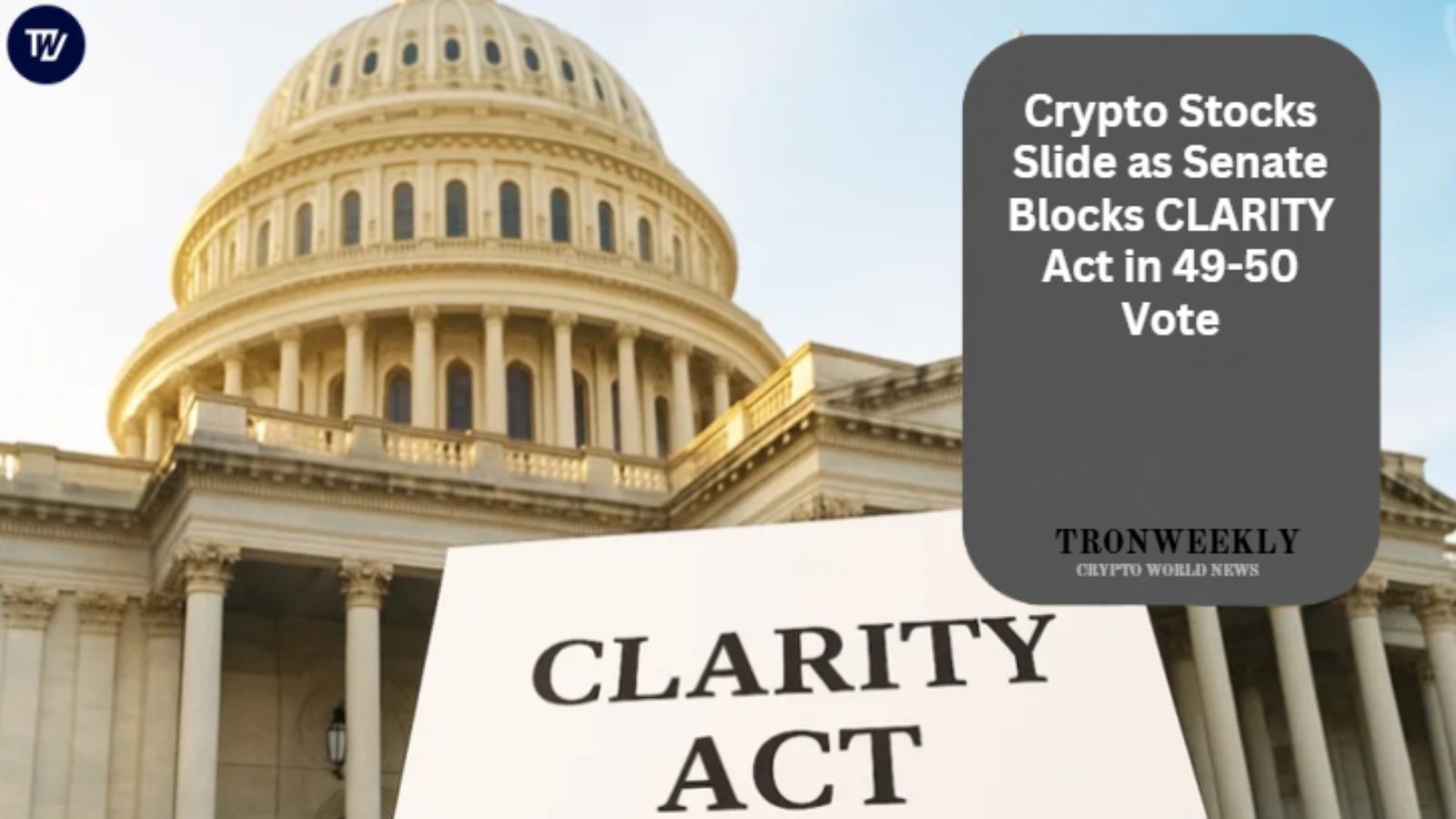
Crypto-linked stocks fell sharply on Tuesday after the U.S. Senate failed to advance the CLARITY Act, reviving concerns over the timeline for comprehensive digital asset regulation. Coinbase and Circle led the decline, while Bitcoin treasury firms and miners also moved lower as investors reassessed the near-term prospects for congressional market-structure legislation.
The Senate vote had a major impact on those corporations that had business relations with digital asset regulation. Shares of Coinbase slumped by 9.9%, and Circle dropped by 11.5%. Shares of American Bitcoin plunged by 8% while Strategy and Strive slumped by 5%. Other miners included Riot Platforms, CleanSpark, Hut 8 and IREN.
Table of Contents
Also Read | CLARITY Act Faces Last-Minute Counterproposal Before Vote
Senate Vote Stalls Crypto Market Structure Bill
A failure by the Senate to invoke cloture means the CLARITY Act will not make progress towards being put up on the floor. The process did not pass due to the failure to achieve the necessary 60 votes required to defeat the expected filibuster, as per a recent post by Eleaner Terrett. This comes after almost a year of debate over the way federal agencies should classify various types of digital assets.
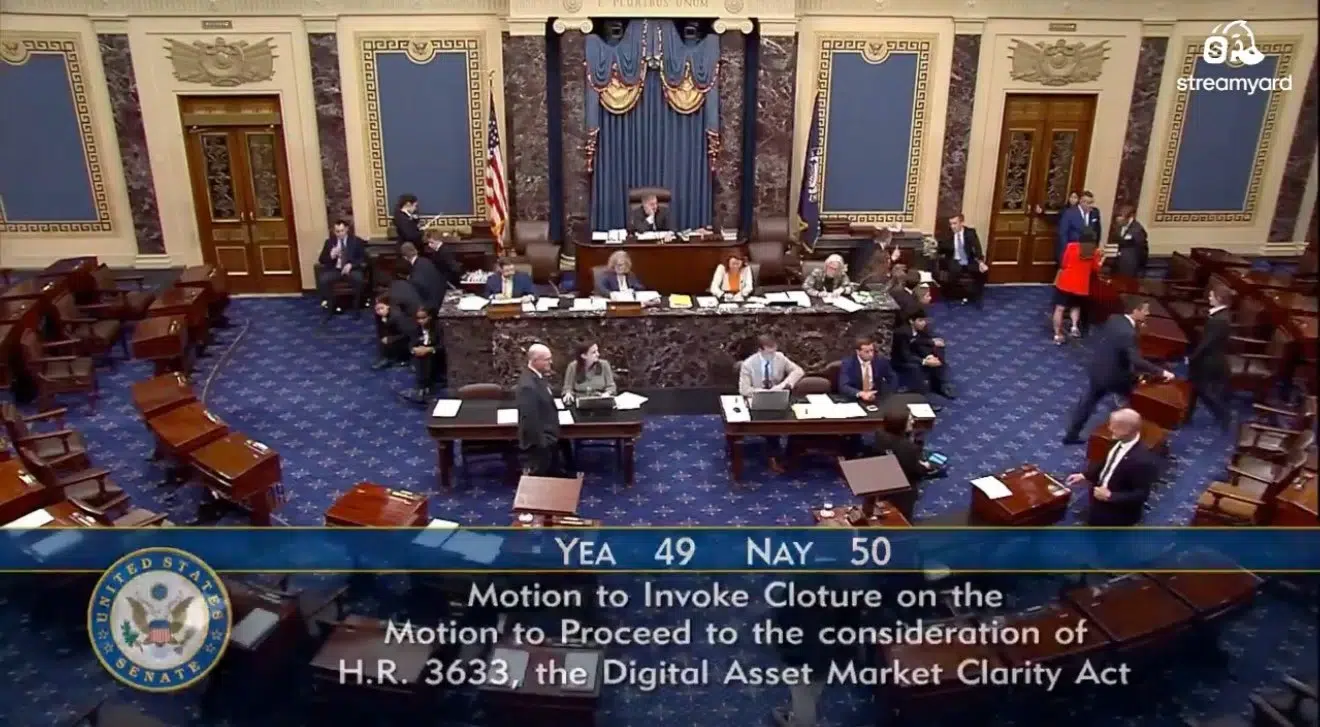
The Act aims to clarify the jurisdictions of the Securities and Exchange Commission and Commodity Futures Trading Commission. It will ensure there is a federal regulatory framework for digital assets and clarify which activities and assets are regulated by each agency. Those supporting the Act have said that doing so will create clarity for exchanges, developers, investors, and financial institutions.
However, talks collapsed because of ethics and other issues included in the Act. The Senate Democrats had asked for more requirements regarding the use of cryptocurrencies by individuals. The Republicans have stated that the amended version of the legislation includes more than 120 requests from the Democrats.
Crypto Stocks React to Regulatory Setback
The reaction from the market highlighted how important it is for investors to be assured of regulatory certainty. While Coinbase and Circle were exposed to the crypto market in the U.S., the treasury companies and miners were exposed to the price of Bitcoin. Therefore, their respective declines were not limited to only firms working towards the legislative proposal.
There was also a decline in other cryptocurrencies because of the failure of the bill. For instance, XRP fell sharply following the Senate vote, while there was another fall in the value of Ethereum. This decline was evidence of how the cryptocurrency market was reacting to the events at Capitol Hill. It is worth noting that before the Tuesday vote, there was a positive reaction among the investors to the changes in the wording of the CLARITY Act.
Armstrong and Lawmakers Push Competing Views
Coinbase CEO Brian Armstrong had repeatedly urged lawmakers to approve the legislation. Before the vote, he argued that the United States faced a choice between supporting domestic crypto innovation and allowing other jurisdictions to take the lead. His comments highlighted the industry’s focus on regulatory certainty as companies expand their U.S. operations.
Senator Cynthia Lummis, a leading Republican supporter of the bill, argued that lawmakers had already incorporated extensive Democratic requests. She described the legislation as a bipartisan effort and warned that rejecting the procedural vote could jeopardize negotiated provisions involving consumers, ethics, and financial innovation. Her comments reflected the Republican position on the remaining disagreements.
Democratic opposition centered heavily on ethics and enforcement. Senator Elizabeth Warren argued that the revised provisions did not sufficiently address potential conflicts involving President Donald Trump and his family’s cryptocurrency interests. Other Democrats also raised concerns involving consumer protection, illicit finance, and the scope of regulatory safeguards.
Following the failed vote, Strategy co-founder Michael Saylor highlighted on X, “The only clarity you need is Bitcoin.”
What Happens Next for the CLARITY Act?
The failed cloture vote does not eliminate the possibility of further negotiations, but the legislative calendar creates a significant constraint. Congress has limited time before midterm election campaigning intensifies, while the current legislative session also faces other priorities. The bill would need renewed bipartisan support before advancing through the remaining Senate process.
The immediate takeaway for crypto markets is that regulatory uncertainty remains unresolved. Companies can continue operating under existing SEC and CFTC authorities, while regulators pursue separate market-structure initiatives. For investors, the Senate outcome adds another policy variable to crypto markets, with future negotiations likely determining whether broader legislation returns to Congress.
Also Read | U.S Senate Launches New CLARITY Act to Shape Crypto Market Rules