
Key Takeaways:
- IRS mandates DeFi brokers to report gross proceeds and issue Form 1099 to customers by 2027.
- Only front-end DeFi service providers are classified as brokers, excluding underlying protocols.
- Users must provide KYC details and manage tax reporting for their transactions.
The U.S. Internal Revenue Service (IRS) has finalized regulations requiring decentralized finance (DeFi) brokers to report gross proceeds from digital asset transactions. These brokers must also issue customers Form 1099, collecting user information, including names and addresses.
The rules specifically target front-end service providers, which are interfaces such as websites, mobile apps, and browser extensions that allow users to interact with DeFi protocols. However, the protocols themselves remain exempt from these reporting obligations.
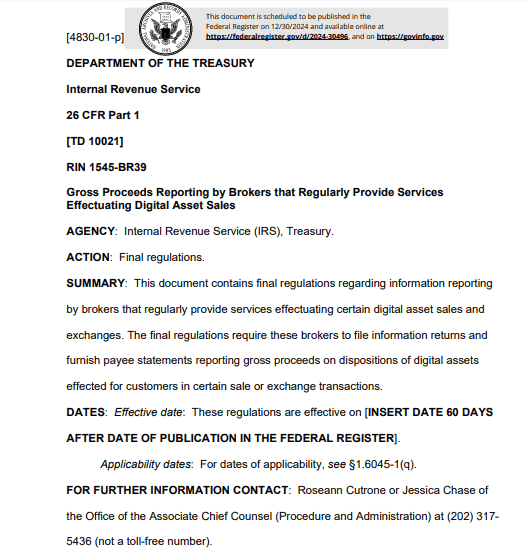
IRS officials said the new regulations put DeFi brokers on par with traditional securities brokers by making their tax reporting consistent. The new regulations are to take effect at the beginning of 2027, which will give ample time for platforms to get on board with the new rules.
Understanding the DeFi Broker Layers
It put the DeFi ecosystem into three critical layers: Interface, Application, and Settlement. The Interface layer, which is responsible for the interaction of users with the DeFi platforms through visual tools such as websites or apps, will now bear the broker classification. This is because, according to the IRS, the front-end services are the ones that interact most directly with the users.
This leaves the Application layer, which processes and validates trade orders, and the Settlement layer, which records transactions on distributed ledgers, free from these broker requirements. This limits the scope of compliance to platforms that interact directly with end-users.
For the first time, there will be a requirement for frontend platforms, such as DEX interfaces and wallet extensions that allow token swaps to adhere to Know Your Customer protocols, track the transactions, and issue Forms 1099-DA to customers.
Impact on DeFi Users
Some of the key changes come in the form of updated guidance affecting individual users in several new ways. In particular, customers onboarding to frontend DeFi services are required to follow the process of providing personal KYC data, similar to the requirements with CeFi platforms, while tax forms will be granted to them showing proceeds upon a given transaction.
Gains and losses will still have to be determined by the user themselves, and third-party crypto tax software is likely to be used. While generally regulations are platform-focused rather than individual, users should be aware of what they are required to report.
These developments mark an important step toward the inclusion of decentralized finance into the mainstream regulatory framework, putting emphasis on transparency and compliance in the space of digital assets that is rapidly unfolding.
Related Reading | Strive Asset Management Launches Bold Bitcoin Bond ETF Proposal
