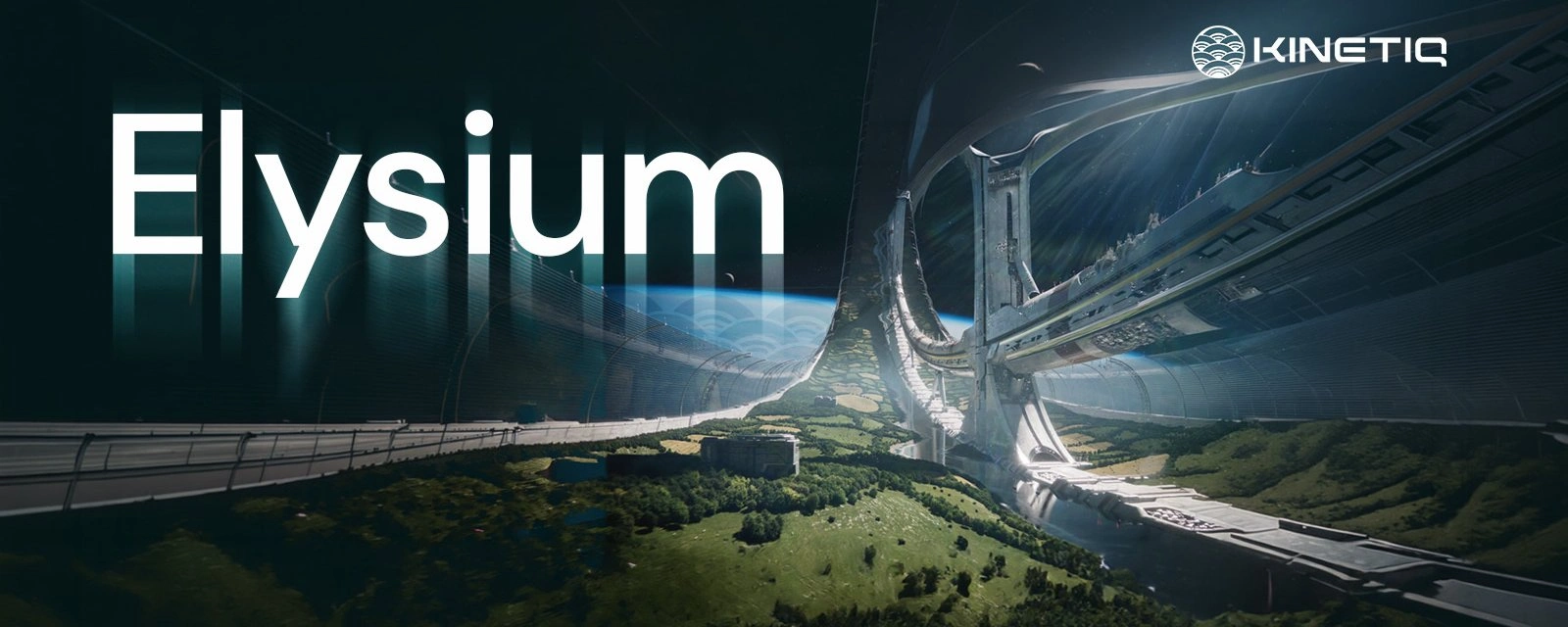
Kinetiq has unveiled Elysium, a new layer-2 environment designed to expand Hyperliquid beyond its derivatives-focused infrastructure.
The project aims to address performance limitations associated with HyperEVM while introducing faster execution, deeper HyperCore connectivity, HYPE as the native gas token, and new opportunities for decentralized finance, spot trading, and token launches.
Source: Kinetiq
Elysium Targets HyperEVM’s Performance Challenges
Hyperliquid has built significant traction through HyperCore, particularly in perpetual futures, but Kinetiq argues that its broader DeFi ecosystem remains underdeveloped.
The company points to HyperEVM’s dual-block architecture, limited throughput, and high transaction costs as barriers for traders and developers. During periods of congestion, simple swaps can reportedly cost as much as $20, making the environment difficult to scale for high-frequency applications.
Elysium is designed to address those challenges through a high-performance EVM environment closely connected to HyperCore.
Kinetiq says the network will deliver significantly faster block times and higher throughput than HyperEVM, potentially opening the door to applications requiring rapid execution, including advanced trading systems and automated market makers.
Also Read: HYPE Price Eyes $150 Breakout as Hyperliquid Futures Expand on Base App
Hyperliquid’s Spot Trading and DeFi Take Center Stage
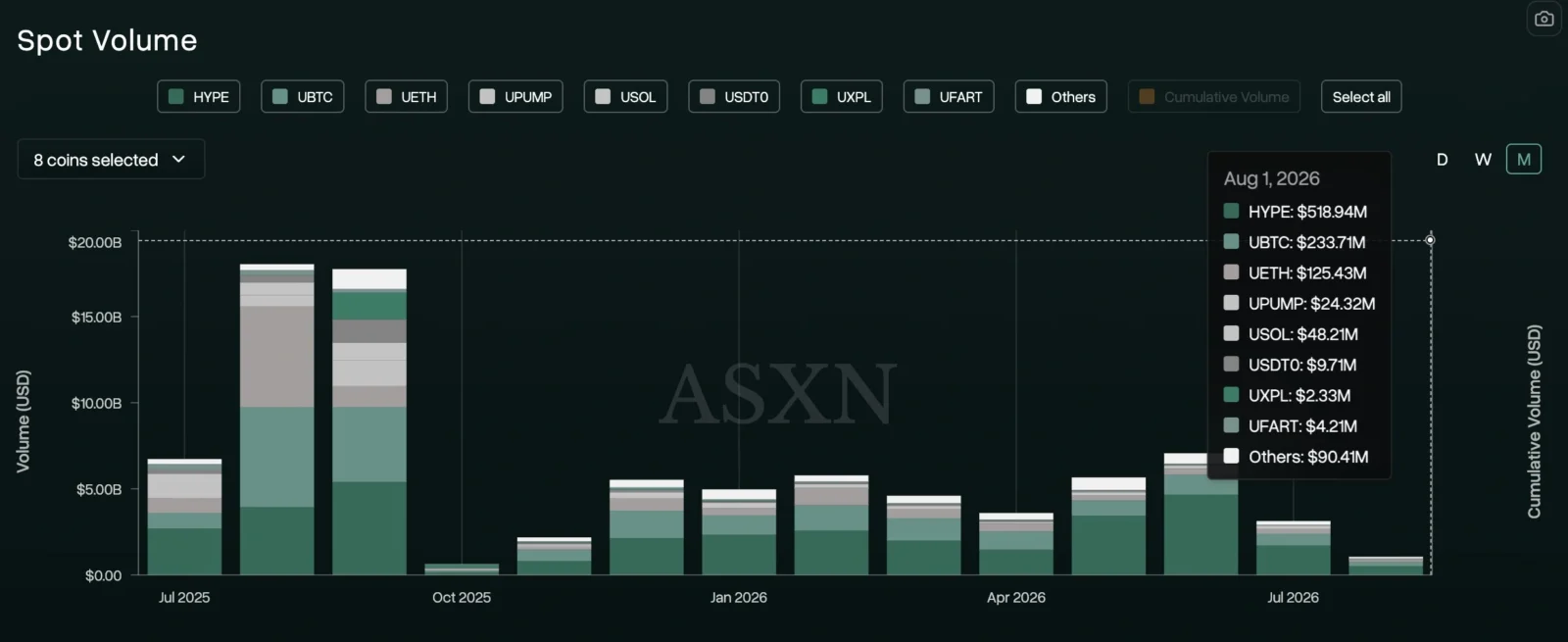
One of the main areas of interest is the spot market of Hyperliquid. According to Kinetiq, the market share of Hyperliquid spot volume compared to Binance has reached one of its lowest levels since the emergence of large spot markets.
Source: Kinetiq
However, the volume and activity of the HIP-2 spot market have been declining too. Elysium, according to the firm, can help change this trend.
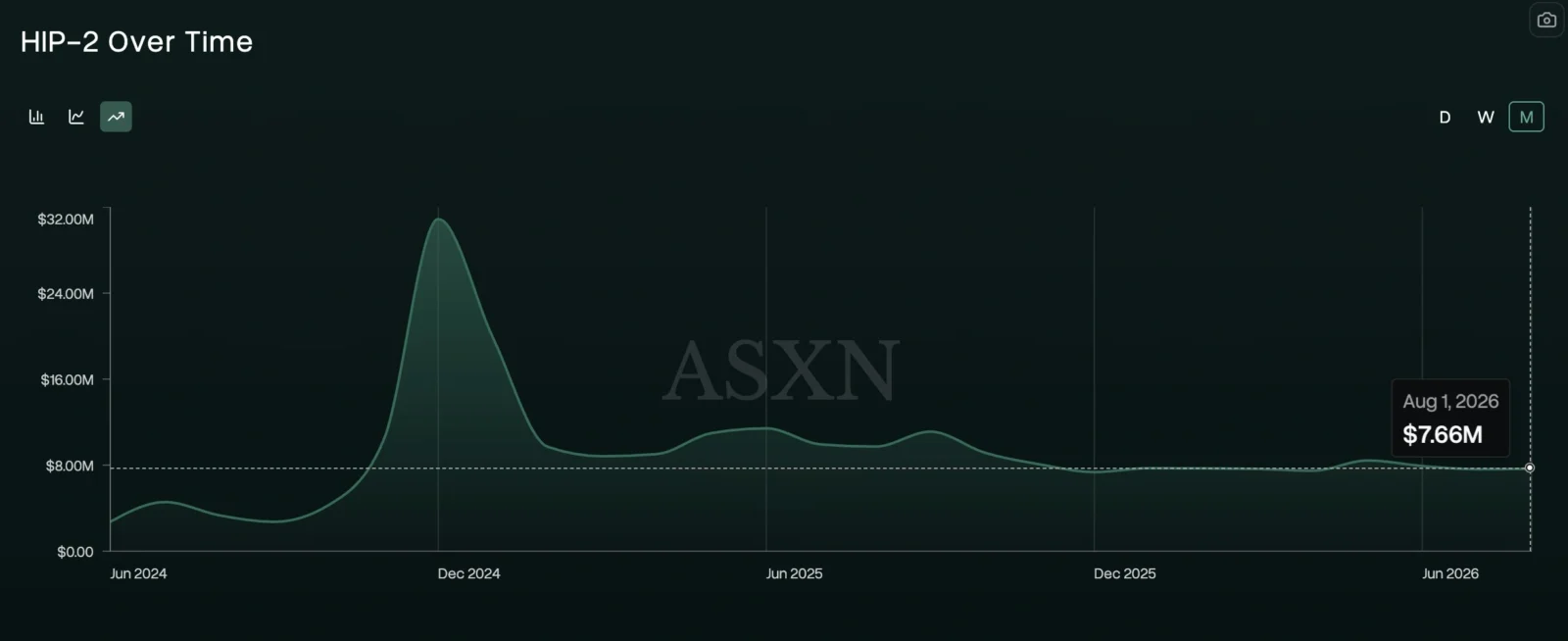
Source: Kinetiq
Another focus of this project is on proprietary AMM protocols that will become known as PropAMM. The Elysium blockchain’s location relative to the HyperCore protocol enables market makers to have more efficient position management while also gaining insight into new market data.
The Kinetiq team intends to tailor the L1Read precompile from Hyperliquid to be able to access more HyperCore data.
Composability in Elysium can also be extended to a wider token lifecycle. This means that new assets can be created and bootstrapped using long-tail AMMs, with PropAMMs, and with spot markets via HyperCore and eventually get perpetual listings via HIP-3.
It is argued by Kinetiq that this sort of composability can make Elysium a launchpad for Hyperliquid tokens.
KNTQ Economics and What Comes Next
Another distinctive factor about Elysium includes its tokenomics. The sequencer fees are expected to distribute 25% to builders, 25% to the treasury of Kinetiq, and 50% towards purchasing KNTQ. According to Kinetiq, all purchased KNTQ tokens would be burnt via the Hyperliquid Assistance Fund.
The launch is said to be imminent, with details like the technical specification and ecosystem partnerships set to be revealed shortly. Elysium will only succeed if it manages to draw sustained liquidity, developers, and users. If this happens, then Elysium will aid Hyperliquid’s transition from a leading perpetuals platform to a financial ecosystem.
Also Read: Hyperliquid Urges SEC, CFTC to Harmonize Perpetuals 2026
This article contains market analysis and price predictions. These are not guarantees. Crypto markets are volatile. Always DYOR. Not financial advice.