• Skip to primary navigation
  • Skip to main content
  • Skip to primary sidebar
  • Skip to footer
  • About TronWeekly
  • Write for us
  • Terms and Conditions
  • Privacy Policy
  • Disclaimer
  • Contact
  • All Posts
  • Advertise

TronWeekly

Crypto World News

  • Home
  • Latest News
  • Opinion
    • Education
    • Best TRON Wallets
    • Beginner’s guide to TRON
    • Tron Tokens
    • Market Analysis
  • Industry
    • Tron Exchange
    • Project Review
  • Press Release
  • Bitcoin (BTC)
  • Ripple (XRP)
  • Advertise
  • About TronWeekly
    • The Team
    • Editorial Policy
    • Write for us
    • Privacy Policy
    • Disclaimer
    • Terms and Conditions
    • Contact
You are here: Home / Cryptocurrency News / Accelerating Ethereum: Vitalik Buterin’s Vision for Faster Transaction Confirmation Times

Accelerating Ethereum: Vitalik Buterin’s Vision for Faster Transaction Confirmation Times

By Mishal Ali | Edited By Sahana Kiran,July 2, 2024, 5:00 AM

Ethereum

In a recent blog post, Ethereum co-founder Vitalik Buterin discussed ways to enhance the blockchain’s user experience by achieving faster transaction confirmation times. Currently, Ethereum transactions on Layer 1 (L1) are confirmed within 5-20 seconds, thanks to improvements like EIP-1559 and steady block times post-merge. While this is comparable to credit card payment times, some applications require much faster latencies. Buterin outlined several practical options to achieve this goal.

Epochs and slots all the way down: ways to give Ethereum users faster transaction confirmation timeshttps://t.co/lfCXrFm6A1

— vitalik.eth (@VitalikButerin) June 30, 2024

Improving Ethereum’s User Experience

The current Ethereum consensus mechanism, Gasper, employs a slot and epoch architecture. Every 12 seconds, a subset of validators votes on the chain’s head, and over 32 slots (6.4 minutes), all validators get a chance to vote, culminating in finality after two epochs (12.8 minutes). However, this process is complicated, and many users’ final time is too long.

To address these issues, Buterin proposed Single Slot Finality (SSF), a mechanism similar to Tendermint consensus, where each block is finalized before the next one is created. This approach would significantly reduce finality time, but it requires validators to publish messages every 12 seconds, posing a load challenge for the chain. Innovative solutions like the Orbit SSF proposal aim to mitigate this issue, though transactions would still take 5-20 seconds to confirm.
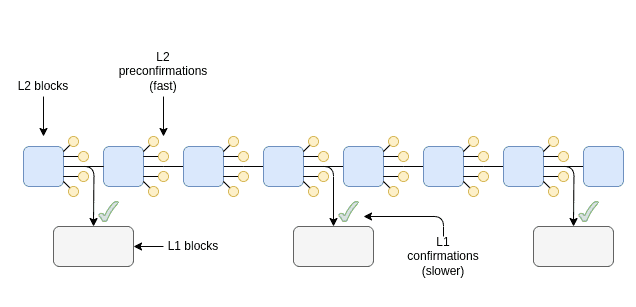
Another approach focuses on roll-up preconfirmations. Ethereum’s rollup-centric roadmap enhances the base layer (L1) to support data availability and other functionalities for Layer 2 (L2) protocols like roll-ups, validiums, and plasmas. These L2s can provide faster and scalable user experiences while maintaining Ethereum’s security. However, L2s need decentralized sequencing networks to offer confirmations faster than L1s in 5-20 seconds. While centralized versions exist, decentralized sequencing has been slow to develop.
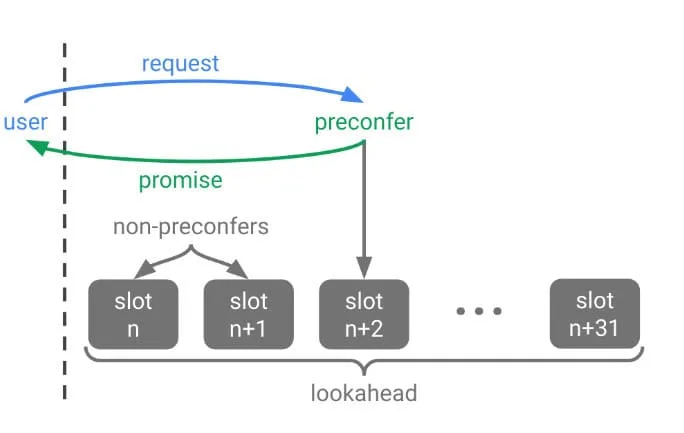
Justin Drake’s “based preconfirmations” proposal aims to give all L2s and L1 access to a shared preconfirmation mechanism. Sophisticated proposers would offer preconfirmations as a service, guaranteeing transaction inclusion in the next block for an additional fee. If proposers violate their promise, they face slashing penalties. This system can provide immediate transaction guarantees, benefiting both L1 and L2 transactions.
If implemented, these proposals could transform Ethereum’s slot-and-epoch architecture. However, the future of Ethereum’s transaction confirmation times hinges on exploring these innovative designs. The goal is to balance fast user experiences with robust security and decentralization. As Ethereum continues to evolve, these strategies will play a crucial role in shaping its future, benefiting both L1 and L2 developers and users.

Related Reading | Solana (SOL) Faces 16% Value Drop, Yet Bullish Predictions Drive Hope Amidst Decline

Filed Under: Cryptocurrency News, Altcoin News

About Mishal Ali

Mishal Ali is a Policy and Regulations Reporter at Tron Weekly with over four years of experience covering the global crypto and blockchain space. Her reporting focuses on crypto regulations and policy, alongside Bitcoin, Ethereum, altcoins, DeFi, NFTs, Web3, Layer 2 solutions, and AI-driven crypto use cases. She also tracks Ripple-related developments, enforcement actions, licensing updates, and crypto scams and fraud trends, helping readers understand regulatory and compliance risks.

🔗 Connect on LinkedIn

Twitter LinkedIn

Primary Sidebar

Recent Posts

  • XRP Price Analysis: Break Above Resistance Opens $1.4700 Upside Target May 10, 2026
  • Bitcoin Supply Shift Analysis Shows 78.3% BTC Held by Long-Term Wallets May 10, 2026
  • Bitcoin Price Faces Correction Risk as Santiment Warns of Rising Bullish Sentiment May 10, 2026
  • Solana Price Gains Strength After Breakout, $100 Target Back in Focus May 10, 2026
  • ONDO Price Prediction: Can Bulls Push the Token Toward $0.76 Resistance? May 10, 2026

Footer

News

  • Latest News
  • Altcoin News
  • Bitcoin (BTC)
  • Blockchain
  • Tron (TRX)
  • World

Digest

  • Meet the Founder
  • Price Winning Article
  • DeFi
  • Cyber Security
  • Crypto Scam

Industry

  • Project Review
  • Technology
  • Fintech
  • Tron Exchange
  • New in Town

Tron Universe

  • Event and Tron Parties
  • New in Town
  • Tron Tokens

FOLLOW US

  • Facebook
  • Telegram
  • Twitter
  • Linkedin

Subscribe US

Editorial Policy | Privacy Policy | Disclaimer | Terms and Conditions | Masthead

Copyright © 2026 · Tron Weekly. All Rights Reserved. NOTE: Tron Weekly is an independent crypto news site that adheres to the strict journalism policy anchored on transparency, trust, and objectivity, we have no affiliation with the TRON Foundation, its founder Justin Sun or any other cryptocurrency firm.