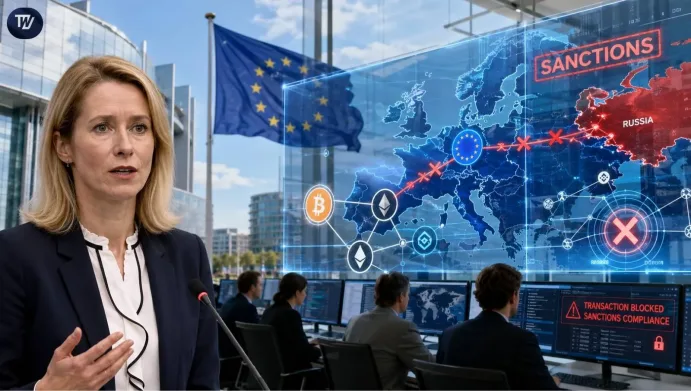
EU crypto sanctions moved forward after the European Union proposed transaction bans on 11 crypto platforms in its 21st Russia sanctions package. The measure targets suspected sanctions evasion channels. It also expands pressure beyond banks, oil traders, and military suppliers.
Kaja Kallas described the restrictions in a post on X. She is vice president of the European Commission and the EU’s high representative for foreign affairs and security policy. The package would also introduce new designations, she said.
Also Read: Arthur Hayes Flags AI Bubble Risks for Crypto Markets in 2026
EU Sanctions Plan Expands to Crypto and Russian Banks
According to Kallas, the EU will toughen the sanctions on crypto-asset service providers in some third countries. She also said 11 crypto platforms were blacklisted under this sanction scheme. However, the names of such platforms have not been revealed in the official press release of the Commission.
The proposed crypto sanctions by the EU will broaden the bloc’s sanctions policy targeting the financial channels connected to Russia. Indeed, Brussels previously placed sanctions on banks, energy revenues, and enterprises that allegedly supported the military actions of Russia.
The European Commission President, Ursula von der Leyen, said that the new package involved 31 additional banks located in Russia. Besides, she stated that there were 20 additional entities from third countries in the sanction package. Those included banks, crypto exchanges, and oil trading firms.
Von der Leyen stated that all these entities provided services to sanctioned persons and companies from Russia or helped circumvent EU sanctions measures. However, the new package is yet to be officially approved.

EU Crypto Sanctions Follow Elliptic Report on Russia Evasion
EU crypto sanctions come after prior threats issued by blockchain intelligence companies. In February, Elliptic reported five crypto exchanges that allegedly helped evade sanctions by Russia-linked individuals. According to the report, the exchanges provided non-banking transaction options.
The proposal was also preceded by UK sanctions imposed on Huobi Global S.A., the Panamanian company behind HTX. UK authorities announced the action on May 26, accusing the exchange of supporting Russian financial networks linked to A7 Limited Liability Company and Garantex.
HTX denied the allegations and said the sanctioned entity was separate from the online exchange. Later on, in August, according to Global Ledger, HTX had processed $21.06 billion in high-risk crypto transactions from 2021 to May 2026. Of this, $7.64 billion involved high-risk crypto transactions with Russia and dark net marketplaces.
EU crypto sanctions have raised wider compliance questions for exchanges and blockchain analysts. Some researchers criticized broad exchange-level restrictions after the UK action. They warned that such measures could affect legitimate users and weaken tools used to trace illicit funds.
Also Read: HTX Sanctions Criticized as Investigators Report On-Chain Tracking Issues
