• Skip to primary navigation
  • Skip to main content
  • Skip to primary sidebar
  • Skip to footer
  • About TronWeekly
  • Write for us
  • Terms and Conditions
  • Privacy Policy
  • Disclaimer
  • Contact
  • All Posts
  • Advertise

TronWeekly

Crypto World News

  • Home
  • Latest News
  • Opinion
    • Education
    • Best TRON Wallets
    • Beginner’s guide to TRON
    • Tron Tokens
    • Market Analysis
  • Industry
    • Tron Exchange
    • Project Review
  • Press Release
  • Bitcoin (BTC)
  • Ripple (XRP)
  • Advertise
  • About TronWeekly
    • The Team
    • Editorial Policy
    • Write for us
    • Privacy Policy
    • Disclaimer
    • Terms and Conditions
    • Contact
You are here: Home / Industry / Euro Stablecoin Rules 2026: ECB Warns of Banking and Policy Risks

Euro Stablecoin Rules 2026: ECB Warns of Banking and Policy Risks

What to know:

  • Stablecoins could pull deposits from banks, weakening balance sheets and cutting eurozone lending capacity.
  • Heavy stablecoin use may blunt ECB interest rate policy and reduce control over inflation and growth.
  • Tough EU rules risk pushing users to US dollar stablecoins, fueling “digital dollarization” and sidelining the euro.

By Ananthyka J | Edited By Ammar Raza,May 23, 2026, 7:00 PM

Euro Stablecoin

The ECB is pushing back on loosening rules for euro stablecoins because it sees risks to banks and how policy gets passed through. Reuters mentioned that wider use of these coins might get in the way of normal lending. And it makes interest rate moves harder to manage which adds some friction in the EU digital space.

Bank Lending Risks

Officials, including Lagarde have pointed out that easier standards could pull deposits away from commercial banks. Banks depend on those deposits for credit so big shifts into stablecoins might leave balance sheets weaker.

And it will also reduce lending capacity in the eurozone overall. It seems like this could matter but maybe not everyone sees the scale the same way.
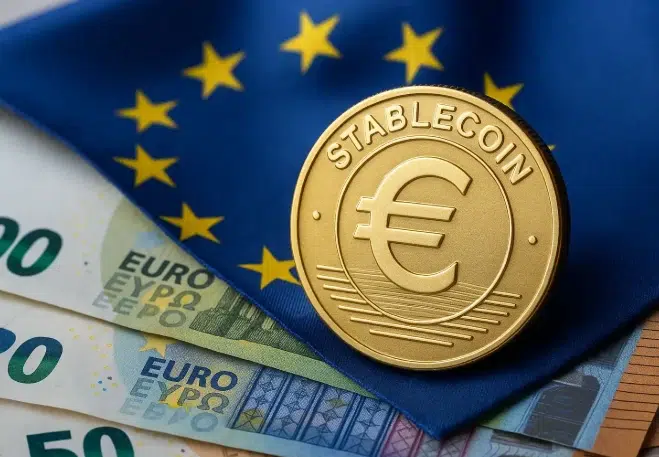
euro stablecoin
Source: The Rio Times

Also Read: ECB Chief Lagarde Says Euro Stablecoin Could Weaken ECB Policy

Weakening Central Bank Power

Central bankers in Europe are worried that if euro stablecoins become too popular, it could weaken the European Central Bank’s control over the economy.

Normally, the ECB influences inflation, borrowing, and economic growth by adjusting interest rates. If private stablecoins replace bank deposits at scale, those rate changes may no longer reach households and firms as intended.

🚨 La BCE, y compris Christine Lagarde, s’oppose à un assouplissement des règles européennes sur les stablecoins en euros, craignant un affaiblissement des banques et une perte de contrôle sur la politique monétaire, selon Reuters. pic.twitter.com/4kmeIdmYyJ

— Journal du Coin (@LeJournalDuCoin) May 23, 2026

But if people and businesses start relying heavily on private digital currencies instead of traditional bank money, those policy decisions may not have the same effect.

In simple terms, the more money moves into private stablecoins, the harder it becomes for the ECB to guide the financial system effectively.

Also Read: 12 European banks select Fireblocks for MiCA euro stablecoin

Euro Competitiveness Threat

The EU is introducing stricter rules to protect consumers and maintain financial stability, but experts at Bruegel warn that overly tough regulations could push stablecoin companies and users outside Europe. If that happens, people may increasingly adopt US dollar-backed stablecoins instead of euro-based ones.

This trend, often called “digital dollarization,” could strengthen the global dominance of the dollar in crypto and blockchain payments while reducing the euro’s influence in the digital economy. At the same time, regulators face a difficult balancing act.

Also Read: Europe Pushes Hard to Break U.S. Grip With New Euro Stablecoin Plan

Filed Under: Industry, Altcoin News, Cryptocurrency News

About Ananthyka J

Ananthyka J is a market reporter at Tronweekly, reporting on cryptocurrency news. She covers cryptocurrency markets, blockchain technology, and digital asset regulation, focusing on Bitcoin, Ethereum, DeFi, altcoins, and crypto policy. Her reporting emphasizes clear and accurate market coverage, including crypto market movements, regulatory developments, and blockchain adoption. She holds a BA in Journalism and Mass Communication and an MA in Communication and Media Studies. She has also completed multiple media internships, follows strict editorial and fact-checking standards, and discloses potential conflicts of interest when reporting.

Primary Sidebar

Recent Posts

  • Euro Stablecoin Rules 2026: ECB Warns of Banking and Policy Risks May 23, 2026
  • Bitcoin Price Weakens Below Key Levels as Market Eyes $50,000–$47,000 Zone May 23, 2026
  • Hyperliquid ETF Gains Momentum as Grayscale Files Third SEC Amendment May 23, 2026
  • Zcash Price Rallies Toward $700 Resistance as Bullish Momentum Builds May 23, 2026
  • Bank of America Expands Bitcoin ETF Holdings to $37 Million in Q1 Filing May 23, 2026

Footer

News

  • Latest News
  • Altcoin News
  • Bitcoin (BTC)
  • Blockchain
  • Tron (TRX)
  • World

Digest

  • Meet the Founder
  • Price Winning Article
  • DeFi
  • Cyber Security
  • Crypto Scam

Industry

  • Project Review
  • Technology
  • Fintech
  • Tron Exchange
  • New in Town

Tron Universe

  • Event and Tron Parties
  • New in Town
  • Tron Tokens

FOLLOW US

  • Facebook
  • Telegram
  • Twitter
  • Linkedin

Editorial Policy | Privacy Policy | Disclaimer | Terms and Conditions | Masthead

Copyright © 2026 · Tron Weekly. All Rights Reserved. NOTE: Tron Weekly is an independent crypto news site that adheres to the strict journalism policy anchored on transparency, trust, and objectivity, we have no affiliation with the TRON Foundation, its founder Justin Sun or any other cryptocurrency firm.