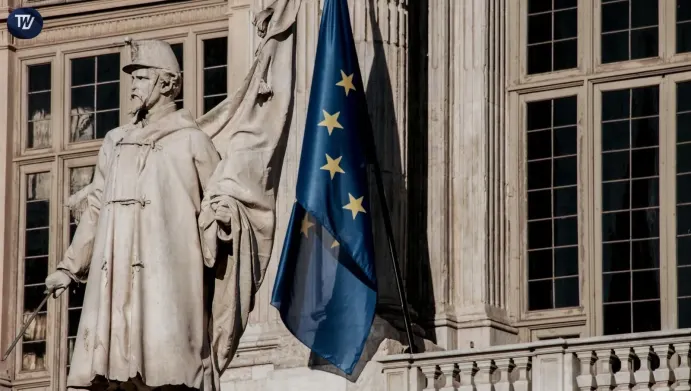
The European Union’s new Anti-Money Laundering Regulation, effective July 2027, introduces strict financial controls across cash and crypto markets. It aims to unify AML rules, improve transparency, and prevent illicit money flows. The framework tightens identity checks, restricts anonymity, and strengthens cross-border enforcement through a central authority.
European Union Introduces New Cash Payment Cap
The European Union will introduce a bloc-wide limit on large cash payments in July 2027. The rule sets a maximum threshold of €10,000 for commercial transactions across member states.
Some countries may still apply lower limits under their national policies. Businesses must verify customer identity for cash payments above €3,000. Private individual transfers remain exempt from these restrictions.
Banking channels and regulated payment systems are not impacted by the cap. Regulators say cash controls reduce opportunities for illicit financial activity.
The measure aligns with broader European Union anti-money laundering harmonisation efforts. It aims to prevent large-scale cash-based laundering schemes. Uniform rules improve cross-border enforcement. Coordination.
Also Read: European Union Strengthens Crypto Transparency With New Directive Tax
Crypto Exchanges Face Stricter Compliance Rules
Crypto-Asset Service Providers will face stricter identity verification requirements under the new regulation. Transactions above €1,000 will trigger enhanced Know Your Customer checks.
Exchanges will have to collect and check the identification information of customers, despite the fact that the transactions are made occasionally.
The idea behind such a requirement is to prevent anonymity in transactions of crypto assets. In the case of small crypto exchanges that operate in Europe, the costs of compliance are likely to grow.
It is an effort to align crypto regulation with banking regulation. Single transactions will also require complete verification of the identity of users.
AML Authority Expands EU Enforcement Power
The regulation will strengthen the grip on regulated platforms by prohibiting any crypto wallet accounts that offer anonymity. Regulated crypto exchange platforms will also limit privacy-oriented digital assets.
This is because these coins make the traceability of dirty money hard. However, private self-custody wallets are still not subject to regulation. Transactions between people on a peer-to-peer basis will still be allowed.
The framework will be enforced by an anti-money laundering authority that will be based in Frankfurt. It will oversee major organizations in relation to compliance with the regulation. Users of cryptocurrency will find the most significant changes in their transactions with regulated crypto platforms.
Also Read: European Union Powers Up Crypto Anti-Money Laundering Authority In Germany
