The FBI crypto operation, the undercover creation of Ethereum-based tokens, unmasked the techniques of wash trading and paid market making in crypto. By sending out fake assets like NexFundAI and Lexobit, the federal law enforcement agents documented how, among others, service providers and project teams artificially boost trading volumes. This way exposes the risks on a wide scale for retail market participants and the blockchain markets.
How the Sting Played Out
As part of the FBI crypto Operation to probe industry practices, the FBI released NexFundAI, an ERC-20 token accompanied by a professionally designed website and whitepaper. Through undercover agents posing as the project team, the operation invited market makers to generate fake liquidity.
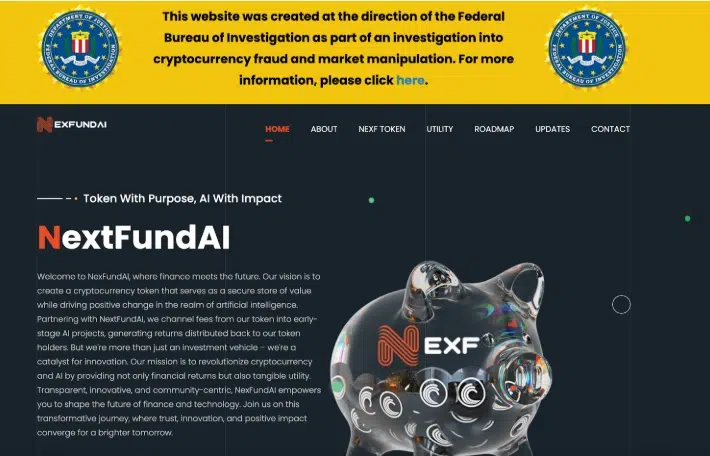
Gotbit, CLS Global, and ZM Quant, among others, agreed to producing fake volumes, with one firm even saying $200 would “simulate” $1 million of daily trades. Internal documents refer to these activities as “fake volume, ” while their messages disclose the intention to “engineer charts” to attract retail buyers, after which insiders would have their exit positions.
Also Read: FBI Busts 276 in Global Crypto Pig Butchering Scam Sweep 2026
Projects and Participants Indicted
The FBI crypto operation resulted in 18 individuals being indicted in the United States, United Kingdom, and Portugal. Also, $25 million were confiscated. Law enforcement officials mentioned projects like Saitama, which at one point had a market value of several billion dollars. Also, Lillian Finance, whose leader was found to have been deceiving the public by using false charitable claims.
One piece of evidence from the FBI crypto operation showed a bot executing hundreds of circular trades and posting coordinated pump messages. Gotbit’s CEO was extradited and sentenced, demonstrating cross-border enforcement capabilities.
Also Read: FBI Reports $20 Billion Losses and Over 1 Million Cybercrime Complaints in 2025
Market Implications and Oversight
The legal actions demonstrate that compliance, transparency, and investor protection are still unresolved issues. Ledger forensics found that 99% of the transactions of one particular firm were circular. The current FBI crypto operation also revealed deceptive consequences when the genuine investors purchased NexFundAI, which meant the company had to engage in restitution.
Similar tokens popped up within hours, showing that the temptation to deceive is still present. For the exchanges, regulators, and DeFi protocols, the revelations underscore the importance of having strong monitoring systems and performing thorough checks.
Also Read: FBI Issues Warning Over Fake Tron Token Scam Targeting Crypto Users