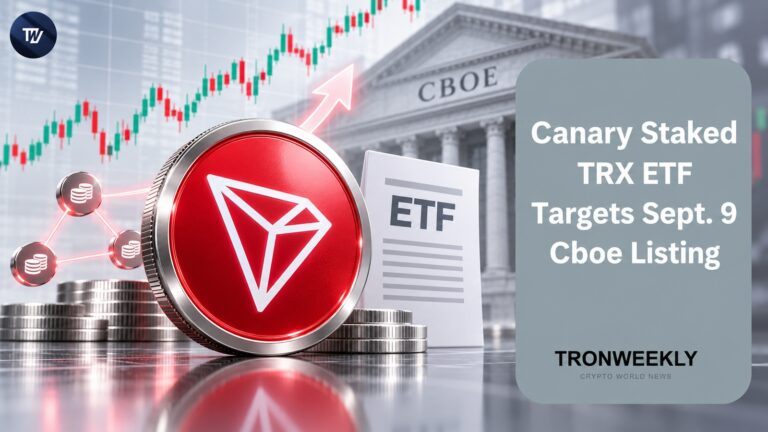
Canary Capital’s staked Tron ETF is expected to list on Cboe BZX on Sept. 9 under ticker TRXS, according to ETF analyst Henry Jim. The proposed launch would package spot TRX exposure and staking rewards inside a U.S.-traded investment product.
Table of Contents
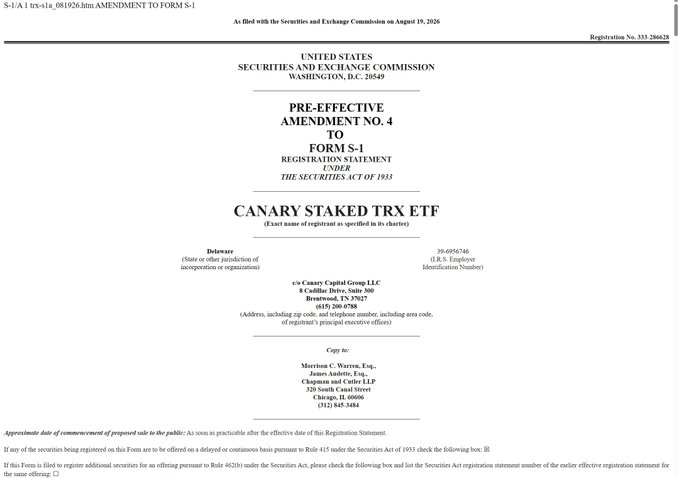
The Aug. 19 prospectus remained subject to completion. It said sales could not begin until the SEC registration statement became effective. Shares were also subject to Cboe’s notice of issuance.
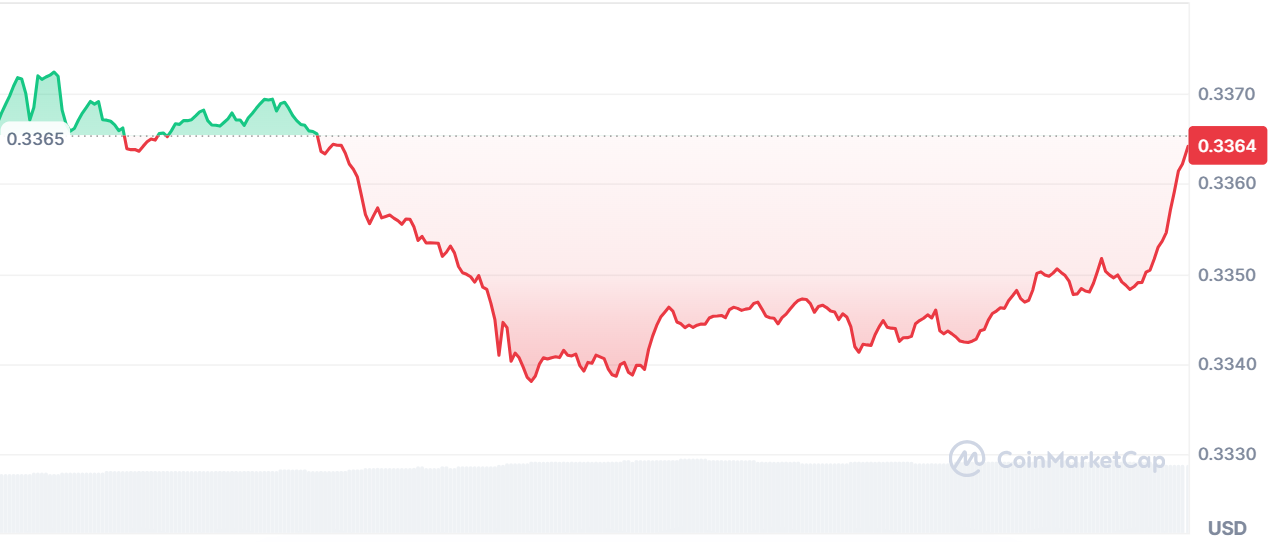
TRX traded near $0.336 on Sept. 8, down less than 1% over 24 hours. CoinMarket data placed its market value near $31.83 billion, indicating modest movement before the reported listing date.
When Could the Staked Tron ETF Begin Trading?
According to Jim’s post, Sept. 9 is the expected listing date, while TRXS is the ticker. Another ETF analyst, James Seyffart, who works for Bloomberg Intelligence, pointed out the ETF’s planned debut at X. Neither analyst considered the staked Tron ETF as currently listed.
Also Read: Coinbase Targets US Stock Perpetuals With 2 SEC Filings
In April 2025, Canary filed the initial registration statement. According to the recent amendments to the registration statement, Cboe BZX is the designated exchange, and TRXS is the ticker.
How Would the Staked Tron ETF Work?
The Staked Tron ETF would be holding the TRX directly. The main aim of the ETF is to track the value of the token after accounting for expenses and liabilities. The other aim will be to generate extra TRX through staking.
In normal times, the TRX that the trust holds should be staked at a minimum of 90%. Service providers will get 20% of the staking rewards. 80% of the staking rewards will be credited to the NAV and then restaked.
The daily calculation of NAV will use the CoinDesk 60-minute, time-weighted TRX benchmark index at 4 p.m. New York Time. The authorized participants can create or redeem baskets of 10,000 shares using cash or TRX following the rules.
The TRX will be held by BitGo Bank & Trust, while the cash will be in US Bank. The administrator and transfer agent will be U.S. Bancorp Fund Services.
What Fees and Risks Would Investors Face?
Canary would charge a 1.10% annual sponsorship fee in TRX. The token value held by the fund per share may go down in case the staking proceeds do not suffice to cover such fees and operational costs.
There is also a liquidity limit to it. The Tron blockchain has an unstaking requirement of 14 days, after which tokens would be frozen. Canary would maintain some TRX unstaked for redemptions, but high redemption activity can strain it.
It is indicated in the filing that no digital assets get any insurance coverage from either FDIC or SIPC. Further, even private insurance may not compensate for the loss from complete failure of custody. Moreover, the shares may trade at both premiums and discounts to net asset value.
There would not be any leverage or derivative products for this trust. However, the TRX exposure would entail exposure to TRX risk, cyber risk, validator risk, and regulatory risk.
Why Could Tron’s Network Scale Matter?
Canary listed 14.55 million average daily transactions and 5.8 million daily active addresses in the year 2026. The decentralized finance value of Tron was listed as around $4.5 billion on that date.
These were numbers indicating the scale of the network, which do not assure the demand or profit of the staked Tron ETF.
If the launch proceeds as expected, TRXS would bring a staked Tron ETF to the U.S. market. However, the SEC registration statement must first become effective, and Cboe must issue a listing notice. Until then, Sept. 9 remains the expected launch date.
Also Read: Bitcoin Price Holds Near $79K as ETF Inflows Support Demand