
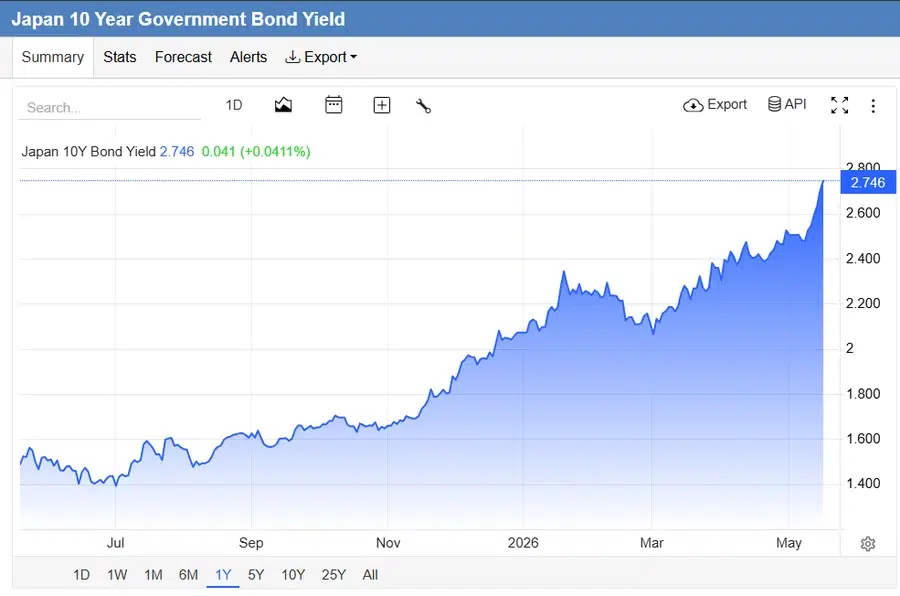
Japan bonds market came under heavy pressure on May 18 as long-term yields surged to record levels. The 30-year JGB yield reached about 4.2%, while the 10-year yield climbed to 2.8%, its highest level since 1996.
The sell-off reflected growing worries about inflation, public debt, and fiscal stability in Japan. Higher oil prices, the potential for new borrowing, and the waning demand for long-dated government debt also had an impact on investors.
Also Read: Microsoft AI Warns Massive 18-Month Job Automation Shock
Japan Bonds Weaken as Borrowing Fears Grow
The pressure rose when Prime Minister Sanae Takaichi announced that her government is planning to approve a supplementary budget. According to a local media report, the plan could support households and businesses through fresh fiscal measures.
That proposal raised expectations that Japan may issue more deficit-covering bonds. This put further pressure on an already under performing market and a lack of confidence in the future supply of debt.
At a foreign securities firm in Japan, one official commented that no investors were interested in purchasing bonds. The official also stated that the long-term interest rates would likely be on the rise.
Japan bonds are closely monitored as the debt load in the country is still high. The International Monetary Fund (IMF) recently assessed that Japan’s gross public debt level had exceeded 200% of GDP.
The IMF projects that the debt ratio will gradually diminish over the medium term. Instead, investors are turning to the possibility of new spending that might lead to greater deficits or slower fiscal healing.
Oil Price Surge Adds Pressure on Global Bonds
The Japanese bond sell-off is also following the pressure in other major bond markets. Investors responded to inflation concerns and shifting expectations for Federal Reserve policy by driving U.S. Treasury yields higher.
The 10-year U.S. Treasury yield increased as much as 3.6 basis points to 4.631%. The market data show that this was the top level since February 2025.
The two-year U.S. yield touched a 14-month high of 4.105%. The 30-year Treasury also hit a record high of 5.159% for the year.
Oil prices continued to put pressure on markets. Brent crude climbed to $111 per barrel after talks to end the Iran war broke down after a drone attack on a nuclear power plant in the United Arab Emirates.
Japan Bonds Pressure Spreads to Yen Market
Markets now see a more than 50% chance that the Federal Reserve will raise rates by December. Before the war, investors had expected rate cuts this year.
The pressure on Japan bonds also spilled over to the currency market. The dollar briefly rose above 159 yen in Tokyo trading, marking its highest level since April 30.
Eugene Leow, senior rates strategist at DBS, said that the bond market sentiment had been dampened by further fiscal measures from the Japanese government. He said the move is falling within a broader repricing trend on yield curves throughout the region.
This further weakened eurozone bonds in the broader selloff. Germany’s 10-year bond yield touched a 15-year high of 3.193% for the second week in a row.
Also Read: BNB ETF Nears Launch After Strong Filing of Amended S-1 prospectuses with SEC