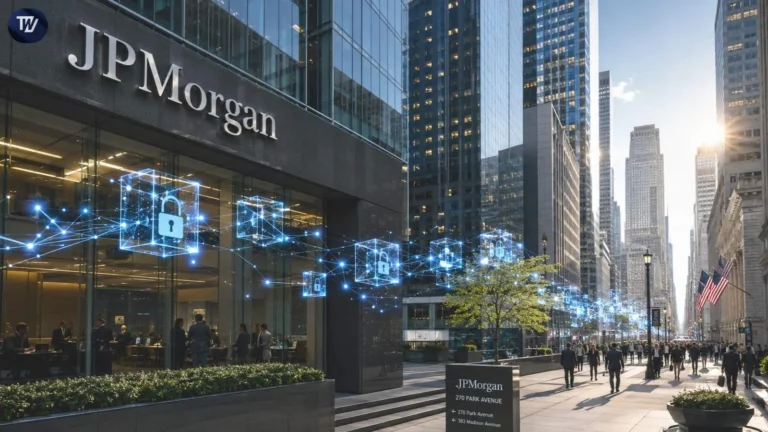
Major US banks are reportedly preparing a tokenized deposit network for the first half of 2027. The project responds to blockchain firms entering traditional finance. It aims to support faster settlement while keeping deposits inside regulated financial systems and channels.
The Clearing House, a bank-owned payments operator, will run the network. It will connect to traditional payment routes with digital asset infrastructure, Chief Executive Officer David Watson told The Wall Street Journal. The system is designed to accommodate settlement 24 hours a day.
Also Read: Ripple RLUSD Drives Multichain Growth via Wormhole in 2026
Tokenized Deposit Plan Responds to Stablecoin Growth
The Clearing House’s website states that it is co-owned by several large US banks. It is owned by JPMorgan Chase, Bank of America, Citibank, Barclays, BNY, Wells Fargo, and others. The tokenized deposit plan is near the current banking system because of its role.
The tokenized deposit model demonstrates bank response to the growth of stablecoins. Stablecoins have gained attention for faster transfers, programmable movement, and treasury use across blockchain systems. Banks attempt to provide comparable services without moving deposits out of regulated banks.

The tokenized deposit initiative also coincides with the legislative push for a US crypto market. Banks have been pushing back on efforts to permit stablecoin issuers to pay yield on user deposits. These products may be in competition with interest-bearing bank deposits.
JPMorgan CEO Jamie Dimon recently criticized the current version of the Digital Asset Market Clarity Act. Cryptocurrency companies seeking to provide yield-bearing services should consider seeking banking licenses. His remarks came after the committee voted in May to move the CLARITY Act forward in the Senate Banking Committee.
The bill is still subject to approval by both houses of Congress before it goes to US President Donald Trump. As digital asset companies grow, the debate has brought the protection of deposits to center stage for banks. The tokenized deposit network falls under that broader response.
Wall Street Tokenization Plans Expand Across Markets
Lydian CEO Carl Grimstad stated that banks are responding to the shift in value. Programmable settlement 24/7 is increasingly important, he said. He additionally said the primary concern is the transfer of value amongst bank ledgers, public chains, and digital assets.
Wall Street companies are also boosting tokenization initiatives in security markets. On March 24, the New York Stock Exchange (NYSE) is collaborating with Securitize to build blockchain trading infrastructure. The plan includes minting tokenized shares of stocks and exchange-traded funds.
On March 18, Nasdaq also got approval from the SEC for a tokenized securities pilot. Earlier in January, Intercontinental Exchange outlined a venue for 24/7 tokenized securities trading. Instant settlement, stablecoin funding, and on-chain settlement were all part of that plan.
South Korea is also piloting the use of tokens for deposits in public finance. On 16 April, its Ministry of Economy and Finance announced the introduction of a pilot for government operational spending. The program will undergo a planned full rollout in the fourth quarter of 2026, following the pilot phase.
Also Read: SpaceX IPO Sparks Explosive Retail Investment Boom 2026