Several major South Korean companies have questioned their reported inclusion in the Open USD stablecoin alliance, saying they had not formally agreed to join the consortium announced by Open Standard, according to a Chosun Biz report.
The report said some Korean firms named as participants had not held official talks with Open Standard. They said they became aware of their inclusion after local media coverage. The responses raised questions about the status of several listed members.
Also Read: XRP Ledger Gains IMF Recognition as Stablecoin and Tokenization Adoption Expands
Open USD Launch Raises Questions Over Listed Participants
On June 30, Open Standard made an announcement of the launch of Open USD. This cryptocurrency pegged to the U.S. dollar will be launched in the coming months.
According to the company, over 140 firms from various countries, including financial institutions, payments providers, tech companies, and cryptocurrencies, will be part of this consortium.
These firms included Visa, Mastercard, BlackRock, and Google. In addition, it also named Samsung Electronics, Dunamu, Shinhan Financial Group, KakaoBank, K Bank, Hyundai Card, KB Kookmin Card, BC Card, Hana Card, Samsung Card, Woori Card, NH Nonghyup Card, and Hanwha. Many South Korean firms denied joining the consortium.
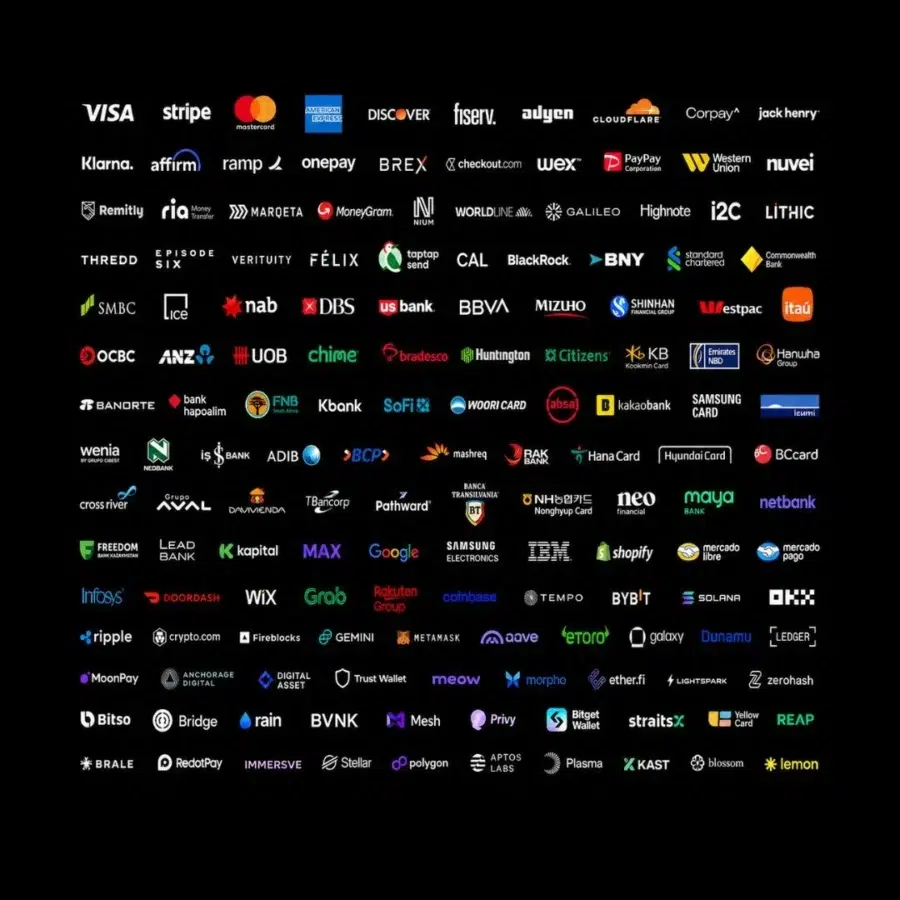
Samsung Electronics told Chosun Biz that it has not held official consultations with Open Standard. It also claimed that it did not know what kind of position it would play in the consortium. Companies like Dunamu, Shinhan Financial Group, and K Bank shared the same response.
They claimed that they were only asked whether they were interested in participating. They said that they will evaluate the proposal. However, they did not consider it to be their approval.
Open Standard Details OUSD Model
OpenStandard stated that OpenUSD will be developed for its utility purpose. The coin will be controlled by all the companies participating in the development process. It clarified that the formation of such a consortium will not be a decentralized autonomous organization or any equity-based project.
Rather, it was expected that the coalition would operate in a cooperative manner. According to Open Standard, the members could mint Open USD tokens via the deposit of U.S. dollars to the reserve account. Additionally, they would be capable of redeeming tokens by giving them back to the issuing entity.
As the company stated, the participants would not have any fees for the mentioned operations. It also said there were no limits on the number of operations as well. It is an essential part of the model proposed by the company.
The company explained another income generation method. The profits from reserve assets backing Open USD would be allocated among participants after deduction of operational costs. This differs from Tether and Circle, which retain reserve earnings.
According to Chosun Biz, some participants in South Korea’s digital asset sector perceived the project as a potential competitor of USDT and USDC stablecoins. However, the responses of the Korean companies demonstrate that some of the listed participants have not committed officially to Open USD.
Also Read: South Korea FSS Orders Crypto CEOs to Strengthen Compliance & Controls