Polkadot is considering a significant overhaul of its staking system through OpenGov Referenda #1909 and #1910. The proposals aim to improve network security, reduce staking friction for users, and create stronger incentives for validators. If approved, the changes would reshape how validators and nominators participate in securing the Polkadot network.
Polkadot Introduces 10,000 DOT Validator Stake Incentives
Referendum #1909 builds on the previously approved requirement that validators maintain a minimum self-stake of 10,000 DOT. The proposal introduces additional rewards for validators who commit their own capital to the network, reinforcing the principle of “skin in the game.”
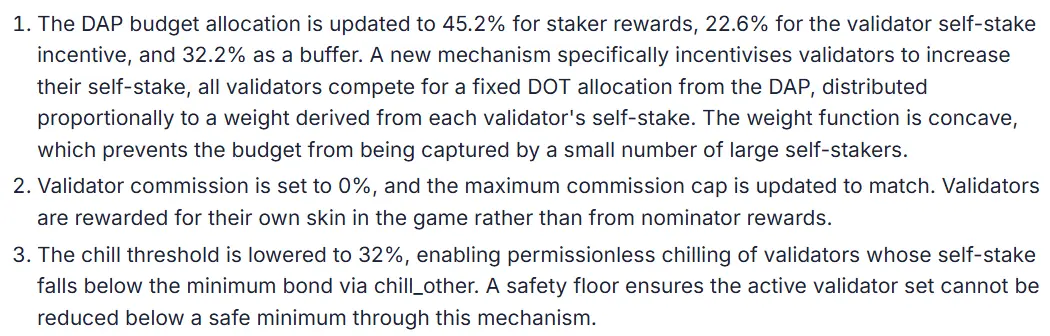
Under the proposal, validator self-stake incentives would receive 22.6% of the Dynamic Allocation Program (DAP) budget, while 45.2% would go toward staker rewards.
A concave weighting model would be used to distribute incentives, ensuring that large validators do not capture a disproportionate share of the rewards pool.
Also Read: Polkadot Sentiment Hits Multi-Month Low as Rising FUD Sparks Relief Rally Speculation
Referendum 1910 Targets 2-Day Unbonding for Nominators
One of the most notable changes in Referendum #1910 is the proposal to reduce the nominator unbonding period from approximately 28 days to just 48 hours. This would significantly improve liquidity and flexibility for DOT holders participating in staking.
The referendum also proposes removing slashing penalties for nominators. Currently, nominators can face losses if they back validators that violate network rules.
By eliminating nominator slashing, Polkadot aims to make staking more accessible and less risky for retail participants while placing greater responsibility on validators to maintain network security.
Zero Validator Commission Shifts Rewards Toward Self-Stake
Referendum #1909 also proposes setting validator commission rates to 0%, with the maximum commission cap adjusted accordingly. Instead of earning rewards from nominator commissions, validators would benefit directly from the amount of DOT they personally stake.
This change represents a major shift in the network’s incentive structure. Supporters argue that rewarding validator self-stake creates stronger alignment between validators and the health of the network.
Critics, however, may question whether smaller validators will be able to compete effectively under the new model. The proposal seeks to address this concern through the weighted reward distribution mechanism.
Security Model Changes Could Impact Polkadot Participation
The proposals also introduce permissionless chilling for validators whose self-stake falls below the required threshold. The chill threshold would be reduced to 32%, allowing network participants to remove under-bonded validators from the active set.
However, safeguards are included to prevent the validator set from shrinking below safe operational levels. These changes come as Polkadot continues to refine its governance and staking framework in a competitive blockchain landscape.
Networks such as Ethereum and Solana have focused on staking accessibility and validator economics, making Polkadot’s proposed updates part of a broader industry trend toward balancing security with user experience.
If approved, the reforms could strengthen Polkadot’s long-term staking model while making participation easier for a wider range of users.
Also Read: Polkadot Price Prediction: Can DOT Hold $1 Support or Is Another Breakdown Ahead?