PUMP has gained about 120% over the past 40 days as rising Pump.fun revenue and its ongoing token buyback program strengthen the token’s supply-side dynamics. The latest figures suggest that protocol activity is increasingly translating into direct demand for the token, although continued revenue growth remains important for sustaining the effect.
PUMP Revenue Rises as Weekly Figures Exceed $9M
According to data highlighted by crypto commentator Jussy, the platform’s weekly revenue recently exceeded $9 million, its strongest level since March. The post also noted that the token price has closely tracked the protocol’s revenue since around May, pointing to a stronger relationship between platform activity and token performance.
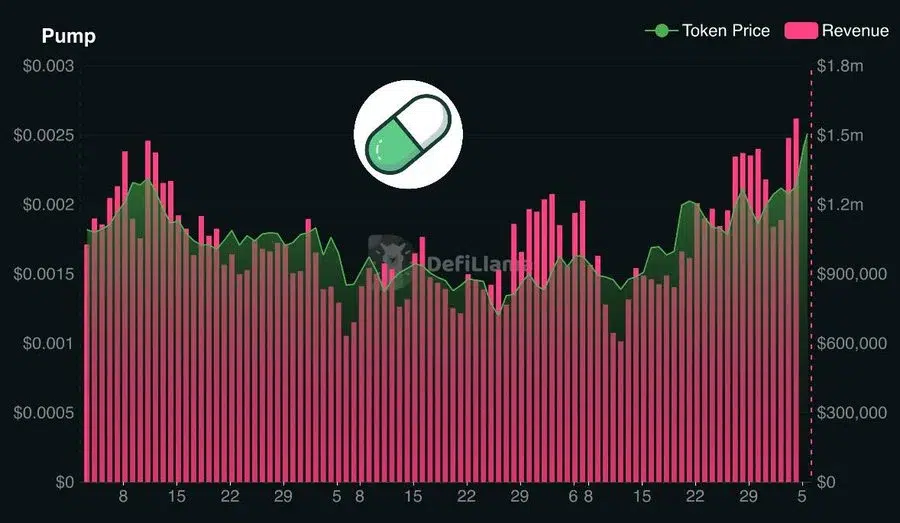
The revenue trend matters because the platform uses a portion of its protocol income to purchase the token from the open market. The platform’s official token dashboard says 50% of eligible revenue is allocated to buybacks and burns, with purchased tokens permanently removed from supply. The platform currently reports more than $414 million in cumulative buybacks and burns.
Also Read: PUMP Price Prediction: Inverse H&S Breakout Points to $0.0034 Rally
PUMP Buybacks Have Removed 15.6% of Total Supply
The supply reduction is becoming a central part of the PUMP investment narrative. Data shared in the post claims that buybacks have now offset approximately 15.6% of the tokens’ total supply, meaning a substantial amount of the token has been removed through the program.
The platform’s own dashboard provides a similar picture, reporting 153.73 billion of the token burned, equivalent to roughly 15.37% of the total supply at the time of its latest displayed figures. This distinction is important because the percentage can change as additional tokens are bought and burned, so the latest on-chain figure is preferable to treating the 15.6% estimate as fixed.
120% PUMP Rally Highlights Revenue and Supply Link
The recent price increase is notable because buybacks create a direct connection between the performance of the platform’s underlying business and demand for its token. When platform revenue increases, the amount available for programmed purchases can also increase, while the subsequent burns reduce the number of tokens remaining in supply.
However, buybacks do not automatically guarantee higher prices. The platform itself warns that purchases can affect market prices and that future activity should not be interpreted as a promise beyond the programmed mechanism. Independent analysis has also pointed to the importance of emissions, unlocks, and sustainable revenue when assessing whether buybacks can offset new supply.
The Token Faces Revenue and Supply Risks Beyond Buybacks
For the token holders, the next question is whether the recent revenue acceleration can continue. A strong buyback mechanism is more meaningful when it is supported by durable platform usage rather than a temporary increase in trading activity, particularly because the platform operates in the highly cyclical memecoin market.
The token also faces supply-related considerations. The platform changed its model in April 2026 from directing all revenue toward token burns to allocating 50% of revenue to buybacks, retaining the other half for operations and growth. This gives the platform more resources for development.
Also Read: Robinhood Chain Surpasses PumpSwap as $1.23B Weekly Volume Signals Rapid Adoption
This article contains market analysis and price predictions. These are not guarantees. Crypto markets are volatile. Always DYOR. Not financial advice.