- Bitcoin faces quantum risks, prompting a proposal for quantum-resistant wallet migration.
- Developer Agustin Cruz introduces a hard fork to secure Bitcoin from quantum attacks.
- New Bitcoin proposal targets quantum computing threats by upgrading security protocols.
Bitcoin developers are developing a substantial update to shield cryptocurrency from quantum computing cybersecurity threats. A developer named Agustin Cruz recently submitted a draft Bitcoin Improvement Proposal (BIP) known as “Quantum-Resistant Address Migration Protocol” (QRAMP) to the Bitcoin-Dev mailing list.
The new proposal introduces a hard fork that mandates moving unspent transaction outputs (UTXOs), or bitcoins, to quantum-resistant wallets. This plan protects Bitcoin’s blockchain, which holds the world’s largest value, by safeguarding it against quantum technology-related vulnerabilities.
Cruz’s QRAMP includes initial code and guidelines for destroying UTXOs secured by Bitcoin’s current Elliptic Curve Digital Signature Algorithm (ECDSA). Experts note that ECDSA, while robust against classical computers, may falter against advanced quantum machines.
No quantum computer has breached Bitcoin’s security yet, but Cruz and others warn that such a threat could emerge within years. The proposal sets a deadline: users must transfer funds to updated wallets, or Bitcoin Core, the dominant node software, will reject transactions from legacy wallets.
Hard Fork Sparks Debate Over Bitcoin Supply
The QRAMP proposal has created controversy because it could alter Bitcoin’s circulating supply. The upgraded nodes implementing QRAMP will reject all transactions attempting to use UTXOs that fail to meet the migration deadline, permanently eliminating associated coins. According to Cruz, the new proposal presents a “realistic” and “necessary” solution that allows rightful owners to protect their possessions.
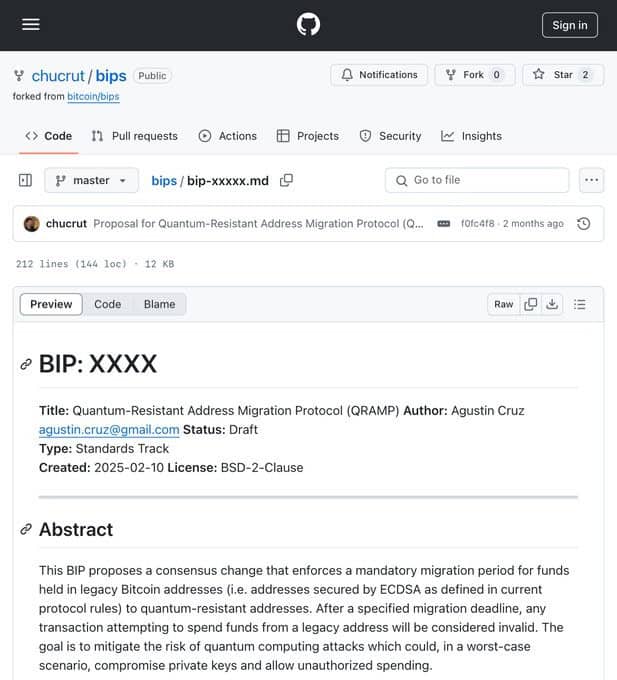
Community members express concern about burning unclaimed coins as they recognize situations where users could miss deadlines because of unexpected events. Implementing this hard fork would be difficult because Bitcoin is a decentralized system. Discussions on platforms like Reddit reveal skepticism. According to a user’s comment on Reddit, Satoshi Nakamoto’s inactive Bitcoin holdings would be at risk if this proposal were implemented.
The draft proposal represents current efforts to strengthen Bitcoin against quantum threats, although it remains without its official BIP number. The future of QRAMP remains uncertain because the Bitcoin development community lacks consensus about its optimal implementation.
Quantum Computing Looms as Future Challenge
The power promised by quantum computing to do processing beyond that of classical systems is simultaneously using qubits in multiple states. ECDSA is used for Bitcoin signatures and SHA-256 for mining, which is secure today. However, Cruz warns that if technology develops, it could turn those same keys used in past transactions into targets.
While a quantum computing processing unit revealed by Microsoft earlier shows how fast quantum is progressing, this acts as prevention rather than a reaction to an imminent threat. The migration period provides users with free fund movement capabilities through tools developed by wallet developers and block explorers.
Network nodes that remain non-compliant after the cutoff could experience the risk of separation from the network. Implementing BTQ’s quantum-ready blockchain innovations alongside QRAMP is a bold approach to securing Bitcoin from technological advancements.