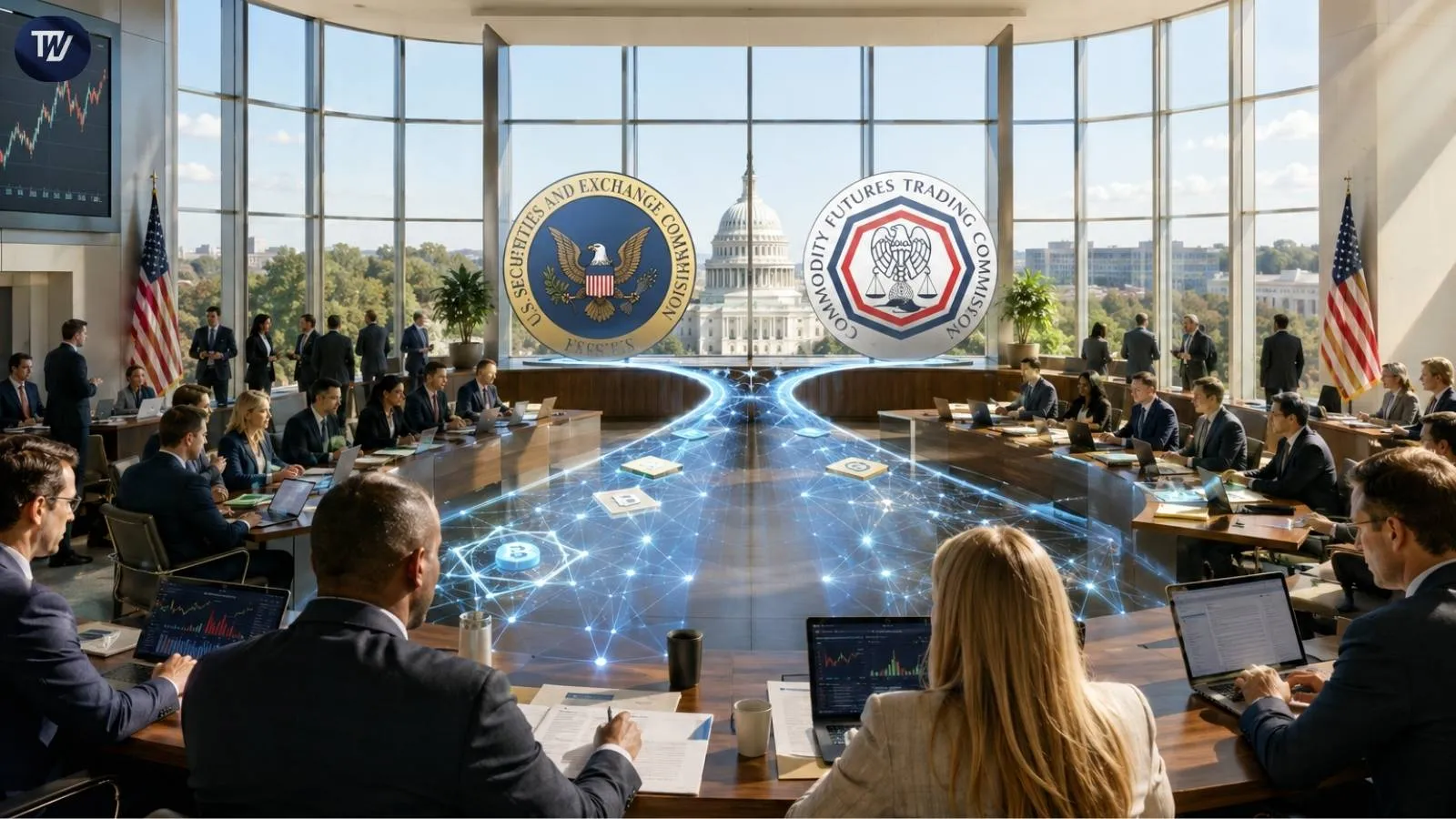
Digital asset regulation by the U.S. Much of Senator Cynthia Lummis’s support for the CLARITY Act hinges on its provision for clear dividing lines between the SEC and the CFTC. In her opinion, it will stop the two agencies from enforcing policy through their respective enforcement powers after nearly two decades.
Raising the Issue of the SEC and CFTC’s Relationship
The CLARITY Act seeks to clarify the overlap between the Securities and Exchange Commission (SEC) and the Commodity Futures Trading Commission (CFTC). The bill intends to clarify which agency has oversight of which specific digital asset activities to eliminate a source of confusion that has led to difficulties for exchanges, custodians, and DeFi protocols for compliance. Making clear the jurisdictional boundaries can result in a more efficient system of licensing, reporting, and enforcement throughout the U.S. crypto market.
Source: Freedom For All Americans
Also Read: CLARITY Act: White House to Host High-Stakes Talks on Crypto Regulation in 2026
Ending Enforcement-Driven Policymaking
Lummis argues that the present world is based mostly on ad hoc enforcement actions rather than legislation. The CLARITY Act will establish set standards and enable businesses to develop products with more regulatory assurance. Institutional investors may see a decrease in operational risk and be encouraged to invest in blockchain infrastructure long-term if there is predictable rulemaking.
This shift could also reduce legal ambiguity for startups building in DeFi and tokenization. However, the actual impact will depend on how consistently the new standards are applied across agencies.
Also Read: CLARITY Act Gains Momentum as Hedera Joins 200+ Groups
Protecting Retail and Institutional Participation
Besides the industry players, Lummis believes that setting rules is a way of safeguarding Americans who want to use the digital economy. Proper regulations might protect consumers better, but also facilitate innovations in tokenization, payments, and custody. Though there are still questions being raised on the details of how it will be done, and coordination among various government agencies.
Clarity on implementation timelines and compliance costs will be key for firms assessing long-term strategies. Ultimately, the balance between oversight and innovation will determine how effectively the framework supports broader digital asset adoption.
Also Read: CLARITY Act at “5-Yard Line,” Heads to Floor: Lummis