Sui Devnet has processed its first native quantum-safe transaction, marking a step toward introducing post-quantum authentication across the blockchain. Mysten Labs has integrated ML-DSA-65 into Devnet, with native account authentication on Mainnet targeted for the first quarter of 2027, subject to security audits and testing.
Sui Devnet Processes Its First Quantum-Safe Transaction
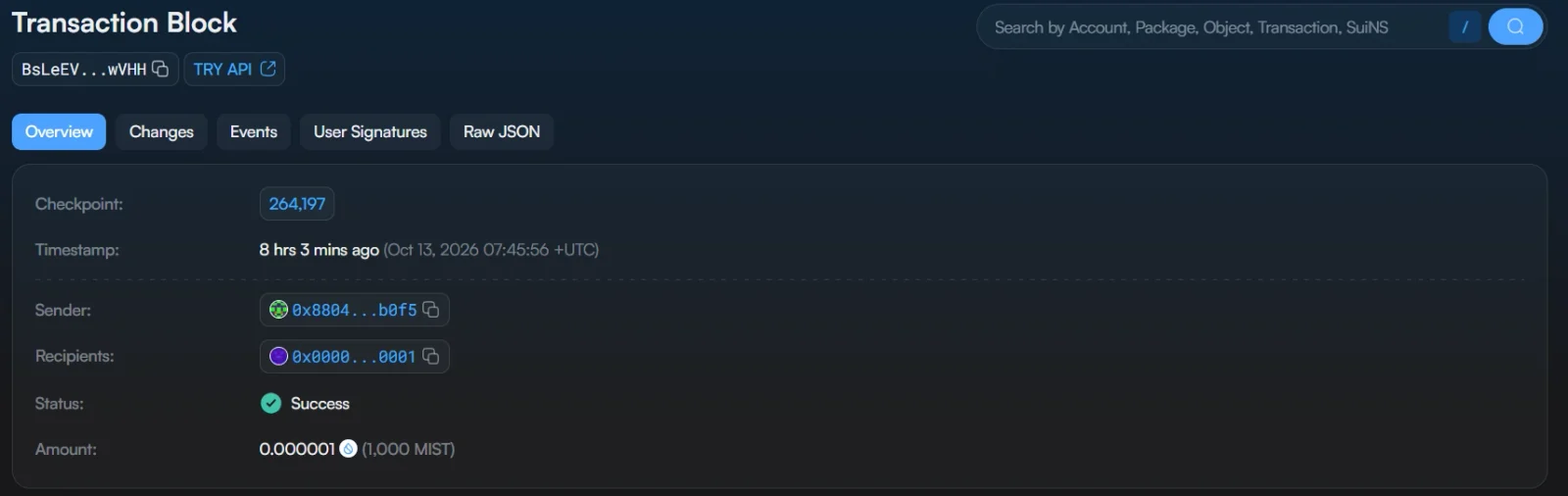
Mysten Labs co-founder and chief cryptographer Kostas Chalkias announced the transaction and shared its on-chain record. The implementation is available through Devnet release v1.82.0, allowing transactions signed with ML-DSA-65 to be submitted through the ExecuteTransaction API and checked through the VerifySignature API. The integration also extends to multisignature transactions, GraphQL and the Rust SDK.
The upgrade gives developers an opportunity to test quantum-resistant transaction authentication before the feature reaches production. However, the Devnet milestone does not mean existing Sui Mainnet accounts are already protected by post-quantum signatures. The feature remains in development while the team prepares for further testing and independent security reviews.
Also Read: SUI Price Eyes Fresh Momentum Ahead of Basecamp 2026
Why ML-DSA-65 Matters for Blockchain Account Security
ML-DSA-65 is a lattice-based digital signature algorithm designed to resist attacks from sufficiently capable quantum computers. The US National Institute of Standards and Technology (NIST) standardized ML-DSA under FIPS 204 in August 2024. Digital signatures authenticate transactions and help ensure that unauthorized parties cannot approve transfers using another user’s account.
The concern is that a sufficiently powerful quantum computer could eventually undermine widely used public-key cryptography, potentially exposing blockchain accounts whose public keys are available on-chain.
Preparing alternative authentication methods before such machines become practical could reduce future migration risks. Nevertheless, the upgrade addresses a potential future threat, not evidence that current Sui accounts are being compromised by quantum computers.
Sui Plans Testnet Release Before Q1 2027 Mainnet
According to Sui’s official post-quantum roadmap, native ML-DSA-65 accounts are expected to reach Testnet by the end of 2026. Native account authentication on Mainnet is targeted for Q1 2027, although the schedule depends on security audits and Testnet feedback. Wallet, software development kit and command-line support will also be important to practical adoption.
The staged rollout allows developers to identify implementation issues before users rely on the new authentication method. Multisignature support is particularly relevant for teams and organizations that require multiple approvals for transactions. The roadmap remains a target rather than a confirmed launch date, and the final deployment will depend on testing results.
Larger Signatures Create Trade-Offs for Sui Developers
Sui’s post-quantum plans extend beyond native accounts. Its technical overview also describes SLH-DSA-SHA2-128s, a hash-based signature scheme intended for high-value vaults implemented through Move smart contracts. Using two cryptographic approaches provides different security assumptions for everyday accounts and specialized asset protection.
The transition also introduces engineering considerations because post-quantum signatures and public keys are larger than conventional Ed25519 equivalents. This can increase transaction size even when signature verification remains efficient. It’s developers will therefore need to assess transaction overhead, wallet compatibility and implementation security alongside cryptographic resilience as the upgrade progresses.
Also Read: Bitcoin Finance Gains $500M Commitments Through Sui Hashi