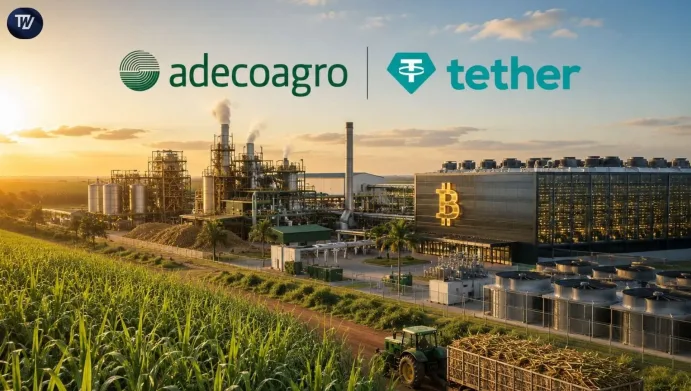
Adecoagro Bitcoin mining will begin commercial operations in Brazil on July 1, 2026. The Tether-backed agribusiness plans to use sugarcane waste for power under a renewable energy model. The facility in Ivinhema will convert renewable surplus energy into Bitcoin production.
The plan was announced at the Roots of the Future technology summit in Mato Grosso do Sul. The project moves Tether to the center of the business, as it has a 70% stake in Adecoagro. Biomass power based on sugarcane will be used at the facility.
Also Read: Tether Launches GEL₮ Stablecoin With Georgia Government Support
Adecoagro Bitcoin Mining Starts With 10 MW Phase
Adecoagro plans to power itself with electricity from sugarcane residues, rather than only selling power. The company said the model will be used for the guidance of excess renewable power to the mining infrastructure. The facility provides a second commercial value for the agricultural byproducts.
The first phase of the Adecoagro bitcoin mining will consume 10 megawatts of electricity in the first phase. Project Manager Matheus Lechuga said the operation will use 1,280 Bitcoin mining machines. He said the data center will be used to test the company’s structure and to put new technological developments to the test.
Lechuga said the project is geared towards Bitcoin mining using clean energy sourced from sugarcane. That approach connects Adecoagro’s agricultural operations with digital asset infrastructure. It also provides the company with another method of dealing with excess power production.
Adecoagro Bitcoin mining is based on an MOU signed in July 2025 between Tether and Adecoagro. The deal referred to sustainable digital infrastructure development in South America. The Brazil facility is a product of that cooperation.

Adecoagro Uses Biomass Power for Bitcoin Mining
In its regions, Adecoagro owns over 230 megawatts of renewable electricity. A significant part of that is made up of biomass energy. That power base is behind the company’s strategy to integrate sugarcane waste, electricity production, and Bitcoin mining.
Adecoagro Bitcoin mining aligns with Tether’s larger vision of using mining as a means of consuming stranded or unused energy. Tether CEO Paolo Ardoino stated that the venture is helping to promote sustainable Bitcoin mining. He also associated the project with decentralized development of infrastructure.
Adecoagro CEO Mariano Bosch said the project could assist in stabilizing a portion of the surplus energy that is being sold in the spot market. He also said it gives the company balance-sheet exposure to Bitcoin. Adecoagro Bitcoin mining therefore adds a new use for existing renewable power.
The Ivinhema launch gives Adecoagro a direct role in renewable-powered Bitcoin infrastructure. Adecoagro Bitcoin mining may be an example of agribusiness groups converting the power from processing waste for data centers. The first phase will be to test that model in Brazil.
Also Read: Cardano Foundation Signs 3-Year Brazil Olympic Blockchain Deal
