
Key Takeaways:
- The Purge simplifies Ethereum by reducing unnecessary data and feature complexity.
- History and State Expiry ease storage demands, enabling smaller devices to run Ethereum nodes.
- Feature Cleanup improves security and efficiency, ensuring Ethereum’s long-term scalability.
Vitalik Buterin, co-founder of Ethereum, addresses a pressing concern in his latest blog post, “The Purge,” addressing the increasing complexity and bloat inherent in blockchain protocols over time.
He also adds that every transaction and account must be retained indefinitely, which puts a heavy burden on client synchronization and overall network efficiency. Furthermore, with every innovative addition, most of the older ones remain, hence overcomplicating the protocol.

According to Buterin, Ethereum will only be truly successful if these trends are actively counterbalanced, and there is a balance between permanence and the need for reducing bloat and complexity.
Ethereum Dilemma: Addressing the 1.1 TB Storage Challenge
Perhaps the critical challenge that has faced Ethereum to date has been the enormous requirement for historic data storage. The storage needed by fully synced nodes is upwards of 1.1 TB. According to Buterin, one possible solution could be history expiry.
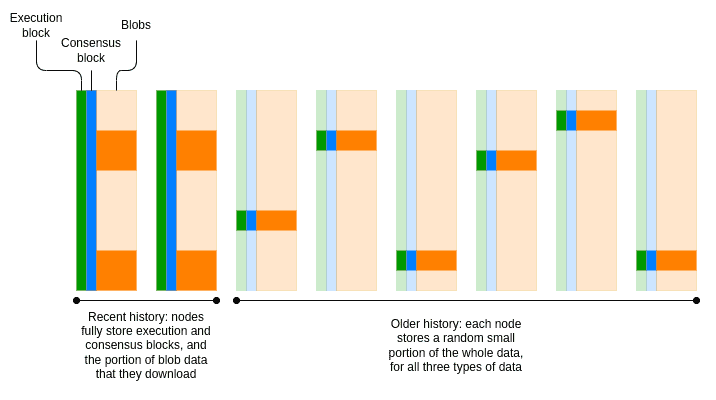
Here, the solution would implement cryptographic proofs of the state so that nodes are required to retain only partial histories–essentially, similar to a torrent system where nodes keep pieces of data that often overlap from node to node.
Currently, Ethereum nodes keep consensus data for six months and transaction blobs for 18 days. Proposed changes, such as EIP-4444, include reducing the storage time for blocks and receipts to just one year.
This shift toward transient data storage is not only being driven for efficiency but also to make nodes operable with smaller devices to further decentralize the network.
Simplifying Ethereum’s Protocol for Future Growth
As Ethereum has evolved, its protocol has naturally become more and more complex; this can arguably undermine its integrity and security. This is something that needs simplification.
Buterin points to various successful efforts, such as the removal of the SELFDESTRUCT opcode, which is used to complicate interactions among clients and also introduce security risks.
The other efforts may include migrating data serialization from RLP to SSZ, removing obsolete transaction types, and cleaning the EVM through the removal of unused precompiles.
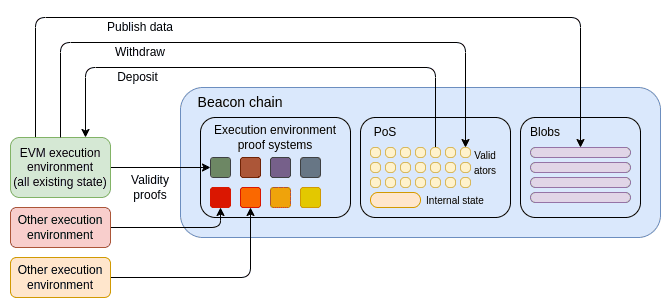
Such removal of features should be systematic, much like the process of SELFDESTRUCT, allowing developers to measure the impact before making changes. That would keep the protocols open, accessible, and efficient.
These measures will help Ethereum control its growth and remain competitive and dominant in the blockchain market. This is reflected by initiatives such as the Purge, which are pivotal in simplifying operations without getting rid of foundational elements responsible for its dominance in the decentralized ecosystem.
Related Reading | XRP Army Unites: SEC Demands 2025 Deadline for Appeal
