US Treasury Yields surged on Wednesday as stronger-than-expected economic data, higher oil prices, and weak demand at a major Treasury auction intensified selling across government bonds. The move pushed several maturities toward their highest levels in nearly two decades, raising borrowing costs and increasing pressure on stocks and other financial assets.
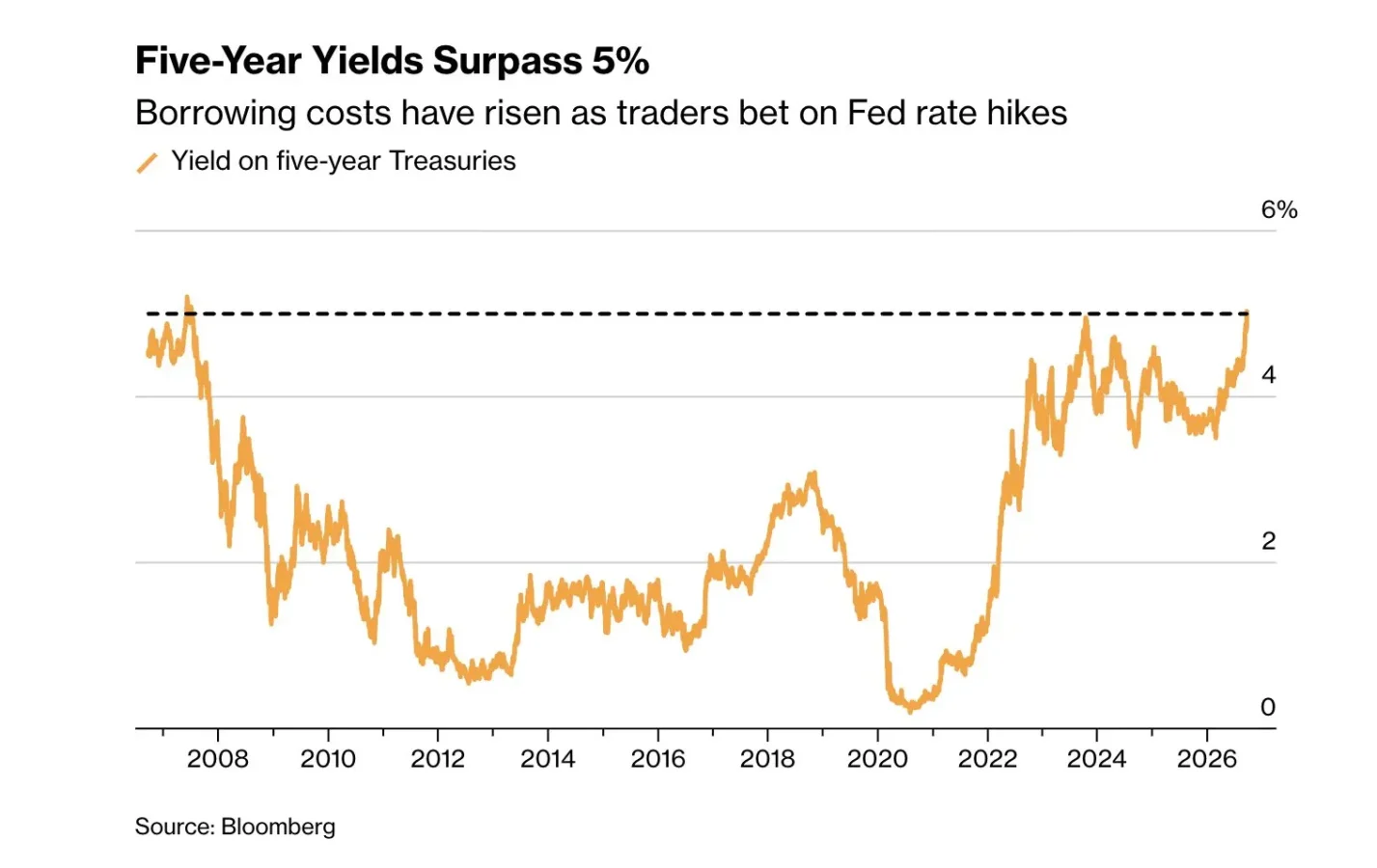
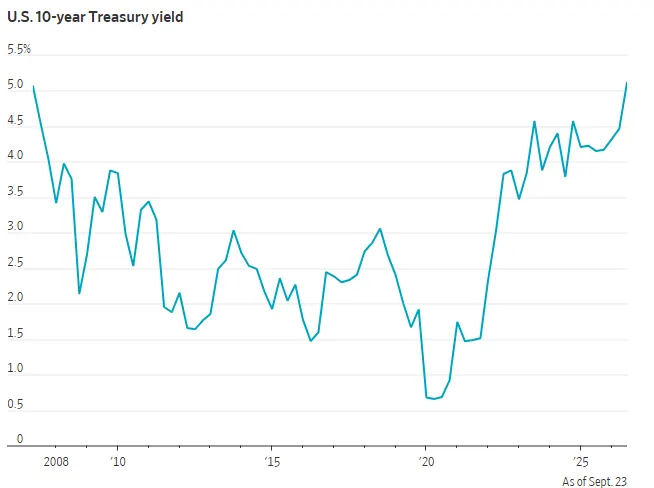
The five-year Treasury yield moved above 5% for the first time since 2007, while the 10-year yield climbed nearly 17 basis points to 5.13%. The 30-year yield also reached about 5.4%, bringing both longer maturities close to their highest levels since 2007. The sharp move reflected growing inflation and interest-rate concerns.
Table of Contents
Also Read | Litecoin Price Holds $60 as Network Activity Nears $1 Billion
US Treasury Yields Rise on Economic Data
The sell-off was triggered by rising prices of oil, which raised fears about a persistent state of high inflation. Prices of oil surpassed $100 per barrel and increased pressure on government bonds. Moreover, a survey by S&P revealed better performance of private-sector businesses and increasing prices, thus making people expect a longer period of higher interest rates.
US manufacturing and services also became an additional source of pressure, as the healthy economy makes it more difficult for inflation to reach the target level set by the Federal Reserve 2%. This made investors expect additional monetary tightening, driven by healthy economic performance and high costs of energy.
Rising US Treasury Yields are important from an even larger perspective since government bond yields affect all borrowing costs in the economy. It can affect the cost of mortgages and corporate loans and the valuation of stocks and other investments.
Five-Year Yield Breaks Above 5%
The five-year yield was the most apparent sign of the change in the situation on the market by crossing the 5% barrier after the Treasury auction. The auction of $70 billion in bonds resulted in a yield of 5.033%, which exceeded expectations by more than 3 basis points. Bloomberg noted that it marked the second-weakest result of the five-year auction since 2018.
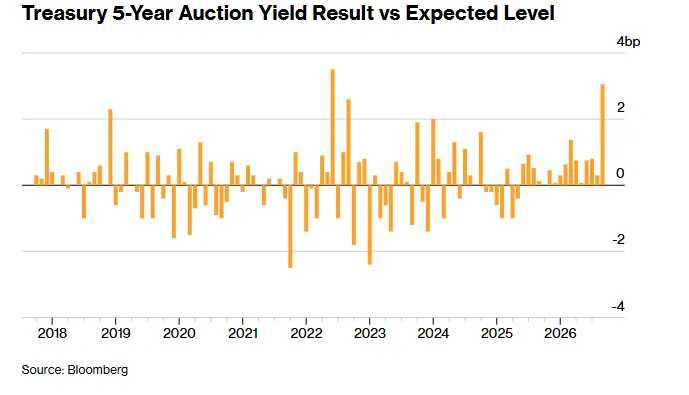
The weak result showed that the demand was not sufficient to accommodate the issuance of the bond without offering higher rates to the buyers. The five-year yield grew by up to 20 basis points during Wednesday’s trading, its biggest one-day growth since 2024, and exceeded last year’s 4.99% level.
The yield of the 10-year Treasury also increased notably. According to the Wall Street Journal, it rose 14.7 basis points and was equal to 5.113% being the highest level since July 2007 and the biggest one-day increase during the last year. The 10-year bond rate serves as a reference for mortgage and corporate borrowing.
Fed Rate Hike Expectations Increase
Market expectations for Federal Reserve policy also shifted as economic data and energy prices strengthened the case for additional rate increases. The pricing of rate swaps implied three rate hikes by 25 bps each during the upcoming year, along with heavy hedges on another one, which means that the federal funds target range will be 4.75%-5%.
Also, Fed Governor Michael Barr expressed his opinion that further rate hikes may become necessary in order to bring inflation back to the Fed’s target level. Policymakers remain concerned about inflation staying above the Federal Reserve’s 2% target for five and a half years, while elevated energy prices and a resilient US labor market add pressure.
Fed Governor Michael Barr said further rate increases may be needed. Meanwhile, the Treasury’s expanded $6 billion buyback program faces rising long-term yields, with its second operation scheduled for Thursday. Brendan Fagan, a macro strategist, mentioned that:
Strong growth, sticky inflation, questions around energy intervention and a hawkish Fed are a near-perfect storm for higher yields.
Bond Selloff Spreads Across Markets
US equity markets were also impacted by the Treasury sale, with the S&P 500 falling 0.8% and the Nasdaq falling 1.1%, according to the Wall Street Journal. The US dollar appreciated against a basket of currencies as Fed expectations impacted foreign exchange markets.
The sell-off was not confined to US markets, with European government bonds under pressure amid higher inflation expectations following higher energy prices. In early trading on the Asian side, Australian three-year government bond yields surged to their highest since 2011, and New Zealand’s 10-year yield hit the levels last seen in late 2023.
The Treasury’s purchase program is another event that investors should pay attention to. According to officials, the new round of operations on longer-dated securities will be set at $6 billion. The program is expected to improve the functioning of the Treasury market; however, the most recent rise in long-term yields shows that there still is considerable selling pressure.
In terms of market considerations, the next set of considerations would relate to the outlook for inflation and the economic situation, the Fed’s statements, and the demand at upcoming Treasury auctions. Rising costs of energy and better economic data would exert pressure on the yields, while weak economic data would change the outlook of the policies going forward. Also, demand will need to be watched if demand does not rise despite high borrowing costs.
This last action clearly highlights the importance of US Treasury Yields in the markets. Five-year yield above 5%, 10-year yield above 5.1%, and 30-year yield close to 5.4% all point to much higher funding costs. It will continue to be important going forward for markets.
Also Read | Fed Hike 2026: Tom Lee’s Massive Bullish Rally Prediction