South Korea is maturing its tokenization policy into a production buildout with Avalanche leading the charge. On October 13, Avalanche announced that the Korea Securities Depository, South Korea’s central securities depository, is building infrastructure connectivity on its network for the country’s soon-to-be-tokenized securities market.
The Korea Securities Depository (KSD) joins a fresh Financial Services Commission (KFS) three-phase buildout that will serve tokenized stocks, bonds, and funds with legal recognition starting Feb. 4, 2027anchored by law amended Jan. 15, 2026 and announced Feb. 3, 2026.
Phase one includes institutional-only private money market funds and private bonds, unlisted equities via trust beneficiary certificates, and publicly offered fractional investment securities. The KSD will transition its clearing and settlement engine from a testbed to a production platform that will oversee issuance trading clearing and settlement, and investor rights.
Table of Contents
KSD’s Multi-Ledger Finality Model
The Korean Depository’s custody architecture is multi-ledger by design. Its July 2026 distributed ledger principles specify Avalanche, plus Hyperledger Besu and Hyperledger Fabric, as supported tools. Samsung SDS, which developed the prior pilot, has been awarded the contract for the full build planned for February 2027, in line with the law’s effective date.
The approach retains the KSD as the source of truth about the existing securities, their current owners and when ownership changes, while connecting approved ledgers to each other through normalized interfaces. This reconciles a deep institutional concern: programmable execution without a loss of legal finality. With Avalanche, at least, non-exclusive support can still be enough.

Source: Binance
The network offers high-throughput subnets with flexible compliance features for finance. Broker-dealer visitors are on their way: Hanwha Investment & Securities created an Avalanche-compatible digital securities platform with FairSquare Lab. In a country with more than $5 trillion in securities assets, even small-scale activity could be meaningful.
Also Read: Avalanche Network Activity and AVAX Price Outlook Signals Bullish Momentum
Why This Matters For Markets And Institutions
This links the blockchain backbone to a new regulated post-trade stack. Korea integrates distributed ledgers directly into its CSD, instead of resorting to pilots that bypass the central securities depository. For institutional investors, custodians, exchanges, and stablecoin issuers, this is a route to legal onchain settlement.
For blockchain developers and ecosystems, this creates demand for compliant tokenization tooling and secondary markets that can plug into KSD and a regulated post-trade ecosystem. Korea’s move means that it is now competing with Hong Kong Singapore the EU and other economies for a functionally similar post-trade infrastructure to implement tokenized securities.

Source: Bombay Chamber
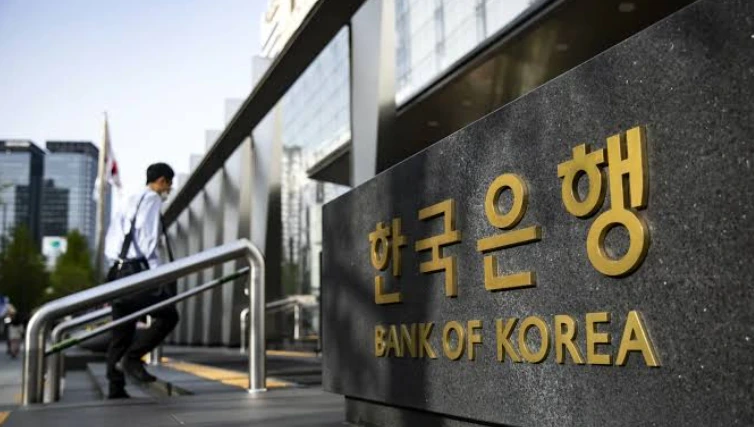
The FSC ties subsequent phases to stablecoin settlement and payments. Phase three will enable onchain payments connected to regulated stablecoins, in tandem with Bank of Korea pilots of tokenized deposits expected in Q4 2026. Consultation on subordinate rules continues until November 11, 2026 after, which planning is underway for phase two covering all publicly offered securities and phase three.
Source: Bloomberg
Also Read: Tether USA₮ Avalanche Institutional Adoption Big $200B
Challenges And What’s Next
Challenges remain. Legal clarity does not equal liquidity; phase one explicitly excludes listed stocks and public bonds. Interoperability standards, real-time reconciliation, and investor protection rules still need to be developed.

KSD’s standard requirements for systemic stability and security for its integrity and reliability test will need to be demonstrated by Avalanche and other ledger providers. In an ideal world, if delivered on time, Korea’s model would work as a foundation for institutional tokenisation, tying legal finality at the CSD with the innovation-enabled programmable networks of Avalanche.
Also Read: Avalanche Price Eyes $12.23 on $2B India Agri Push