Bitcoin’s recent price decline highlights a market caught between weakening short-term demand and continued institutional participation. According to blockchain analytics firm Glassnode, Bitcoin fell to approximately $62,600 as spot market activity remained subdued and derivatives traders adopted a defensive stance.
Despite the pullback, ETF inflows and steady long-term holder behavior continue to provide a foundation of support for the world’s largest cryptocurrency.
Bitcoin Drops to $62.6K as Spot Demand Remains Weak
Glassnode reported in its latest Market Pulse update that Bitcoin’s decline was largely driven by weakening spot demand. The firm noted that buying pressure has slowed considerably, limiting the cryptocurrency’s ability to sustain upward momentum despite broader interest from institutional investors.
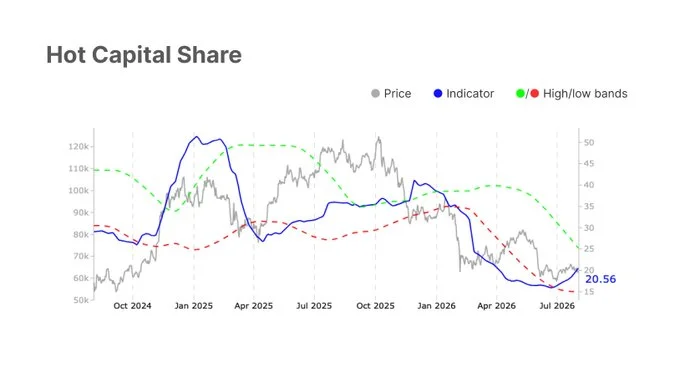
According to Glassnode, “BTC has slipped to $62.6k as spot demand remains weak and derivatives stay defensive.” The report suggests that market participants are becoming increasingly cautious, with investors waiting for stronger catalysts before committing additional capital.
Lower spot demand often reflects reduced conviction among retail and short-term traders, making it more difficult for prices to break out of established trading ranges.
Also Read: Coldcard Attack Enters Fourth Wave as 448 Bitcoin Moves Across Wallets
ETF Inflows Continue Supporting Bitcoin Market Structure
While demand has softened, institutional participation remains an important source of stability. Glassnode highlighted continued inflows into Bitcoin exchange-traded funds (ETFs), which have helped absorb selling pressure and prevent deeper declines.
The significance of ETF demand extends beyond short-term price action. Since the approval and expansion of Bitcoin investment products, traditional investors have gained easier access to the asset without directly managing cryptocurrency wallets. This shift has broadened Bitcoin’s investor base and increased its integration into conventional financial markets.
On-Chain Activity Shows Resilient Long-Term Holders
Glassnode’s data also pointed to improving on-chain activity and resilient holder behavior. Metrics such as active addresses and capital retention indicate that many long-term investors continue to hold their Bitcoin despite recent market volatility.
Historically, strong-holder conviction has played a critical role during consolidation periods. When long-term holders avoid significant selling, circulating supply becomes more constrained, reducing downside pressure. This dynamic can create conditions for future price recovery if demand eventually returns.
The data suggests that the current weakness is not necessarily being driven by panic selling. Instead, the market appears to be experiencing a period of reduced participation while investors evaluate macroeconomic and cryptocurrency-specific developments.
Defensive Derivatives Signal Cautious Market Outlook
The derivatives market remains another area of concern. Glassnode’s funding rate and momentum indicators suggest that traders are positioning conservatively, reflecting uncertainty about BTC’s near-term direction.
Defensive positioning often emerges when investors expect continued volatility or lack confidence in a sustained rally. While this can limit upward momentum in the short term, it may also reduce the risk of excessive leverage-driven liquidations that have historically amplified market downturns.
Also Read: Bitcoin Governance Debate Grows as Craig Wright Calls for a Fixed Protocol
This article contains market analysis and price predictions. These are not guarantees. Crypto markets are volatile. Always DYOR. Not financial advice.