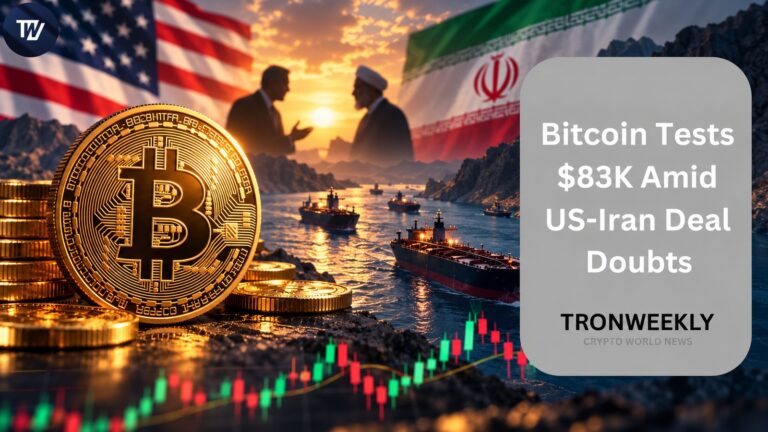
Bitcoin rebounded toward $83,000 on October 20 as reports of a peace proposal revived US-Iran deal hopes. A later update disputed claims that an agreement was close, underscoring uncertainty over nuclear talks, frozen assets, and Strait of Hormuz shipping.
Table of Contents
Walter Bloomberg, known as DeItaone, posted on X: “IRAN-US TALKS CONTINUE, REPORTS DEAL IS CLOSE ARE WRONG: PERSON.” The update challenged expectations of an imminent US-Iran deal without suggesting that negotiations had ended.
Bitcoin’s initial rebound amounted to roughly 1.5%. Ethereum gained about 2.5%, while XRP advanced roughly 3%. The gains accompanied early optimism about diplomatic progress, leaving the market reaction distinct from confirmation of a settlement.
What does the proposed US-Iran deal cover?
Qatar and Pakistan have made a compromise proposal to the US and Iran in Washington and Tehran on Tuesday, according to sources who were informed about the negotiations process. Pakistani army chief Asim Munir gave a proposal to the Iranians in Tehran.
Also Read: Citi Research: Strong Outlook for Aave and $5T Markets
The sources noted positive feedback from both parties. The sources said that the proposal was aimed at obtaining some concessions and building mutual trust after a period of conflict.
According to the proposal on the terms of US-Iran agreement, Iran will let a secret visit of the International Atomic Energy Agency inspector to Iran’s nuclear facilities while the US will give Iran access to interest accrued on $6 billion of frozen funds of Iran in Qatar.

This concession refers to the accumulated interest but not to the release of the entire $6 billion of frozen funds that Iran wants to get. The demand of Washington for dismantling Iran’s nuclear program is still an unresolved issue.
The previous truce in June was aimed at opening negotiations on the wider issue. However, the truce collapsed the next month and tensions increased due to the tanker attacks and possible military actions.
Why is a US-Iran deal still uncertain?
Senior Iranian officials highlighted growing political tensions surrounding the negotiations. Tehran reportedly sought to pressure President Donald Trump ahead of the November 3 midterm elections. They expressed their distrust in Washington and were afraid of another military strike.
Both parties also have different perspectives on sequencing. While Washington demands that issues related to nuclear program be discussed right from the beginning, Iran wants its relief from the U.S. naval blockade, limitations on oil sales and frozen assets first.
All these conflicting circumstances make a US-Iran deal more difficult despite all the mediations’ efforts. Later, DeItaone’s update will stress even more the difference between the negotiation process and the nearing of the deal.
How do oil risks affect Bitcoin?
Tensions in the Strait of Hormuz continue to form the crux of US-Iran deal speculation. One of the tankers had exploded after hitting a naval mine in the area, reported Iran’s Revolutionary Guard navy. Regional stocks declined on October 19 on account of shipping concerns.
Nevertheless, Brent crude was down 1.32% at $108.41 per barrel on that day. Profits were being taken after the easing of restrictions imposed on Russia by the United States.
The relationship between economics and Bitcoin lies in the aspects of inflation and risk appetite. The IMF warns that prolonged conflict and energy disruptions threaten regional economies as policy buffers shrink. A lasting deal between the US and Iran can help achieve less supply uncertainty in case that happens.
Institutional investments in US Bitcoin spot ETFs have brought about net inflows amounting to $526.6 million on Monday. In particular, iShares Bitcoin Trust of BlackRock saw an inflow of $665.16 million, marking its largest single-day inflow since October 7, 2025. On the other hand, there were net outflows from Ethereum ETFs worth $103.3 million for four consecutive days.
Also Read: US-Iran War Deal Talks Put Bitcoin’s $90K Recovery in Focus
This article contains market analysis and price predictions. These are not guarantees. Crypto markets are volatile. Always DYOR. Not financial advice.