Canary Capital is set to roll out an ETF that could represent a groundbreaking move towards cryptocurrency investment funds in the U.S. The fund will let investors invest in Tron’s TRX tokens and earn staking rewards on the holdings.
Table of Contents
The TRX ETF will start trading on Cboe BZX from Wednesday onwards, and Justin Sun, the founder of Tron and its CEO, posted a statement about this issue on September 8. Should the rollout be successful, it will allow U.S. investors to invest in TRX and earn staking rewards via a conventional brokerage account without having to deal with a cryptocurrency wallet.
Also Read | Strategy Deploys $176M on STRC Buyback After Pausing Bitcoin Accumulation
How the TRXS ETF Will Earn Staking Rewards
In a regular market environment, Canary Capital is going to put 90% of the TRX that is present in the fund into staking. The service fee for staking is going to be 20% of the reward that comes from this process, leaving the other 80% for the ETF.
Investors are not going to receive any payments as a result of staking. Rather, the income received from staking is going to stay inside the fund, increasing its total value.
A sponsor fee of 1.10% per year will be levied on Canary Capital, which will be payable on a monthly basis using TRX or cash. This cost is much higher compared to that charged by the majority of Bitcoin ETFs in the United States, which is usually between 0.19% and 0.25%. Nevertheless, Bitcoin ETFs do not earn staking rewards.
Also, different parties will handle cash and TRX custody. Cash will be held by US Bank, while BitGo Bank & Trust will handle the TRX portion.
TRXS Could Set a New Standard for Crypto ETFs
However, the ETF can potentially play an important role within the entire US crypto ETF industry, especially with regard to asset managers seeking ways of incorporating staking into their investment products.
Indeed, several other companies have tried to obtain regulatory approval for ETFs based on individual altcoins, such as BNB; however, most of these ETFs are still undergoing the process of SEC review.
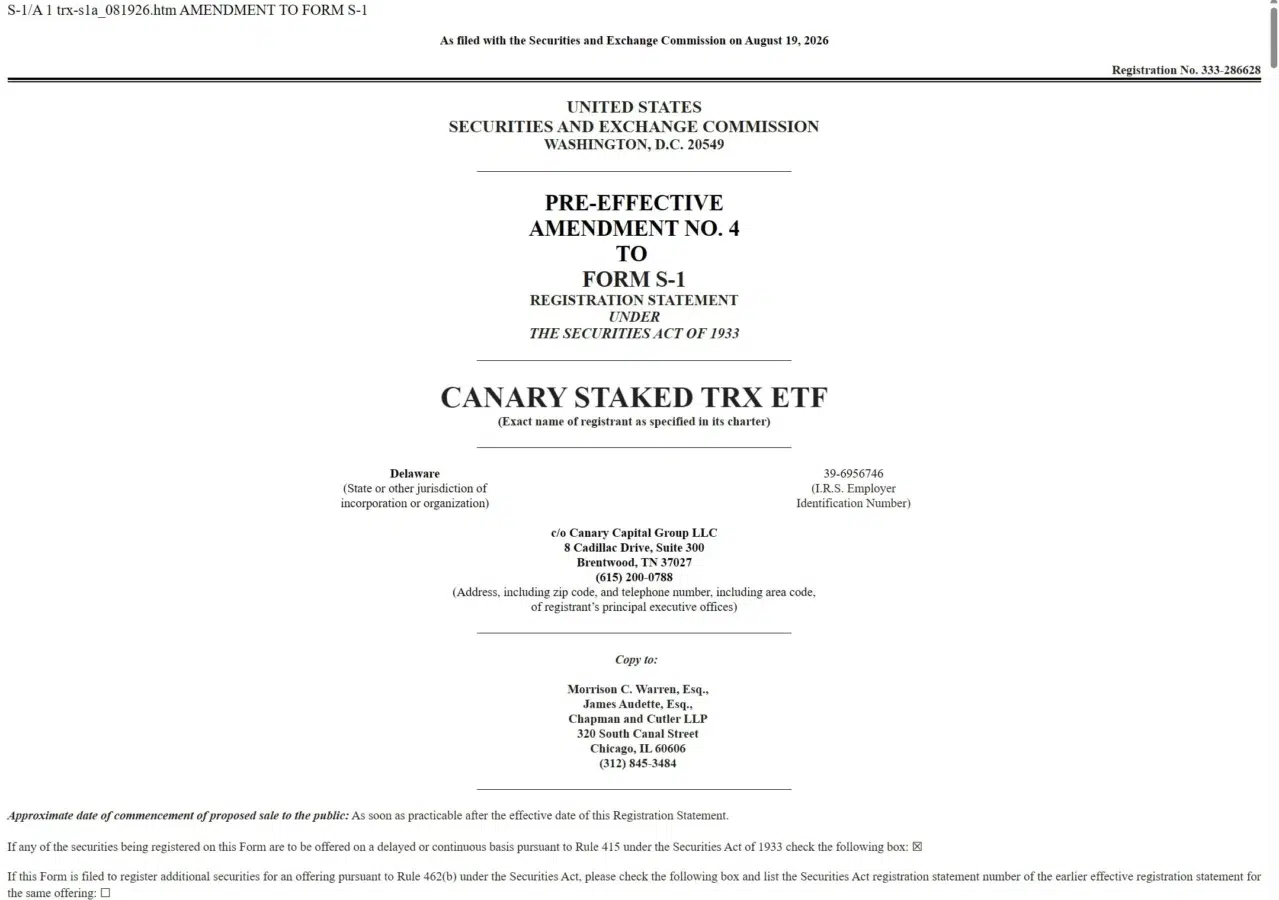
Canary Capital revealed more information about the TRXS arrangement through the amended S-1 filing that was filed on August 19. The filing revealed the custodial, fee, and staking structure that indicated how advanced the TRXS had been in its development process.
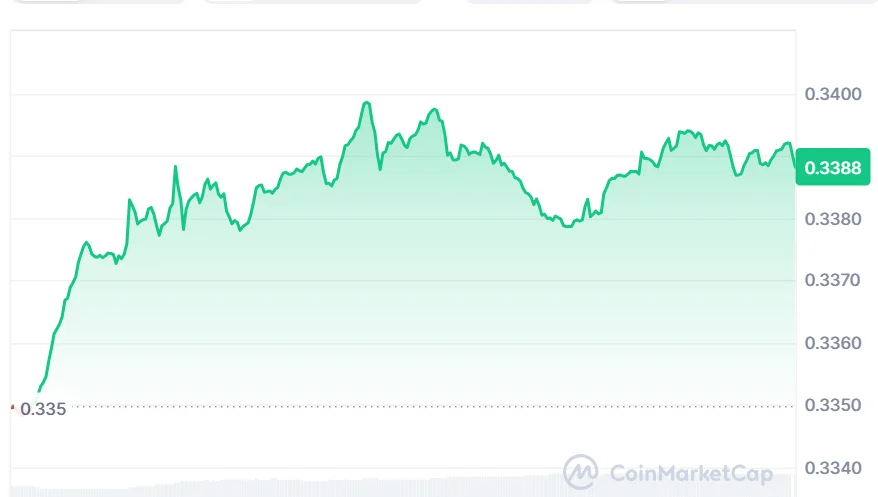
Founder of Tron, Justin Sun, confirmed the listing details of TRXS on September 8, which was only a day prior to the launch. At the time of writing, TRX is trading at $0.3388, and its 50-day exponential moving average was $0.33.
Canary Capital TRXS ETF Could Set a Staking Trend
The proposed TRXS product is occurring after some issuers of Ethereum ETFs have lobbied to be allowed to include staking in their products, but regulatory bodies have turned down all of these requests.
This makes the Canary Capital product especially important. Assuming that the proposed TRXS ETF is allowed to trade on the market without changing its staking function, this would be an example of a crypto staking ETF in the US market.
This move will also serve as an incentive for other asset managers to follow the same path. Ethereum and other proof-of-stake platforms may be potential candidates for ETFs that would give both token exposure and staking yields.
At present, the launch of TRXS can be regarded as an important step in the crypto ETFs space in the United States.
Also Read | Can the CLARITY Act Survive Its Sept. 15 Senate Vote?