Chainlink solved a major bottleneck that used to hold back prediction markets: slow settlement times. In the past, prediction market decentralization was fundamentally restricted by an operational constraint, i.e. the time needed to settle outcomes was in the order of hours.
Early platforms were dependent on manual human intervention for dispute settlement, which meant that user capital and liquidity were tied up for a long time. This bottleneck was addressed through the utilization of LINK oracles.
Once again, in this use case, smart contracts were connected by LINK to external sources of real-world data and information. Through this, the time period for resolution was cut down from the original hours to minutes, eliminating a major inefficiency that persisted in the industry.
The Chainlink Pre-Challenge Era
Pre-chainlink Ethereum and other blockchain marketplaces largely depended on internal voting systems or the use of centralized databases to check results. Besides delaying transactions, this method also brought on governance uncertainties, possibilities of manipulation, and potential risks to the accuracy of results.
Source: LinkedIn
The settlement time of the markets was typically between 2 and 24 hours which would not only put off high-frequency traders but also discourage involvement by institutions.
Developers couldn’t make trust-minimal arrangements for automated payout execution, and exchanges were very reluctant about launching prediction products without the finality of the outcome being assured beyond a reasonable doubt.
Also Read: Chainlink CCIP Selected by YuzuMoneyX for Yield 2026
Who Can LINK Thank for Resolution?
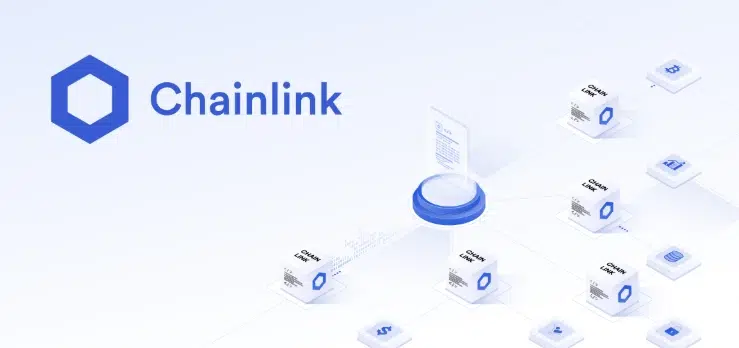
A solution for decentralizing chain data and oracle networks, is the creation of the LINK oracle. By fetching, filtering and delivering off-chain data into chain, LINK is the most used oracle. Augur v2, SX Bet together with Polymarket have decided to use CLINK not only for market resolution, but it also works as a source and tool to deliver data.
Once an oracle has confirmed the event is over, the consensus is reached through the pulling of data from multiple sources.
Also Read: Chainlink 2026: Accelerating Global Blockchain Finance Growth
The Role of the LINK’s Ecosystem & Outlook
Capital efficiency is quite a bit improved at the same time that counterparty risk is reduced for both the market makers and the investors. Developers and exchanges are also affected by the shift in market maker operations.
For example, regulated event contracts that institutions are exploring will become much easier to implement through the availability of an underlying infrastructure that is more trustworthy because of such changes.
Source: Bombay Chamber
The introduction of such oracle networks is yes, a change in how things work. This has made data source diversity an issue which the developers have to address in their products. Also, the CFTC and other regulatory bodies have to be included in the supervision process of the market, which will happen as a natural result of the introduction of oracle networks.
Settlement times shorter than 10 minutes will be expected to be standard industry practice, when such networks are extended to more asset classes as well as Layer2 ones.
Also Read: Chainlink Price Prediction: LINK Targets $14 Amid Robinhood Crypto Integration