• Skip to primary navigation
  • Skip to main content
  • Skip to primary sidebar
  • Skip to footer
  • About TronWeekly
  • Write for us
  • Terms and Conditions
  • Privacy Policy
  • Disclaimer
  • Contact
  • All Posts
  • Advertise

TronWeekly

Crypto World News

  • Home
  • Latest News
  • Opinion
    • Education
    • Best TRON Wallets
    • Beginner’s guide to TRON
    • Tron Tokens
    • Market Analysis
  • Industry
    • Tron Exchange
    • Project Review
  • Press Release
  • Bitcoin (BTC)
  • Ripple (XRP)
  • Advertise
  • About TronWeekly
    • The Team
    • Editorial Policy
    • Write for us
    • Privacy Policy
    • Disclaimer
    • Terms and Conditions
    • Contact
You are here: Home / Industry / GENIUS Act Drives Robust Stablecoin Compliance Framework 2026

GENIUS Act Drives Robust Stablecoin Compliance Framework 2026

What to know:

  • FDIC wants BSA and OFAC compliance for stablecoin issuers.
  • Higher costs for issuers, but stronger institutional trust.
  • Could ease cross-border flows, though regional conflicts remain.

By Ananthyka J | Edited By Ammar Raza,May 23, 2026, 2:30 PM

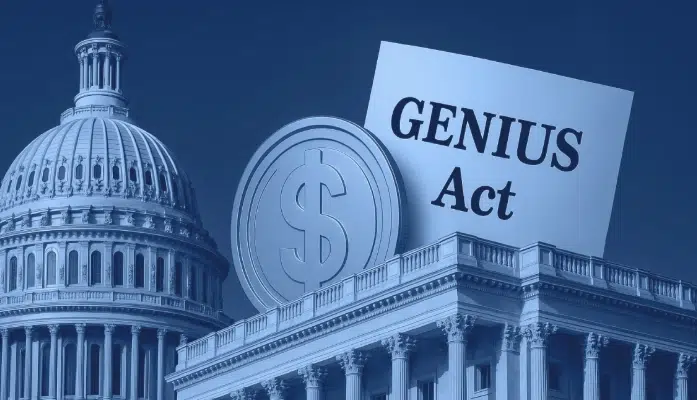
GENIUS Act

The Federal Deposit Insurance Corporation has drafted new compliance norms for stablecoin issuers under the GENIUS Act, including the Bank Secrecy Act (BSA) and sanctions rules.The aforementioned template indicates a push toward stringent anti-money laundering (AML) and countering the financing of terrorism (CFT) measures in the digital asset space. It mirrors the FinCEN-prescribed rules under the GENIUS Act for crypto users.

Proposed BSA and Sanctions Alignment

Under the FDIC proposal, stablecoin issuers would have to implement BSA compliance programs similar to established financial institutions. Starting with customer due diligence, then transaction monitoring and suspicious activity reporting, stablecoin users are expected to have verifiable procedures that are similar to that of the control.
Proposed BSA and Sanctions Alignment
Source: Fireblocks

The stabilization process would have to include Sanctions screening, which would have to follow the Office of Foreign Assets Control (OFAC) watch list of monetary sanctions. Through this step, there is only one regulation system for operation of digital dollar based on FinCEN’s.

Also Read: Morgan Stanley Launches Stablecoin Fund Under GENIUS Act 2026

Impact on Issuer Oversight

Were they to be to adopted, the rules would seem to intend to heighten supervisory oversight for stablecoin issuers. Issuers could be required to strengthen compliance infrastructure, improve reporting burden sharing with regulators and allot resources for AML/CFT programs.

ConsenSys Calls for Updates to FDIC's Proposed Rules for Payment Stablecoins Under the GENIUS Act https://t.co/PA6xhwkydm

— FinTech Faridi (@braindrainomar) May 22, 2026

While this cost increase could be damaging to operations in the short-term, it could also bolster institutional confidence and banking relationships, and support ushering in more widespread use of stablecoins given the historic image of illicit finance concerns ascribed to stablecoins.

Also Read: FDIC Proposes New Rules for Stablecoin Issuers Under GENIUS Act

Implications for Cross-border Transactions

By enabling compliance with standardized sanctions regimes, this proposal could reduce friction during international transactions, although it could create friction when accessing a jurisdiction with a different approach to regulation.

For users, developments like this should engender confidence in stablecoins as payment rails; in the wider blockchain community, this policy signals a trend of greater regulatory certainty, although there is some way to go.

Also Read: The GENIUS Act and MiCA: A Two-Tier Future for Stablecoins in 2026

Filed Under: Industry, Cryptocurrency News

About Ananthyka J

Ananthyka J is a market reporter at Tronweekly, reporting on cryptocurrency news. She covers cryptocurrency markets, blockchain technology, and digital asset regulation, focusing on Bitcoin, Ethereum, DeFi, altcoins, and crypto policy. Her reporting emphasizes clear and accurate market coverage, including crypto market movements, regulatory developments, and blockchain adoption. She holds a BA in Journalism and Mass Communication and an MA in Communication and Media Studies. She has also completed multiple media internships, follows strict editorial and fact-checking standards, and discloses potential conflicts of interest when reporting.

Primary Sidebar

Recent Posts

  • GENIUS Act Drives Robust Stablecoin Compliance Framework 2026 May 23, 2026
  • India’s SEBI Exposes Social Media Stock Scam Case 2026 May 23, 2026
  • PENGU Price Eyes $0.43 Breakout After Descending Wedge Formation May 23, 2026
  • FET Price Analysis: Strong Recovery Signals Point to a Strong Rally to $0.55 May 23, 2026
  • TAO Price Prediction: Bull Flag Formation Points to Long-Term Move to $6,600 May 23, 2026

Footer

News

  • Latest News
  • Altcoin News
  • Bitcoin (BTC)
  • Blockchain
  • Tron (TRX)
  • World

Digest

  • Meet the Founder
  • Price Winning Article
  • DeFi
  • Cyber Security
  • Crypto Scam

Industry

  • Project Review
  • Technology
  • Fintech
  • Tron Exchange
  • New in Town

Tron Universe

  • Event and Tron Parties
  • New in Town
  • Tron Tokens

FOLLOW US

  • Facebook
  • Telegram
  • Twitter
  • Linkedin

Editorial Policy | Privacy Policy | Disclaimer | Terms and Conditions | Masthead

Copyright © 2026 · Tron Weekly. All Rights Reserved. NOTE: Tron Weekly is an independent crypto news site that adheres to the strict journalism policy anchored on transparency, trust, and objectivity, we have no affiliation with the TRON Foundation, its founder Justin Sun or any other cryptocurrency firm.