
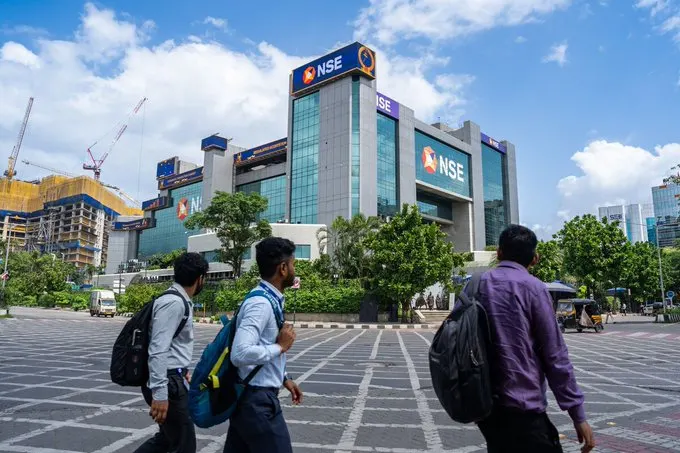
National Stock Exchange of India shares (NSE Shares) rose after debuting on the Bombay Stock Exchange on Thursday, following a $2.4 billion initial public offering. The stock opened at ₹1,800, 0.84% above its ₹1,785 issue price, before climbing to ₹1,878 during early trading, marking a stronger move after its initial listing.
The listing valued NSE at about ₹4.4 trillion, or $46 billion, placing the exchange among the world’s largest publicly traded market operators, according to Bloomberg. The IPO raised roughly ₹22,562 crore and ranked as India’s second-largest public offering, behind Hyundai Motor India’s ₹27,870 crore issue in 2024, according to market data.
Table of Contents
Also Read | US Stablecoin Policy Proposal Targets Global Dollar Adoption
NSE Shares Gain on Institutional IPO Demand
Total subscriptions came to 5.71 times the offered shares, most of them coming from institutional investors. Qualified institutional buyers had subscribed to 12.68 times their allotments, whereas non-institutional and retail investors had subscribed to 6.55 and 1.39 times, respectively, indicating greater participation from institutional investors than individual investors.
Some of the main financial institutions that participated in the issue include Life Insurance Corporation of India, Norges Bank Investment Management, ICICI Prudential Asset Management, Quant Mutual Fund and Mirae Asset Mutual Fund. Some of the anchor investors in the issue include Goldman Sachs Asset Management, HSBC, Fidelity, GIC, Abu Dhabi Investment Authority and Eastspring.
The offering was a completely offer-for-sale type of deal, whereby the company did not offer fresh shares but the existing shareholders offered their shares. The structure provided liquidity to existing investors and at the same time gave the investors the opportunity to invest in the stock exchange of India.
Derivatives Revenue Faces Regulatory Pressure
NSE’s public debut comes as regulators continue tightening rules around India’s derivatives market, an important revenue source for the exchange. Transaction fees from options accounted for more than 60% of operating revenue in fiscal 2026, making changes affecting derivatives activity particularly important for NSE’s earnings outlook.
The tightening regulations have already impacted derivatives trading and are adding to the uncertainty surrounding NSE’s revenues for the next couple of years. According to Bloomberg Intelligence analyst Sharnie Wong, revenues have been constrained by regulatory concerns and increased taxation for equity futures and options trading in fiscal 2026.
NSE nevertheless retains a dominant position across India’s capital markets. According to Reuters, NSE held about 93% of India’s cash-equity market share and 75% of the options market before going public.
Valuation Keeps Investors Focused
At the IPO price, NSE was valued at roughly 42.9 times earnings for the year ended March 2026. It was higher than that for some leading exchanges across the globe but still lower than expectations following the cutback on the size and prices of the issue.
Institutional subscriptions were higher compared to retail subscriptions due to the fact that some of the institutional subscribers had concerns regarding valuation and the impact of regulations related to derivatives on NSE’s earnings.
Listing on the BSE market would provide yet another method through which investors can price the exchange. The BSE debut now provides greater price transparency and liquidity for public investors.
NSE Shares Enter India’s Public Markets
The listing marks the end of NSE’s lengthy effort to enter India’s public markets. The exchange first attempted an IPO in 2016, but the process was delayed amid regulatory and governance issues. It remained privately held for years before completing the latest offering.
The current listing brings NSE into the public market while its shares trade on rival BSE. The development gives investors direct access to one of India’s most important financial-market operators and creates greater transparency around its market valuation.
For NSE Shares, attention will now shift toward quarterly earnings, derivatives volumes, regulatory developments and changes in shareholder ownership. The amount of stock that could become available after applicable lock-in periods expire may also affect trading activity and the public float.
Investors will therefore be watching how NSE’s operating performance develops after the IPO, particularly as regulatory changes continue to affect India’s derivatives market. The exchange’s dominant position across cash equities and options will remain an important part of its financial profile as it begins its new chapter as a publicly traded company.
Also Read | Galaxy Adds $100M in sUSDS as Institutional Use Expands