Pineapple Financial has transferred more than $1 billion of residential mortgage files onto the Injective platform, taking a big step forward in Pineapple Financial’s strategy to transfer its legacy loan portfolio onto the blockchain.
Table of Contents
According to Injective, the Canadian mortgage company plans to transfer more than 29,000 funded mortgages with a total value of over $10 billion onto the layer-1 platform of Injective. This will be done to transfer mortgage files on-chain without altering the mortgages themselves.
Each mortgage is registered on the blockchain and tied to the loan file. The registration does not create a new mortgage security or replace the original loan. Rather, it creates an electronic record, which may help in verifying and reviewing mortgage details.
Also Read | ALGO Price Eyes Breakout to $0.50 as Algorand Transactions Surge 35%
Pineapple Expands Onchain Mortgage Records
The mortgage data has more than 500 data points that include information at the loan level. These data points will be useful for supporting verification, auditing, and risk assessment as Pineapple continues transferring its portfolio to the network.
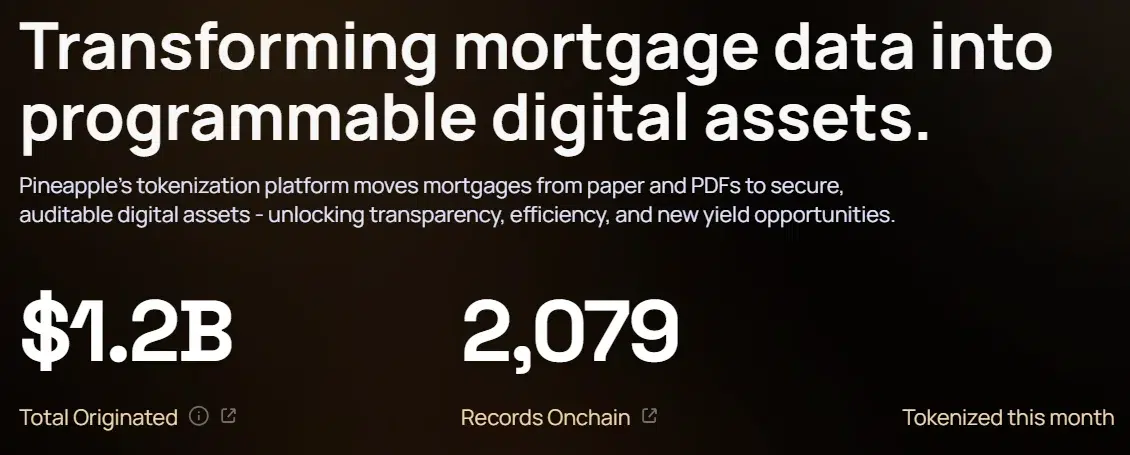
Currently, Pineapple’s dashboard has 2,079 mortgage records on-chain, while in December 2025, when the project started, there were 1,259 records.
The on-chain mortgage token, referred to as PAPL0, is valued at about $1.1 billion, based on information from Token Terminal. This valuation is up 48.2% over the last nine months.
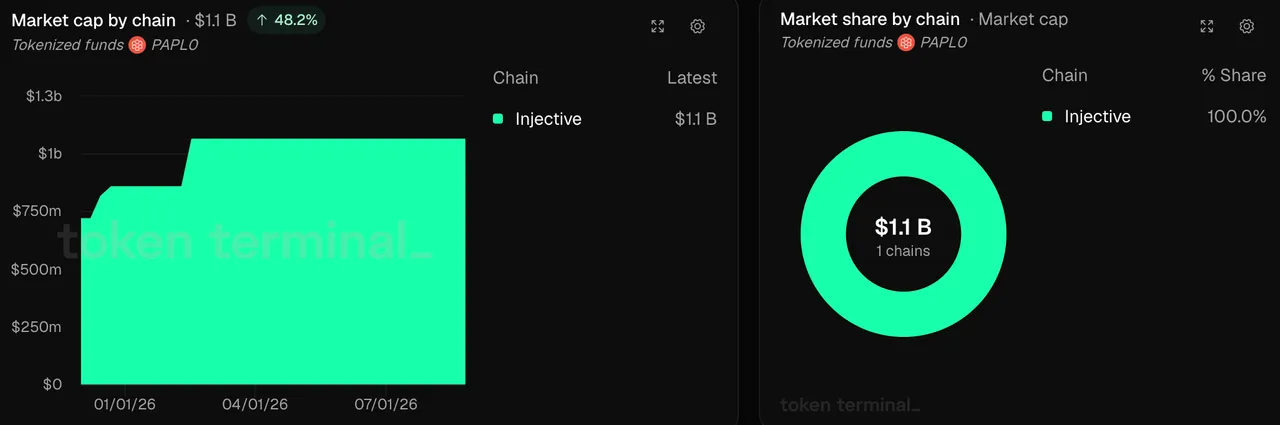
But the PAPL0 token does not equate to ownership of the mortgaged assets; rather, it is tied to the mortgages on the blockchain.
The project is an initiative by Pineapple Financial and Injective. There is another digital assets fund worth $100 million, which is run by Pineapple for its native INJ token. Pineapple stakes some of its INJ, with Kraken being one of the validators.
Real Estate Tokenization Continues to Grow
Pineapple’s decision comes as financial firms start experimenting with the tokenization of assets such as property through the use of blockchain technology.
Tokenization refers to a process whereby data or the interest associated with physical assets is represented in digital form on a blockchain. The advantage of tokenization technology is that it makes some assets traceable, divisible, and transferable.
This month, Apex Group participated in the creation of a tokenized real estate fund with Goldman Sachs, Archax, and LRC Group. This fund uses digital assets to provide blockchain shares of the fund instead of putting property data on the blockchain.
Moreover, Dubai is moving forward with its tokenization of real estate project. In February, the Dubai Land Department started the second stage of the pilot project after the tokenization of around $5 million worth of property on the XRP ledger.
Tokenized real estate is still a fairly niche part of the larger real-world asset market despite the increasing number of projects. According to data collected by RWA.xyz, the market holds about $226.5 million worth of distributed assets, amounting to an 11.7% growth in the past 30 days.
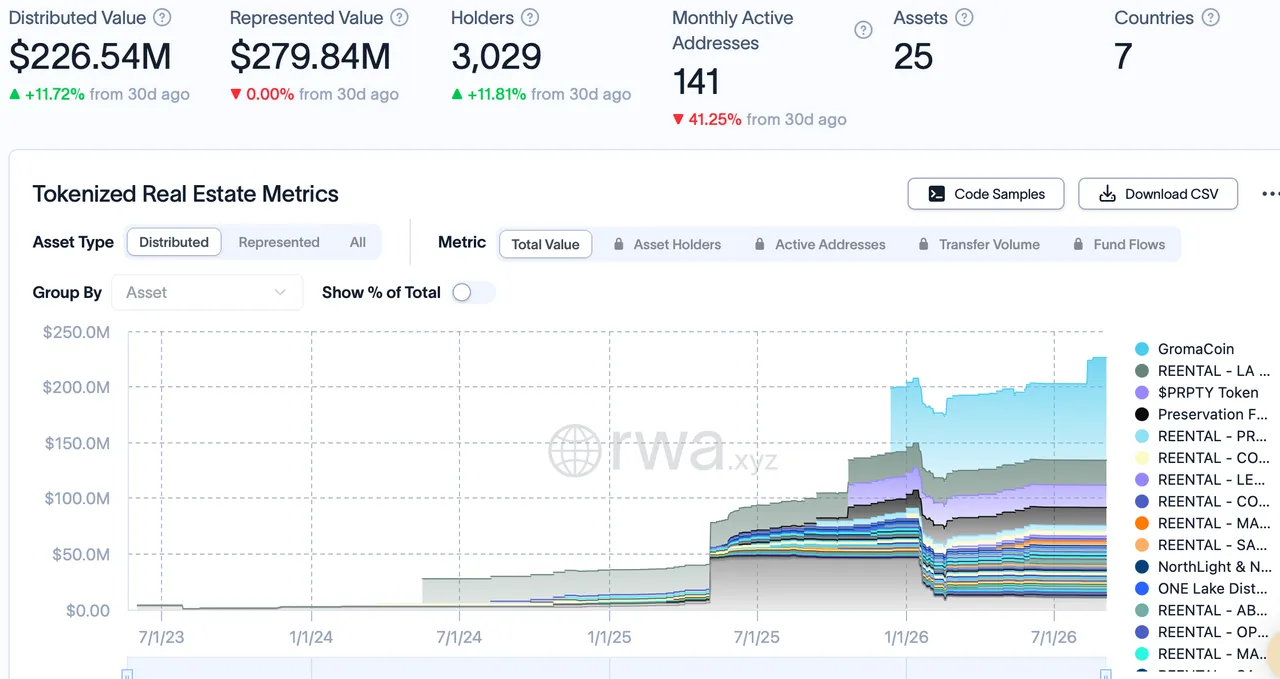
On the other hand, the larger tokenized real-world asset market is valued at roughly $38.8 billion.
The mortgage project by Pineapple demonstrates how the use of blockchain technology is now becoming much more than just asset ownership. By putting their mortgage documentation on the chain, the company is experimenting with blockchain infrastructure to manage large volumes of conventional financial data.
Also Read | Bitcoin ETF Inflows Fuel $125K Rally Hopes as Bulls Regain Control