Ripple, Clearpool, and Cicada Partners plan to bring institutional credit to the XRP Ledger through RLUSD-based lending. The project combines blockchain infrastructure with credit underwriting for regulated financial firms seeking access to real-world credit markets.
Clearpool will build the lending system with its Lending Protocol and Single Asset Vault architecture. The structure lets independent credit managers create separate markets and set their own risk terms for each lending operation.
Also Read: Binance Employees Released After UAE Inquiry Into Third-Party Fund Flows
How Will Ripple’s Credit Partnership Work?
Cicada Partners will handle credit operations, such as loan origination, servicing, and evaluation of borrowers, as well as setting terms of the loans. They will keep track of conditions post-issuance and have over $860 million worth of credit underwriting experience.
The platform processed more than $930 million worth of institutional loans since 2021 through its lending structure. The partners plan to focus on corporate lending, as most of the DeFi yield is from trading activity rather than borrowing.
According to them, around 98% of the DeFi yield comes from arbitrage, basis, looping, points, and liquidity mining. Their fund will lend working capital to businesses operating with stablecoins.
Ripple will join other institutions as a limited partner and will not offer any special backstop to the fund. The fund will invest in fintech firms, payment services providers, and crypto firms that have stablecoin-based working capital requirements.
What Will Power Institutional Lending on XRPL?
The RLUSD, the dollar-based stablecoin of Ripple, will act as the underlying credit asset. Participant eligibility and asset management will be handled by the controls available at XRP Ledger, like Permissioned Domains, Credentials, and Clawback.
Integration testing of the Clearpool platform will be done using the XRPL Devnet. The technical demonstration will cover the full lending process from pool creation, borrowing, and repayment.
Amendments of the Lending Protocol and Single Asset Vault still require community approval before becoming active on the ledger. Amendments of the XRP Ledger require support from at least 80% of trusted validators for two consecutive weeks.
What Are the Latest Ripple and XRP Developments?
Additionally, Ripple supported the fixCleanup3.3.0 amendment ahead of the xrpld 3.3.0 software upgrade. Voting results showed only eight out of 35 Unique Node List validators approved the amendment, far from the needed 28 votes.
Ripple has expanded institutional finance operations in the United States through Ripple Prime. This division recently made an upsized $275 million private placement of senior unsecured notes to fund this activity.
The funds will be used to develop clearing and financing solutions within the operations of the company. The operations of the prime brokerages will get funds from this placement.
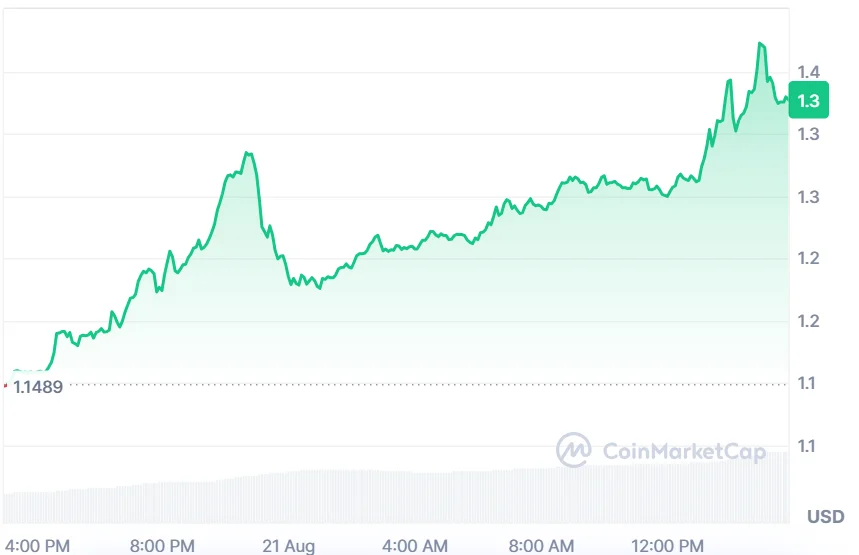
As of writing, XRP traded near $1.37 after rising 18.88% over 24 hours, while volume increased 132.74% to $9.9 billion, according to CoinMarketCap.
Also Read: MANTRA Chain Stops Transactions Amid Investigation Into Network Incident