Robinhood Chain has generated $11.48 million in cumulative fee revenue roughly two months after launch, according to an update from Arbitrum. The figure implies an annualized run rate near $60 million.
Table of Contents
Robinhood Chain Generates $11 Million in Early Fee Revenue
The milestone gives Robinhood Chain an early measure of traction beyond transaction counts or total value locked. Arbitrum said more than $1 million of the reported fees has accrued to its ecosystem under the revenue-sharing arrangement. That makes the chain relevant to users and the Arbitrum ecosystem.
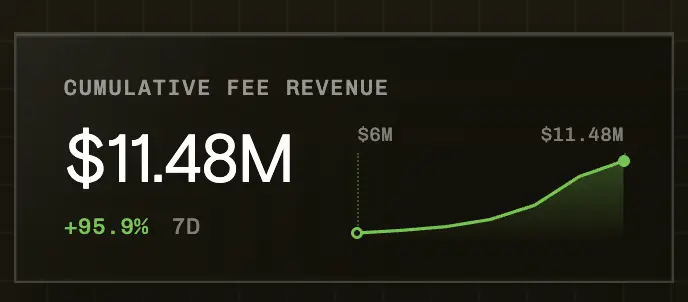
The revenue figure should still be read as a run-rate indicator rather than a forecast of earnings. Fee activity can change substantially as incentives, trading volumes and user behavior evolve. Robinhood is already producing economic activity weeks after its mainnet launch.
Also Read: Coinbase cbBTC Launches on Robinhood Chain via CCIP 2026
Robinhood Chain Uses Arbitrum Technology for Tokenization
Robinhood launched the public mainnet on July 1, describing Robinhood Chain as an Ethereum Layer 2 built using the Arbitrum Platform. The network was designed around tokenized real-world assets, DeFi applications and Robinhood’s onchain users. Its architecture connects a financial platform with Ethereum-compatible infrastructure.
Robinhood’s Johann Kerbrat said the company was “bringing the best of traditional finance and DeFi together.” That strategy explains why fee growth matters: sustained activity could depend on whether tokenized assets, trading and other financial applications develop beyond launch.
Arbitrum Revenue Share Links Robinhood Chain Activity
Arbitrum’s Expansion Program provides an economic link between Robinhood network activity and the Arbitrum ecosystem. Arbitrum said Robinhood remits 10% of its net revenue to the ecosystem, creating a recurring revenue relationship. More than $1 million in fees reaching Arbitrum provides an indication of that model operating in practice.
This matters for ARB ecosystem participants because chain growth can translate into ecosystem revenue. However, the impact should not be interpreted automatically as value accruing directly to the ARB token price. Market impact will depend on governance decisions, revenue allocation and sustained activity.
Robinhood Network Faces a Test Beyond Early Fee Growth
The next question is whether Robinhood can maintain activity as the launch period matures. Robinhood’s roadmap positions the network around stock tokens, DeFi and real-world assets, with partners such as Uniswap announced at launch. Wider adoption would test whether the current revenue pace represents durable demand.
The milestone also matters to the broader tokenization sector. If a consumer-facing platform can move financial activity onchain, other financial firms may have greater incentive to explore blockchain infrastructure.
Investors should focus on recurring fees, transaction activity, application growth and user retention rather than treating the $60 million annualized figure as guaranteed revenue.
Also Read: Uniswap Launchpad Goes Live on Robinhood Chain With New Pools Token