
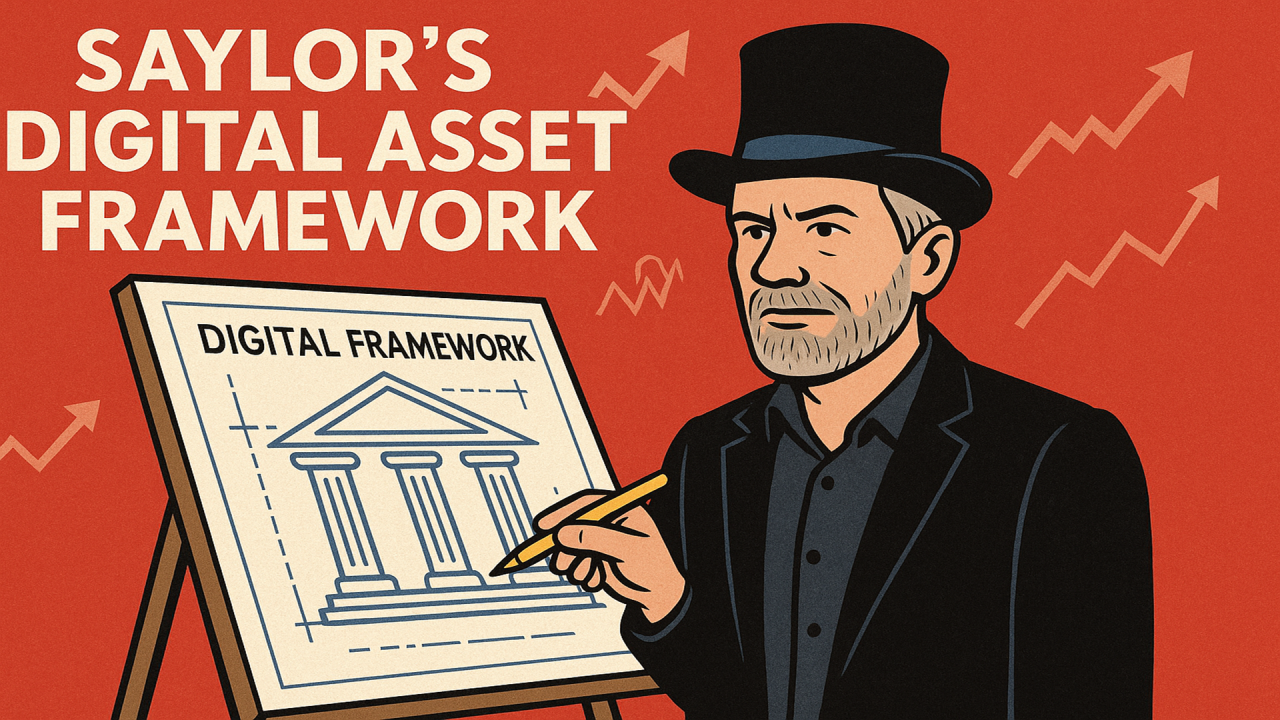
Strategy Executive Chairman Michael Saylor has proposed a “bill of digital rights” for individuals and companies using digital assets. Speaking at the Bitcoin Policy Institute’s Freedom Tech DC summit, he outlined rights covering creation, issuance, custody, transfer, and everyday use.
Table of Contents
He said a workable framework should protect five basic actions. People and companies should be able to create products, issue them to raise capital, hold them directly, move them between providers, and use them for spending, investing, income, or borrowing.
What Rights Does Saylor Want for Digital Assets?
He also supported both self-custody and third-party custody. The owners have to be given the freedom to select a custodian but retain the right of controlling the movement of their asset. It will increase competition among the custodians and lenders.
Also Read: ENA Price Eyes Breakout to $3 as Whale Activity Adds Market Context
Ownership rights are also linked to enhanced disclosure and anti-fraud requirements. He believes that there are differences in the economic utility of digital assets. The regulatory approach has to reflect these differences for digital asset tokens, currencies, capital, and securities.
Capital formation is yet another component of the proposal. The token issuance can help cut the cost and time taken in capital formation. He set an ambitious goal of 10 million new firms being able to access capital through improved issuance and proportional disclosure.
Why Does Saylor Want Bitcoin Inside Banking?
He further requested banks to offer Bitcoin custody and loaning services subject to workable commercial guidelines. He stated that regulations should distinguish between customer custody, collateral-backed lending, and direct balance sheet exposure.
He cited the Basel regulatory framework for Group 2b crypto assets. Banks currently apply a 1,250% risk weight to these exposures.
He hopes that policymakers will reexamine this classification of these assets and determine the value of digital assets based on the activity and risk profile. Saylor’s reasoning is very relevant to the strategy by the company through its Bitcoin holding.
In the company’s balance sheet, there are 846,000 BTC recorded post the most recent acquisition of the company with a total acquisition cost of around $63.8 billion and an average cost of $75,416 per BTC.
How Would Tokenization and AI Fit the Plan?
Another important aspect of Saylor’s proposal includes tokenized securities. “Investors need to be able to own tokenized assets directly and move them between providers to get better custody, credit, or income,” he claims.
Indeed, the U.S. regulatory agencies have recently started to develop the regulations related to tokenized securities on blockchain technology. On September 1, the Securities and Exchange Commission announced its new amendments to transfer-agent rules regarding electronic communication, records keeping, and blockchain.
Saylor also welcomed competition in the area of digital dollars. He suggested that banks, fintech companies, and technology platforms must be able to provide their dollar-related products, competing in the provision of services, returns, and risk disclosure.
Finally, his proposal touches upon small transactions. Saylor suggested higher reporting thresholds, reusable identity verification, and an important tax exemption for everyday transactions with digital currencies.
In particular, he claimed that multiple compliance verifications and tax calculations for each transaction increase the costs of ordinary users. Moreover, he expects that AI agents will need digital asset wallets, programmable payments, transferable assets, and financial services 24/7.
Who Would Drive Saylor’s Proposed Policy Changes?
These agencies include the SEC, CFTC, Department of Treasury, banking regulators, and the White House. He also argued that Congress ought to move where necessary in terms of legislation.
His aim is to increase digital asset issuance, financing, ownership, and transferability. This industry could one day become worth a total of $100 trillion, but this amount is just a personal estimate from him since it is not a market forecast.
Also Read: Prediction Market Dispute Deepens as New York Takes Polymarket to Court