
The United States became a net Bitcoin importer in 2026 for the first time since 2022, as large transactions brought more Bitcoin into the country than they sent out. Chainalysis identified this shift in its report covering the year ending June 2026, highlighting a growing divide between institutional demand and retail activity.
Table of Contents
The report found that transfers below $10,000 recorded net outflows during every measured period. Large transfers were in the other direction, as transfers above $10 million had 53,200 BTC, which is valued at roughly $4.3 billion of net inflow. Chainalysis does not disclose the total amount of net imports or the destination countries of retail outflows.
Also Read | Ethereum Price Faces Liquidation Risk as $92M Whale Long Wavers
U.S. Bitcoin Net Inflows Reflect Institutional Demand
According to the findings, large transactions were among the main factors that contributed to the return of the net inflows of US Bitcoins. Chainalysis stated that retail investors were sending Bitcoins out while institutions were bringing them in. However, the report did not identify the institutions responsible for the recorded inflows.
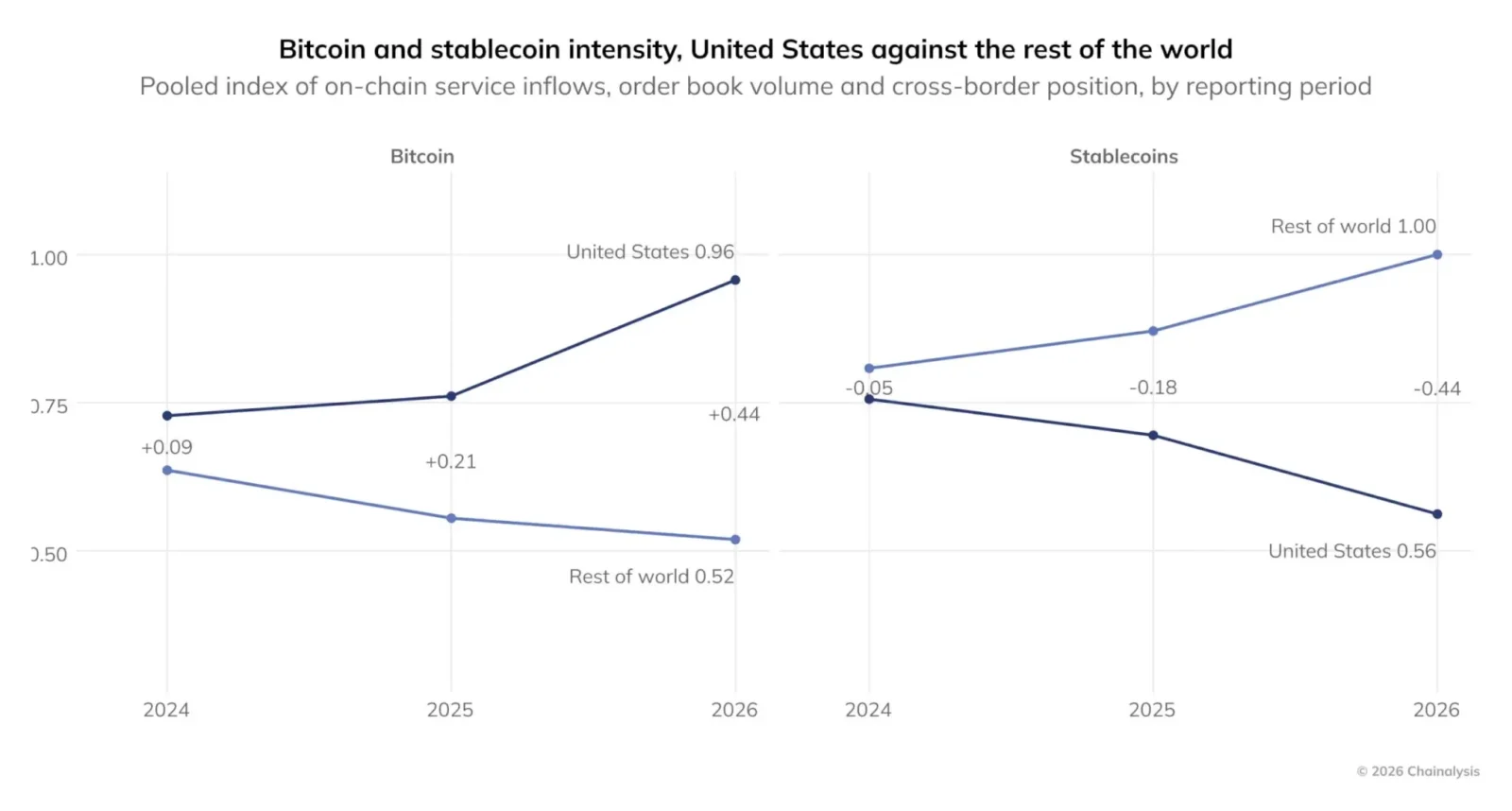
Contrary to fiat currencies, Bitcoins do not actually move across countries. For this reason, Chainalysis uses geoactivity indicators to estimate its geographic flow. These include crypto service traffic, exchange and cross-border receipt activity. It is through these measurements that we can determine the location of the activities and even the location of the assets.
The distinction matters because net inflows do not automatically mean every American institution accumulated Bitcoin. International exchanges, overseas transfers, and payments can also influence measured flows. The findings nevertheless show that large-value activity increasingly shaped the country’s Bitcoin movement during the reporting period.
Net Bitcoin Importer Trend Continues Beyond ETF Inflows
The debut of U.S. spot Bitcoin exchange-traded funds (ETFs) in January 2024 was the key shift in the availability of Bitcoin. The firm Chainalysis stated that the share of the United States in global Bitcoin transactions rose in every reporting quarter since then, demonstrating the growing influence of the country on the digital assets market.
However, ETFs were unlikely to be the primary driver of the latest net inflows. The United States’ spot Bitcoin ETFs showed around $5.39 billion in net outflows in the first six months of 2026, and then recovered, as per the provided report. This means that other institutional avenues should be considered when it comes to Bitcoin’s movement.
At the same time, ETFs continue to be an important factor as they combine regular investments and Bitcoin. The growing popularity of these funds helped to build the connection between traditional finance and the crypto market. Meanwhile, the federal Strategic Bitcoin Reserve has added potential sovereign demand, although Chainalysis described this influence as implicit rather than evidence of direct government purchases.
Net Bitcoin Importer Shift Contrasts With Stablecoin Growth
While the United States recorded Bitcoin inflows, dollar-pegged stablecoins continued serving overseas users through payments, savings, and cross-border commerce. According to Chainalysis, this discrepancy was explained by banking accessibility, since people in the United States have options to manage dollars, whereas people elsewhere use stablecoins to obtain dollar-denominated value without a bank account in the United States.
In addition, dollar-based stablecoins tie international demand to the U.S. market due to reserves that contain Treasury bonds and other legal investments. The Fed noted that the amount of Treasury bonds owned by the stablecoin issuer grew by more than $200 billion during five years.
According to the Chainalysis report, 99.1% of stablecoins traded on order books were dollar-pegged tokens, while only 0.45 percent belonged to euro-pegged tokens. This shows how powerful the dollar position is among stablecoins regardless of attempts to promote others in regulation. For U.S. firms, the growth brings new possibilities in payment systems and the finance industry.
U.S. Crypto Economy Declines Despite Structural Changes
The crypto economy of the United States amounted to $2.78 trillion for the reporting period, decreasing by 2.2% from quarter to quarter. Despite the negative dynamics, the state maintained its position as the largest crypto economy among those researched. The data suggests that increased inflow of Bitcoin can occur amid weakening activity in general in the sphere of digital assets.
Tokenization is yet another component of the trend. According to Chainalysis, the amount of tokenized real-world assets reached $36.07 billion in Q2 of 2026, including $15.42 billion or 42.8% of the U.S. Treasury debt.
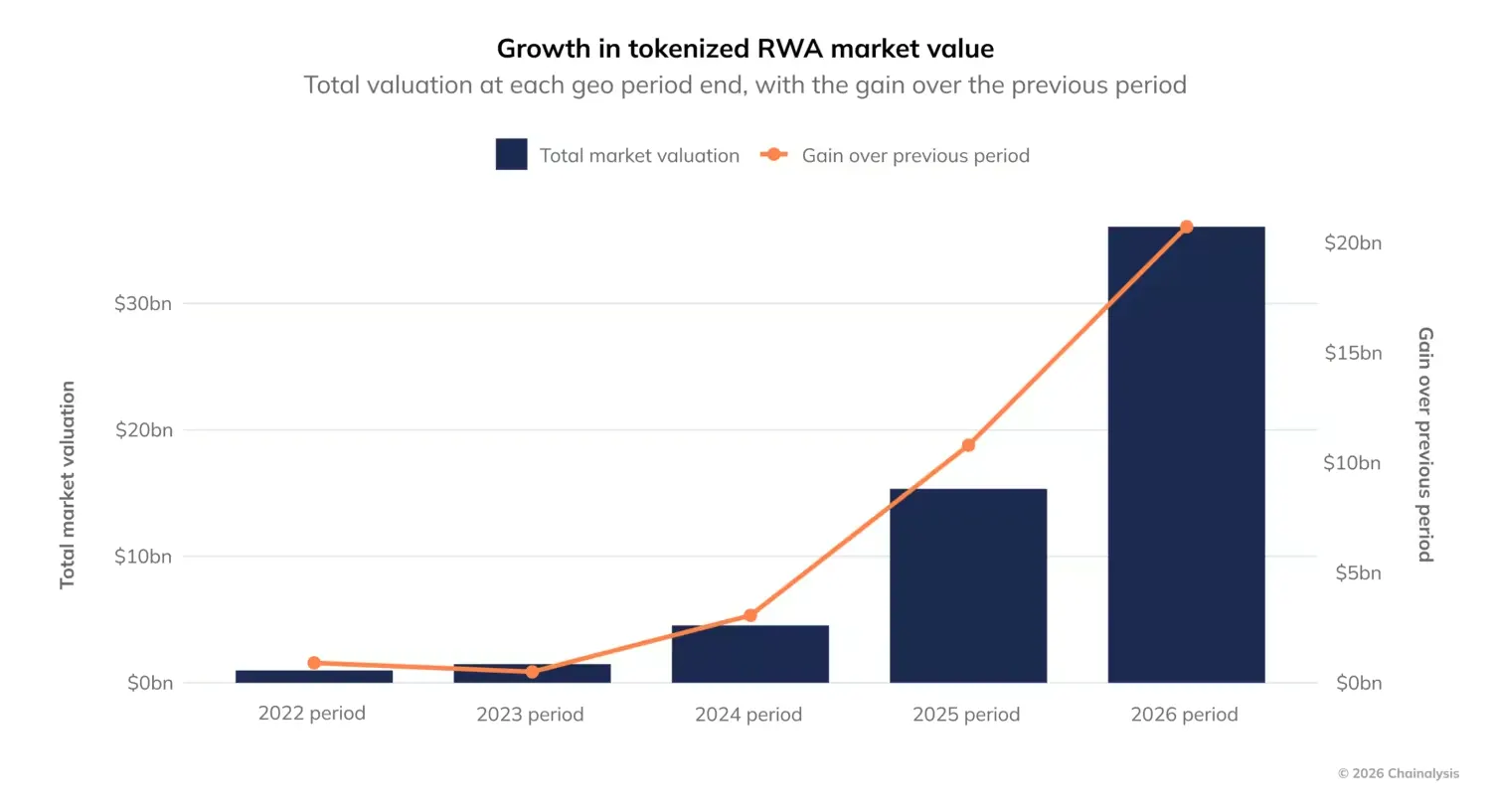
The information is important for institutional investors, individuals, payment systems, and the government. Institutional Bitcoin demand may change with market conditions, while overseas stablecoin adoption supports the international use of dollars. The trends to be considered include ETF outflows, large transactions involving Bitcoin, regulations related to stablecoins, and adoption of tokenized Treasury instruments worldwide.
Also Read | Ripple Integrates RLUSD Into Cross River’s Banking Infrastructure