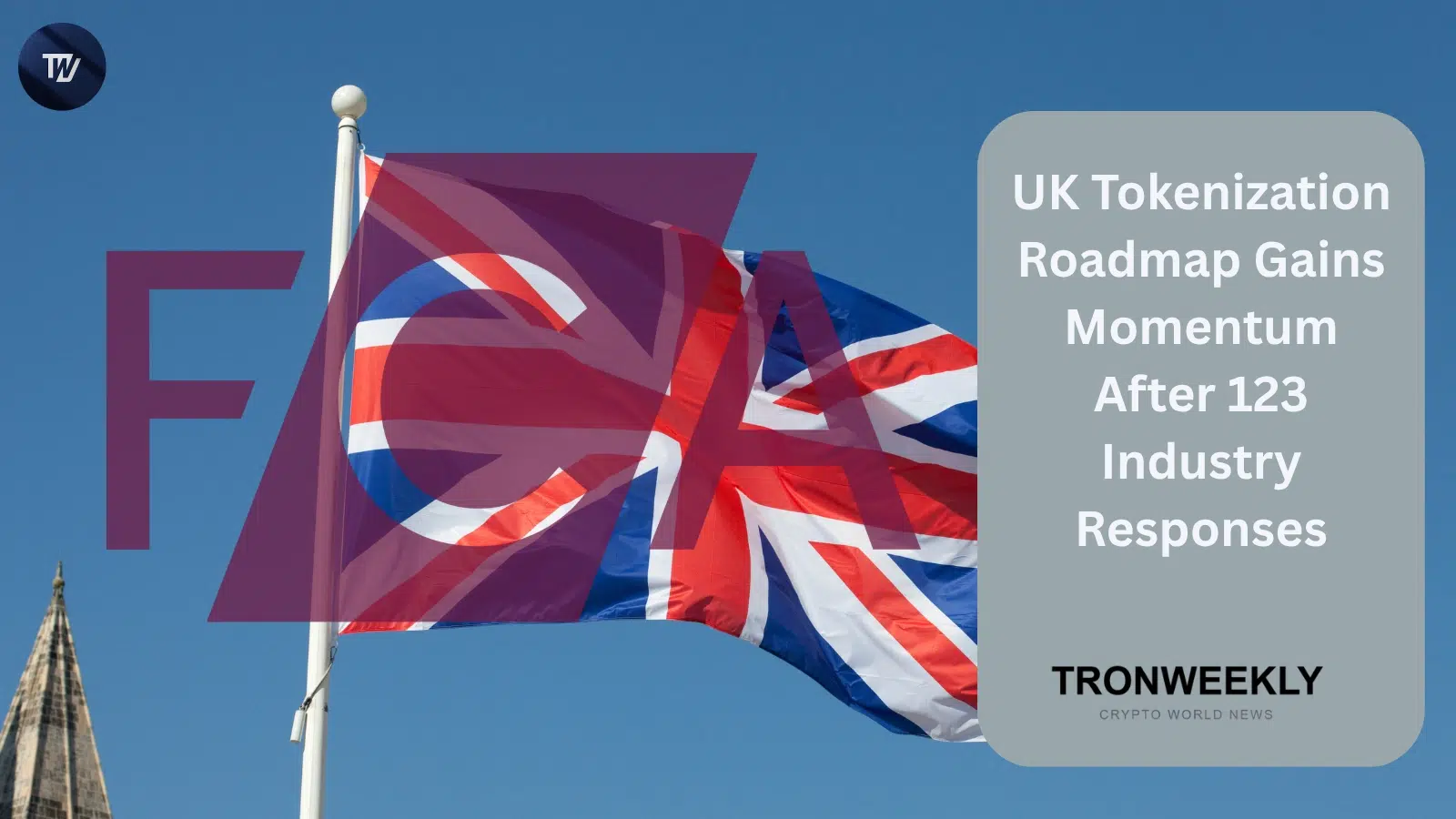
The UK Financial Conduct Authority and Bank of England have developed a joint tokenization roadmap following 123 responses to their Call for Input on tokenized securities issued in May 2026.
This input largely approves of the regulators’ stance but suggests accelerating efforts, developing a clear timeline, and shifting from pilot projects to wholesale-market infrastructure.
The survey is important since the process of tokenization could change the way that securities, collateral, and settlement are conducted in leading financial markets.
Instead of being focused solely on asset issuance on distributed ledgers, the survey found that post-trade activity presented the greatest opportunity. Lower cost through faster collateral movement and settlement is possible.
UK Tokenization Push Targets Collateral Settlement
These include banks, investment firms, asset managers, trading platforms, and providers of financial market infrastructure.
Financial technology (FinTech) companies and blockchain developers might also stand to gain if the regulatory roadmap spells out more clearly the requirements for institutional products. The FCA stated that the feedback was received from industry associations, firms, and legal academia.
Management of the collateral became a very specific concern during the consultations. It is because tokenized collateral might become much faster transferred from one counterparty to another, thus increasing the velocity of the collateral and contributing to an effective margin process.
Tokenized money-market funds can potentially become collateral without liquidation, but this requires certain development of the regulations.
Also Read: Hong Kong’s Tokenization Boom Fuels Crypto Growth! Don’t Miss Aureal One Presale
Industry Seeks Permanent Digital Infrastructure
Furthermore, the feedback highlighted the necessity for an agenda that should go beyond the Digital Securities Sandbox, which is the regulatory regime within the UK for experimenting with the issuance, trading, and settlement of digital tokenized securities.
The participants are not contented only with pilot projects and desire to see a long-term market infrastructure created.
The involvement of HSBC is indicative of how well-established companies are already experimenting with the functionalities of token markets. HSBC has been given clearance to conduct notarization, top-tier account management, and settlement within the Digital Securities Sandbox.
These may prove to be useful precedents that can help regulators decide how digital experimentation can move on to become regulated markets.
FCA Aligns Tokenized Assets With Traditional Regulation
FCA is taking a technology-neutral approach under the framework of the same risk, same regulation concept.
It stated that tokenized traditional assets would be treated equally to conventional assets where there are similar rights in law and similar risks. FCA also emphasized that the responsible entities need to be identifiable.
The need for interoperability and operational resilience is still an issue. There were concerns raised regarding bridges, key management, oracles, cross-chain communication, and wallet security issues.
There is also a need to achieve compatibility of traditional infrastructure with that of tokenized infrastructure. The FCA stated that the industry needs to take the initiative to develop technical standards.
Tokenized Gold and Crypto Custody Enter Agenda
This trend is growing from the securities sector to include tokenized gold that the FCA is separately investigating.
The authority is looking at possible modifications related to collective investment schemes and alternative investment funds. On the other hand, consultation regarding the safety of cryptoassets in the specified investment category is set for early 2027.
What Happens Next for UK Tokenization?
It can thus serve as a potential sign for institutional investors and infrastructure players. The effectiveness of this roadmap depends on whether it sets clear timelines and certainty in issuance, settlement, collateralization, custody, and central bank money. From the markets’ perspective, the next step is to bring tokenization from pilots to scale.
Also Read: Ripple Supports UK Tokenization Drive Targeting £33B Annual Growth