Most convincingly, Ethereum co-founder Vitalik Buterin has argued that AI replacing websites and apps as the GUI of user interaction with blockchains is inevitable.
Speaking at OKX NOW in Singapore 6 October 2026, Vitalik Buterin said that step from AI agents executing multi-step on-chain actions at the native level to becoming the default will lead to fundamental industry shifts in wallet UI/UX, security models, and developer tooling.
Table of Contents
Five-Minute ENS Demo at OKX NOW
OKX NOW 2026 was planned to be OKX’s global product showcase event, coinciding with the crowning of its OKX Dev Day 2026 hackathon on X Layer and OKX AI. During his presentation, Vitalik Buterin made the point more tangible by recanting the personal example, which prompted his thinking.
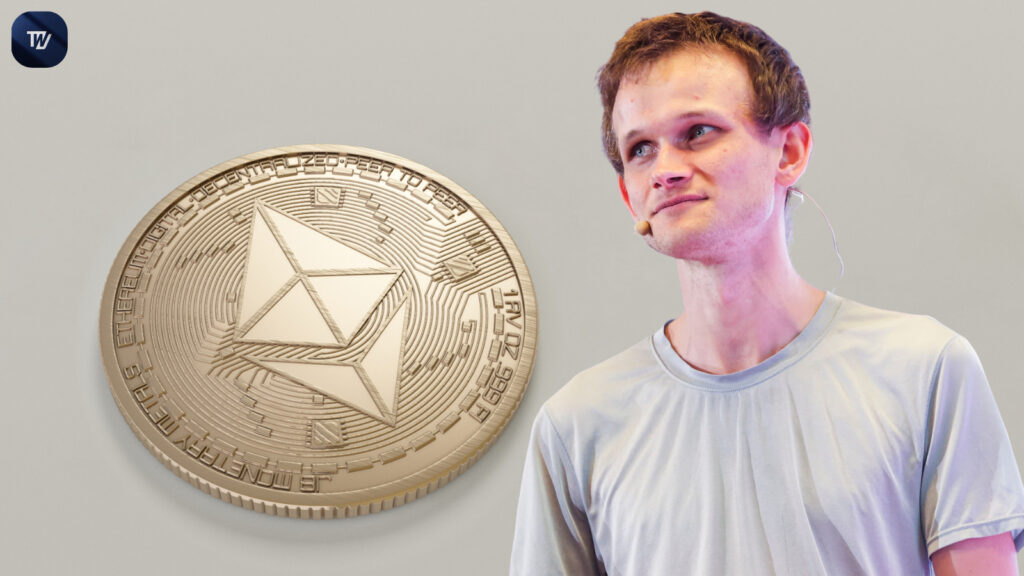
Near a month earlier, he refreshed his ENS record without loading a traditional front-end, just instructing a locally running AI agent to generate and execute the script – in something under five minutes.
Currently, AI has proven it can break sandbox escapes, find exploitable bugs in software, assist in formal verification, run complex cryptography on protocols like Ethereum, but the now missing UI will be between fact input and interacting with the blockchain, where we tell the agent what we want in plain English and it translates that into a transaction, call, or cross-chain flow of calls.
Also Read: Ethereum Roadmap 2030: Vitalik Buterin Maps Post-Hegota Overhaul
Trade-Off of security: Slightly Less Frontend Hacks but Novel Risks with AI
Vitalik Buterin characterized it as “a negative security tradeoff: the fewer frontend hacks you get, the newer risks you get with AI.”Most major losses in crypto have come not from application bugs within on-chain programs but from compromise of the interface layer.
He referenced the Safe breach that lost about $1.4 billion where hackers targeted the interface between user and on-chain systems and not the smart contracts himself. Because transactions would be routed through a local AI agent instead of a hosted web frontend, the potential risk of frontend hijacks is reduced. Consumers would no longer need to trust the security of a web page not to be infected by malicious code.
New vulnerabilities include prompt injection, AI safety failure and the AI agent understanding the security implications of each action it signs plus the actual economic ramifications.
His blog from Oct. 5 about transfer assertions gives some ideas of how the architecture would work: as well as the isolated execution model in zkAPI, several queries would be routed through Tor and the agent could prove what it had executed without revealing private data, all of which suggests local-first verifiable AI as a key to adoption.
Also Read: Vitalik Buterin Pushes EIP-8288 for Ethereum’s I-Star Upgrade
Risks for Builders, Institutions & Ethereum’s Architecture
MetaMask Safe Others with intent-based architecture and account abstraction. MetaMask Safe OKX Wallet and others are forced to compete on intent-based architecture, account abstraction with ERC-4337 and EIP-7702.
Instead of constructing more and more complex dashboards, teams must alert and unveil machine-readable APIs and extensive assertion checks for agents to use reliably and discernibly. For institutional actors, RIA platforms, and retail investors, the benefit is less friction. Re-staking, cross-L2 bridging, managing ENS entries could all be a single prompt away.

For regulators, auditors, and CEXes though, liability is much harder to interpret when autonomous agents require custody and conduct financial activity. As Vitalik Buterin noted at OKX NOW, it follows a larger trend toward agent-enabled finance.
Coinbase’s AgentKit, OKX AI, and Solana’s open ecosystem of trading bots are all directing toward intent-based interactions instead of click-based flows, a shift Vitalik Buterin sees as central to Ethereum’s future.

Source: Bloomberg
Ethereum’s researcher community, echoing Vitalik Buterin’s vision at OKX NOW, is increasingly imagining AI as core interface infrastructure not an add-on, but the primary method by which future financial growth will unfold.
As Vitalik Buterin argued, what comes next hinges on establishing trust. Builders will pursue more experimentation with self-hosted models like Qwen, transaction simulators, and uniform standards for agent capabilities, as they seek to turn AI into the default gateway to on-chain money without sacrificing decentralization.
Also Read: Ethereum EIP 8141 Gains Attention as Vitalik Buterin Pushes New Scaling Design