Cantor Fitzgerald Tether faces growing scrutiny after US Senator Richard Blumenthal demanded financial records, compliance policies, and communications concerning the stablecoin issuer. The inquiry focuses on potential sanctions violations, alleged links between USDT and Iran’s shadow banking network, and financial benefits received by Commerce Secretary Howard Lutnick and his family.
Table of Contents
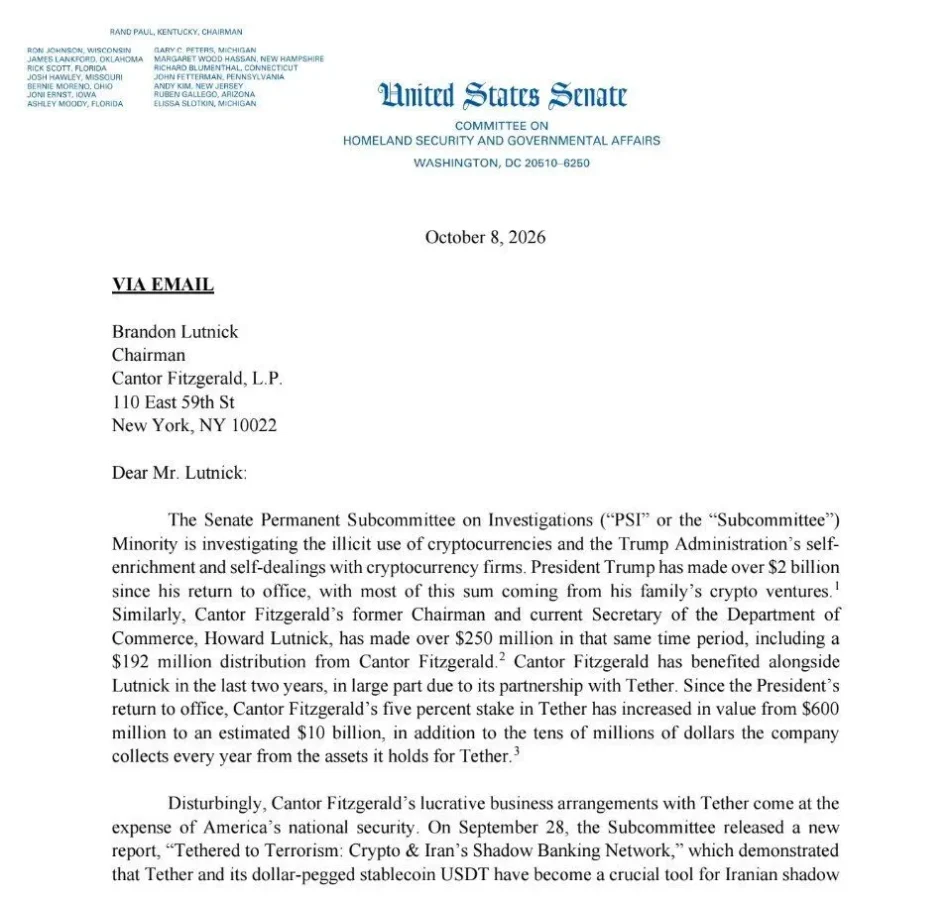
The ranking Democrat on the Senate Permanent Subcommittee on Investigations sent a letter to Cantor Fitzgerald’s chairman, Brandon Lutnick, on October 8. In particular, Blumenthal asked for details regarding Cantor Fitzgerald’s supervision of Tether, ownership in the stablecoin company, and mechanisms to identify money laundering and other violations of American laws. Cantor Fitzgerald and Tether have yet to comment.
Also Read | Ethereum Institutional Major Powerful 500+ Deployments
Cantor Fitzgerald Tether Stake Draws Financial Scrutiny
The Cantor Fitzgerald Tether partnership is under congressional scrutiny over the firms’ financial ties. Cantor holds the right of 5% ownership of Tether since 2024 and acts as the custodian of the treasury bonds securing the stablecoin since 2021.
As per Blumenthal’s letter, the stake in Tether has increased in value, according to Cantor’s estimation, from $600 million to $10 billion after the presidency of Donald Trump in office. The firm is earning tens of millions of dollars per year from the assets that it holds for Tether, says Blumenthal.
Also mentioned in the letter by Blumenthal are the earnings of over $250 million by Howard Lutnick in the same period, including the earnings of $192 million by Cantor Fitzgerald Tether. This is based on the allegations and estimations made in the senator’s letter and not any findings of a completed investigation on any wrongdoing.
Howard Lutnick was heading Cantor Fitzgerald as chairman and CEO before he became the commerce secretary of the United States in February 2025. Later, his son Brandon became the chairman while another son became the vice chairman. The senator needs records of the divestiture by Howard Lutnick, any financing that Tether gave to help the ownership transfer and their earnings from the partnership.
Iran’s Shadow Banking Allegations Raise Compliance Questions
The investigation comes after a report made by the Senate Subcommittee on September 28. According to the report, Tether’s dollar-pegged USDT had become a vital component in a network connected to Iran and its sanctioned entities.
Investigators looked into the cryptocurrency wallets of Iran and its alleged terrorist proxies. Some of the wallets were found to be associated with suspicious financial transactions involving sizable sums. This leads to an issue as to whether Tether acted fast enough to freeze or destroy such funds.
Blumenthal called upon the US Department of the Treasury and Justice to investigate the potential sanctions violations. In his letter, Blumenthal also asked Cantor to explain the procedures for overseeing Tether’s compliance, auditing the firm, investigating suspected illicit transactions, and whether there will be an end to its cooperation.
Tether has been defending its cooperation with the authorities. According to Tether, they have cooperated with law enforcement authorities for years. Furthermore, this year, they froze $550 million of USDT associated with Iran. What should be pointed out here is that the investigation raises some issues about some transactions and practices, while the allegations don’t prove that each USDT transaction or Tether customer is associated with some illicit activities.
Cantor Fitzgerald Tether Inquiry Targets Financial Records
In addition to seeking financial information, Blumenthal has also requested annual revenues related to Cantor’s involvement in the Tether deal and documentation about payments made to the Lutnick family. Furthermore, he has sought documentation about Tether’s reserve, Cantor’s custodial services, independent audits, and know-your-customer policies and anti-money laundering controls.
The senator seeks communication with Howard Lutnick while at Cantor and after leaving the company, as well as communication with government officials regarding Tether and its regulatory issues. Documents and answers should be preserved and sent by October 23, 2026.
While the requests will allow Congressmen to learn more about the way a big financial company manages assets underpinning a top stablecoin, it should be noted that the letter is an investigatory request from the Democratic minority of the committee rather than the final conclusion of Cantor Fitzgerald Tether wrongdoing.
At the same time, the outcome may affect discussions about Tether and other stablecoins regulation, reserve transparency, sanctions enforcement, and financial relations of companies with government officials. From the point of view of investors and companies working with USDT, the key question is whether regulators will find any loopholes in compliance systems.
What Happens Next for Cantor Fitzgerald and Tether?
However, the response of Cantor to the deadline set for October 23 is an essential next move. It might help uncover more details about the income of the company, the audit, ownership, and sanctions risk management. All of the future investigation and possible sanctions will be based on the analysis of evidence by the respective bodies.
Furthermore, the request for the records comes at a time when the US politicians are actively discussing the regulations of digital assets. Stablecoins are helpful in trading cryptocurrency and conducting international transactions, among others. Sanctions-related accusations will put additional pressure on issuers and their bank partners to prove that they cooperate with the authorities.
For now, the case places Cantor Fitzgerald’s relationship with Tether under political and regulatory scrutiny without establishing legal wrongdoing. The next developments will depend on the documents provided, the findings of any government investigations, and whether authorities identify evidence supporting further action.
Also Read | Bitcoin Finance Gains $500M Commitments Through Sui Hashi